Is Oil Still Leaking From the USS Arizona?
Key takeaway
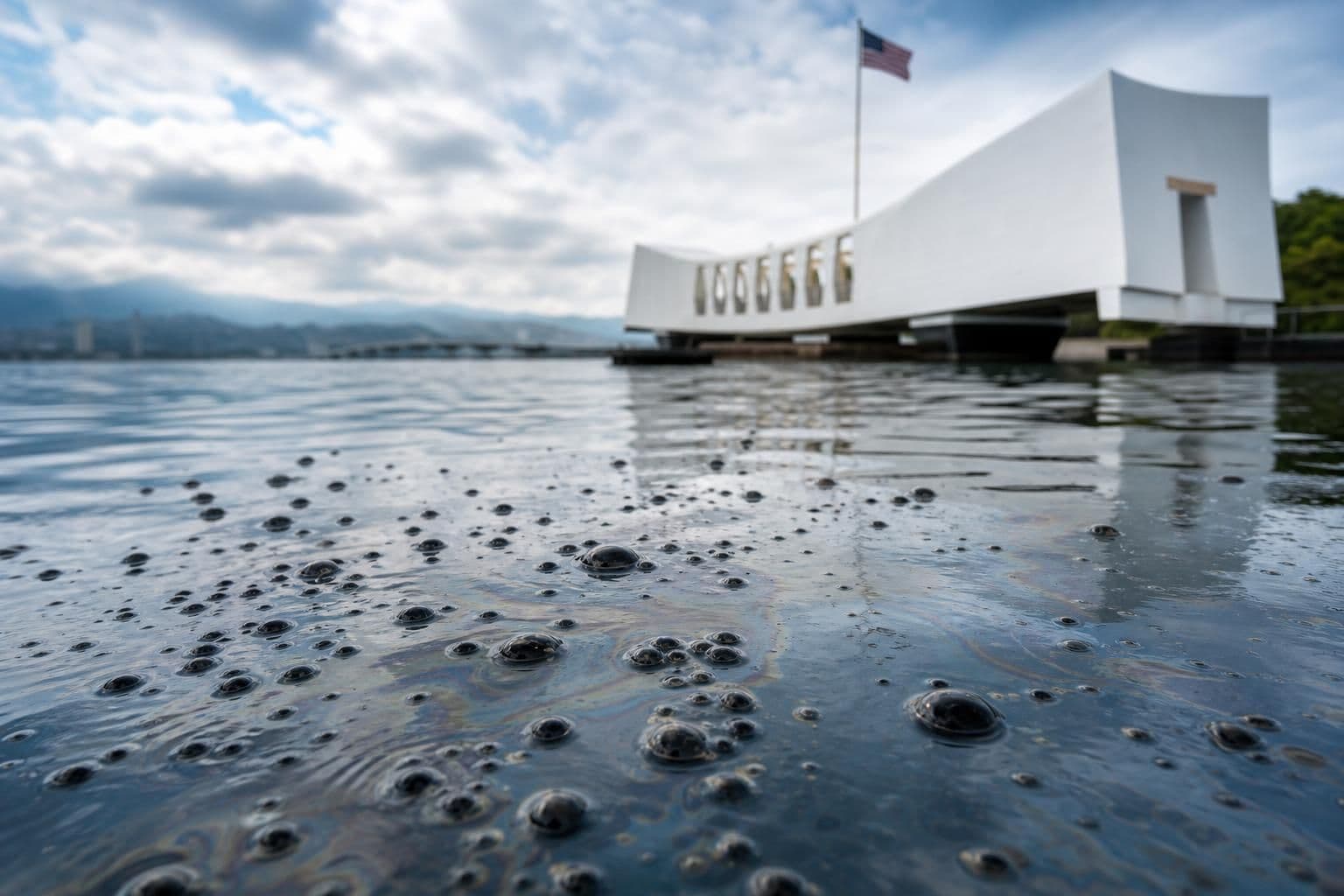
Yes, oil is still slowly leaking from the sunken USS Arizona, more than 80 years after the December 7, 1941 attack on Pearl Harbor. The ship's fuel bunkers held roughly 1.5 million gallons of oil when it went down, and an estimated several hundred thousand gallons remain trapped in the wreckage, seeping out at a slow, steady rate visible on the water's surface. Park rangers and Navy divers monitor the site closely, and the sheen is now a recognized, permanent part of the memorial experience.
Key takeaways
- The USS Arizona still releases small amounts of oil daily, visible as a rainbow sheen around the memorial.
- Locals and National Park Service staff call the droplets the "black tears" or "tears of the Arizona," a nod to the sailors entombed inside.
- The National Park Service and Navy actively monitor the wreck's structural condition and oil reserves rather than trying to remove all the fuel.
Why the Oil Is Still There
When the USS Arizona was struck on December 7, 1941, it was fully fueled for deployment, carrying close to 1.5 million gallons of Bunker C fuel oil. The ship sank in about nine minutes after a bomb detonated its forward ammunition magazine, and it settled onto the harbor floor with most of that oil still sealed inside its hull. Salvage crews in the 1940s removed some fuel and munitions from other sunken battleships at Pearl Harbor, but the Arizona was left largely undisturbed out of respect for the more than 900 crew members who remained entombed in the wreck.
Because the ship was never fully salvaged, its tanks and bunkers still hold an estimated 500,000 gallons of oil, according to National Park Service surveys of the site. Corrosion of the steel hull over the decades has opened small leaks, releasing oil gradually rather than all at once.
How Much Oil Leaks Out Today
The leakage is not dramatic — it is a slow, continuous seep rather than a spill. Visitors standing on the memorial platform can typically see small oil droplets rising to the surface and spreading into thin, colorful sheens on the water. The National Park Service, which co-manages the site with the Navy, has documented this seepage for decades and describes it as an expected, ongoing condition of the wreck rather than a new or worsening leak.
Engineers and scientists have studied the corrosion rate of the hull to estimate how long the oil might continue seeping. Because Bunker C fuel oil is thick and viscous, it tends to leak slowly through small breaches rather than gushing out, which is part of why the ship has continued to release oil at a low, manageable rate for so long.
The "Black Tears" and What They Mean to Visitors
Many locals in Hawaii refer to the oil droplets as the "black tears of the Arizona," a poetic description tied to the belief that the ship continues to weep for the men who died aboard it. For many visitors, this detail deepens the emotional weight of standing on the memorial, which is built directly over the sunken hull. If you're deciding how the memorial fits into a broader visit, it can help to read about the difference between visiting the USS Arizona Memorial and Battleship Missouri before you plan your day.
Because the wreck is a war grave, the National Park Service and Navy treat any changes to the site — including oil monitoring — with particular caution. Structural assessments are conducted periodically to track corrosion, and officials weigh preservation of the historic wreck against any environmental or safety concerns tied to the remaining fuel.
Is the Leaking Oil a Safety or Environmental Concern?
The ongoing seepage is closely tracked, and current assessments classify the leak rate as low-level and stable rather than an emergency. The Environmental Protection Agency has historically been involved in evaluating shipwreck oil risks in U.S. waters generally, and site-specific monitoring at Pearl Harbor focuses on watching the hull's corrosion so that any significant change in leak rate can be caught early.
There is ongoing scientific interest in what would happen if the hull's corrosion accelerates significantly, since a larger release could affect harbor water quality and marine life. For now, though, the leak remains slow enough that it has not required intervention beyond continued observation.
What This Means for Your Pearl Harbor Visit
Seeing the oil sheen on the water is a normal, expected part of visiting the USS Arizona Memorial — it is not a sign of a new problem, and it will not affect your ability to visit or how the tour is conducted. Most visitors notice it as a quiet, somber detail while looking down at the visible outline of the sunken hull beneath the memorial structure.
A few practical points worth knowing before you go:
- Tickets to the memorial are timed and limited, so booking ahead or reserving through a tour operator can help you avoid the walk-up ticket line; see this guide on what to do if Pearl Harbor tickets are sold out.
- The memorial visit itself is brief — typically under an hour once you're on-site — so many visitors pair it with the Battleship Missouri or Pacific Aviation Museum to fill out the day; read more on how long a full Pearl Harbor visit takes.
- If you're staying in Waikiki, transportation logistics matter, since the memorial sits on active Navy property with its own access and security screening; this guide on getting to Pearl Harbor from Waikiki covers the practical details.
Pearl Harbor Official's guided tours build in reserved memorial boat tickets specifically so guests don't have to worry about same-day availability, which matters given how limited daily ticket allotments can be.
Frequently Asked Questions
Q: Is oil still leaking from the USS Arizona today?
Yes. The wreck still holds an estimated several hundred thousand gallons of fuel oil, and small amounts continue to seep out through corrosion in the hull, visible as a sheen on the water's surface.
Q: Why wasn't all the oil removed from the USS Arizona?
The ship was left largely undisturbed after the attack because it serves as a war grave for the more than 900 crew members entombed inside, and removing the remaining fuel would require disturbing the wreck.
Q: What are the "black tears" of the USS Arizona?
"Black tears" is a local nickname for the oil droplets that rise to the surface near the memorial, a phrase tied to the idea that the ship continues to mourn the sailors who died aboard it.
Q: Is the leaking oil dangerous to visitors or the environment?
Current monitoring by the National Park Service and Navy classifies the leak rate as slow and stable, not an active hazard, though officials continue tracking hull corrosion for any significant changes.
Q: Will I definitely see oil on the water during my visit?
Most visitors do notice a faint sheen around the memorial, though the amount visible can vary day to day depending on water conditions and light.