Pearl Harbor Attack Facts Every Visitor Should Know
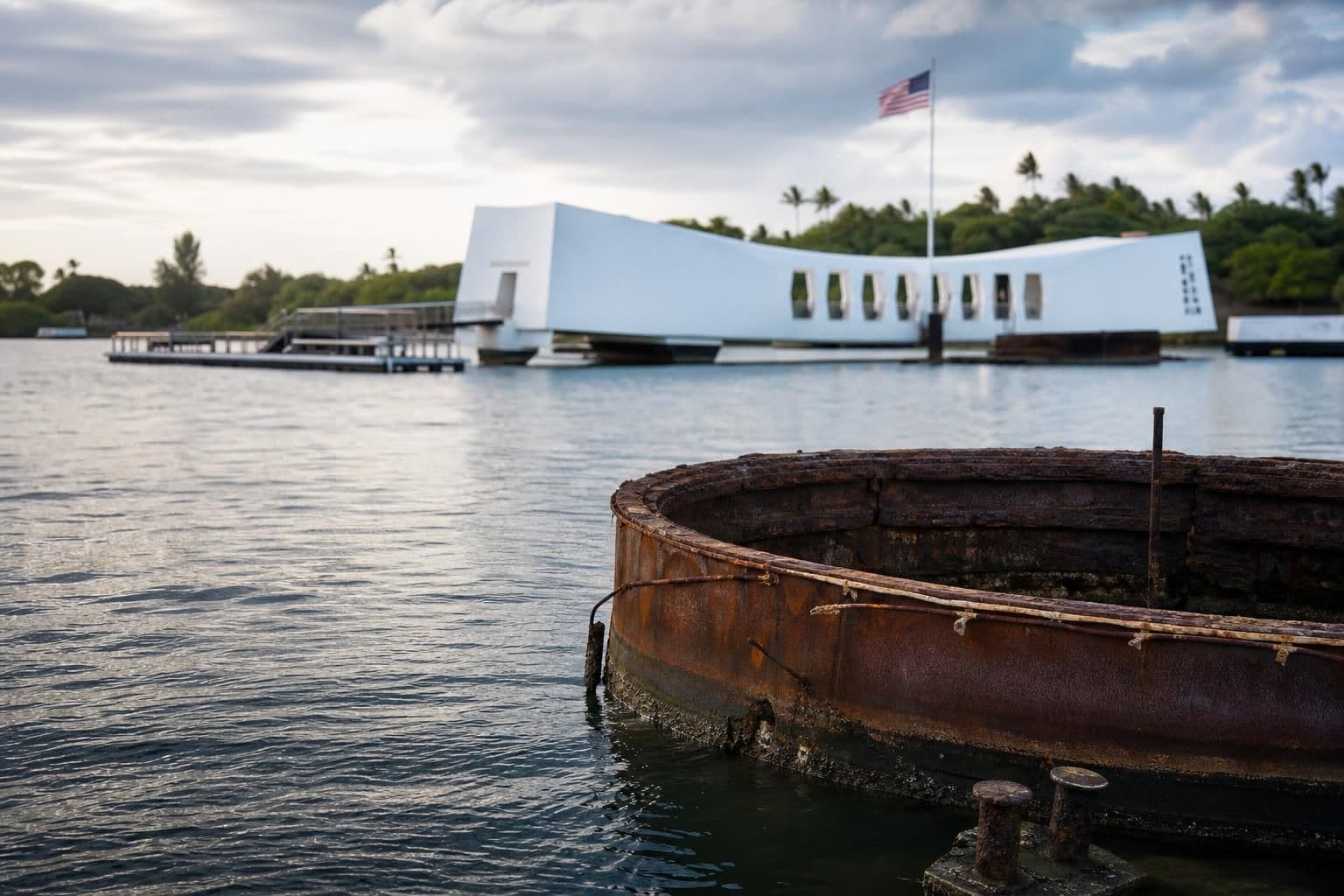
Key takeaway
On December 7, 1941, Japanese naval aircraft attacked the U.S. Pacific Fleet at Pearl Harbor, Oahu, killing 2,403 Americans and damaging or sinking 21 ships in a surprise strike that lasted roughly 75 minutes across two waves. The attack destroyed much of the battleship fleet, including the USS Arizona, which still holds the remains of most of its crew beneath the harbor's surface. It brought the United States into World War II the following day, when Congress declared war on Japan.
Key takeaways
- The attack happened in two waves starting around 7:48 a.m. Hawaii time and killed 2,403 people, including 68 civilians.
- The USS Arizona alone lost 1,177 sailors and Marines, nearly half of all deaths that day.
- The attack prompted the U.S. declaration of war on Japan on December 8, 1941, pulling America fully into World War II.
What Happened on the Morning of December 7, 1941
Japanese carrier-based aircraft launched from six aircraft carriers positioned roughly 230 miles north of Oahu. The first wave of 183 planes struck shortly before 8 a.m., targeting battleships moored along "Battleship Row" and airfields across the island to prevent American planes from taking off. A second wave of 170 aircraft followed about an hour later, concentrating on ships that had survived the initial assault. By the time the attack ended, eight battleships had been hit, along with cruisers, destroyers, and support vessels.
The United States had no formal declaration of war with Japan at the time, and most sailors and soldiers were caught off guard on a quiet Sunday morning. Radar operators had actually detected the incoming planes but mistook the signal for an expected flight of American B-17 bombers, a communication gap documented by the National Park Service, which now preserves the site as the Valor in the Pacific National Monument.
How Many Ships and Lives Were Lost
The human and material toll of the attack was severe and concentrated in a very short window of time:
- 2,403 Americans killed, including 2,335 military personnel and 68 civilians.
- 1,178 people wounded, many from burns and shrapnel.
- 21 ships sunk or damaged, including the battleships Arizona, Oklahoma, California, and West Virginia.
- 188 aircraft destroyed, most of them before they ever left the ground.
The USS Arizona accounted for nearly half of all fatalities when a bomb detonated its forward ammunition magazine, sinking the ship in minutes. The USS Oklahoma capsized after being struck by multiple torpedoes, trapping hundreds of sailors below deck. Casualty figures are maintained by the Naval History and Heritage Command, which tracks U.S. Navy losses from the attack in detail.
Why Japan Launched the Attack
Japan's military leadership viewed the strike as a preemptive move to cripple the U.S. Pacific Fleet before expanding operations across Southeast Asia and the Pacific, where Japan sought control of oil, rubber, and other resources. Tensions had been building for years over Japan's war in China and U.S. economic sanctions, including an oil embargo imposed in 1941 that threatened Japan's military capability. Japanese commanders hoped that destroying America's battleships would delay U.S. intervention long enough for Japan to secure its territorial gains.
The plan had a critical gap: the Pacific Fleet's aircraft carriers were at sea during the attack and escaped damage entirely. Those carriers would prove decisive within six months, most notably at the Battle of Midway.
How the Attack Changed the Course of the War
President Franklin D. Roosevelt addressed Congress the next day, calling December 7 "a date which will live in infamy," and Congress declared war on Japan within hours. Germany and Italy, allied with Japan, declared war on the United States days later, drawing America fully into both the Pacific and European theaters. A recording and transcript of Roosevelt's address are preserved by the National Archives.
The attack also reshaped American industry and society almost overnight, as factories converted to wartime production and millions enlisted or were drafted. For visitors trying to grasp the scale of that shift, seeing the physical remains of the fleet at Ford Island's surviving tour sites makes the history far more tangible than reading dates and figures alone.
Seeing the History in Person Today
The USS Arizona Memorial sits directly above the sunken battleship, and oil still rises from the wreck decades later — a detail that surprises many first-time visitors. The National Park Service issues a limited number of memorial tickets each day, and demand regularly outpaces supply, especially around the December 7 anniversary each year. Guided bus tours from Waikiki, including those run by Pearl Harbor Official, build in reserved memorial access and local guides who walk visitors through the sequence of events rather than leaving them to piece it together from placards alone.
Because the memorial program involves a boat shuttle, security screening, and a fixed program schedule, first-time visitors benefit from knowing what to expect on a Pearl Harbor bus tour before they arrive, particularly if traveling with children or elderly family members who may need extra time moving between sites.
Frequently Asked Questions
Q: How many people died in the Pearl Harbor attack?
2,403 Americans were killed, including 2,335 military personnel and 68 civilians, with another 1,178 wounded. The USS Arizona alone accounted for 1,177 of those deaths.
Q: How long did the attack last?
The attack unfolded in two waves over roughly 75 minutes, beginning around 7:48 a.m. Hawaii time. The first wave targeted battleships and airfields, while the second wave struck surviving ships about an hour later.
Q: Why did Japan attack Pearl Harbor?
Japan aimed to cripple the U.S. Pacific Fleet to clear the way for military expansion across Southeast Asia and the Pacific, partly in response to American oil and resource sanctions. The plan failed to account for U.S. aircraft carriers, which were at sea and survived the attack.
Q: Did the United States know the attack was coming?
Radar operators detected the incoming Japanese planes that morning but misidentified them as an expected flight of American bombers. There was no formal declaration of war beforehand, and the strike caught most personnel at Pearl Harbor off guard.
Q: How did the attack lead to U.S. entry into World War II?
Congress declared war on Japan on December 8, 1941, the day after President Roosevelt's address to Congress. Japan's allies, Germany and Italy, declared war on the United States shortly after, bringing America into both the Pacific and European fronts of the war.