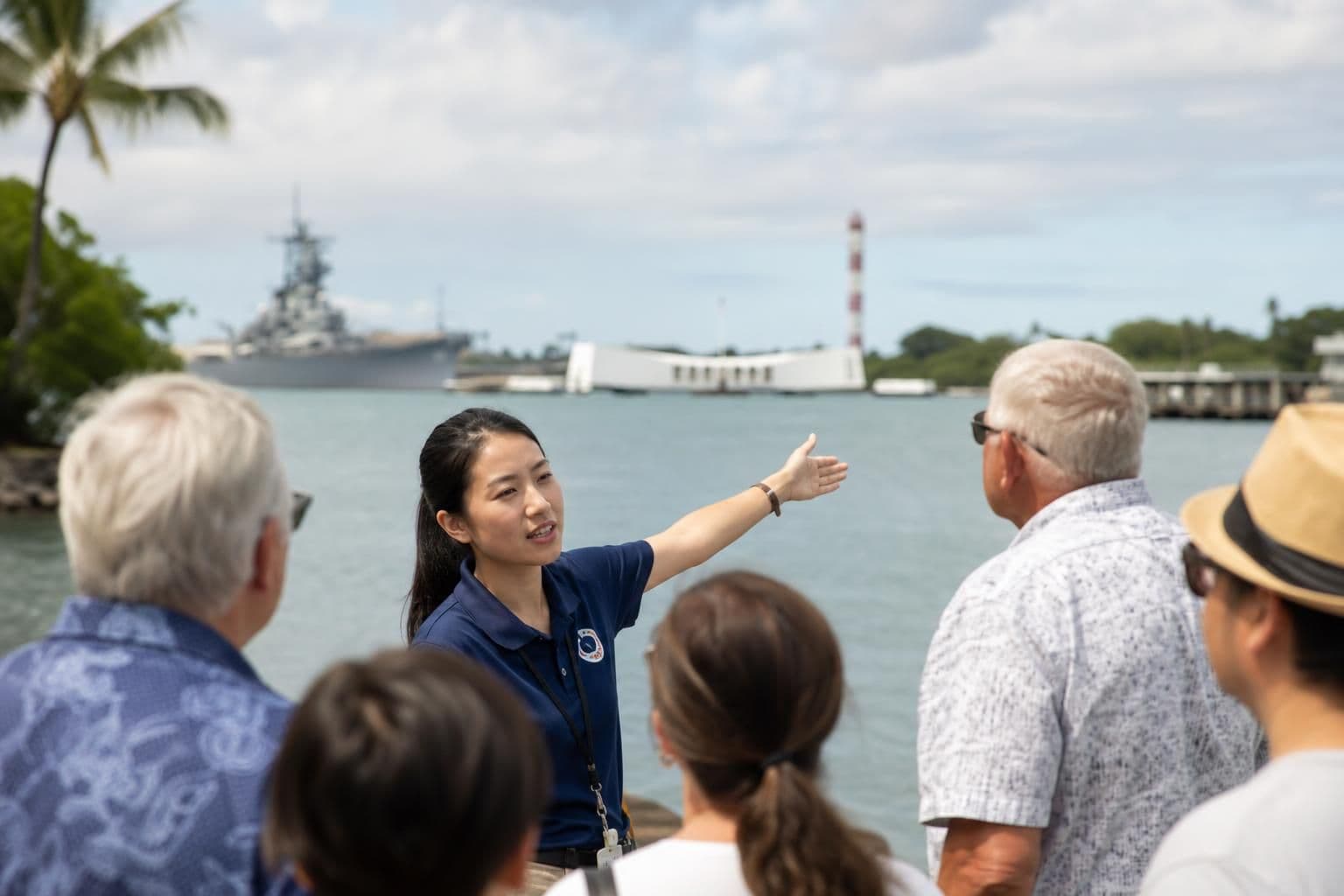
Pearl Harbor Tour with a Japanese-Speaking Guide
Key takeaway
Several Honolulu tour operators offer Pearl Harbor tours with bilingual or Japanese-speaking guides, typically as a scheduled departure or an add-on request rather than the default on every bus. Because USS Arizona Memorial boat access is controlled by the National Park Service through timed tickets, the language of your bus guide is separate from the park ranger narration you'll hear at the memorial itself, which is in English. If a Japanese-speaking guide matters to you, confirm it directly with the operator before booking, since availability depends on the day and departure time.
Key takeaways
- Japanese-guided departures are usually limited to specific days or times, so ask before you book rather than assuming every tour offers one.
- The USS Arizona Memorial boat program is run by the National Park Service, and its film and ranger talk are presented in English regardless of your bus tour's language.
- Printed Japanese-language guides or audio devices are sometimes available at Pearl Harbor National Memorial's visitor center as a supplement to an English-speaking tour guide.
How Japanese-Language Guiding Actually Works on Pearl Harbor Tours
Most Waikiki-based Pearl Harbor bus tours run in English by default, since it's the primary language for the majority of visitors and the National Park Service staff who lead programming at the memorial. Operators that serve Japanese-speaking travelers usually do one of the following: assign a bilingual guide to specific bus departures, offer a private tour where the guide is chosen to match the group's language, or supply a handheld audio translation device for use during the guided portions. None of these replace the ranger-led film and memorial visit, which remain in English, but a bilingual guide can translate the safety briefing, historical context, and site logistics along the way.
If language support is essential to your visit, it's worth booking a guided Pearl Harbor tour from Waikiki with hotel pickup and specifying your language preference when you reserve, since bilingual departures often fill first.
What the National Park Service Provides On-Site
The USS Arizona Memorial visit is operated by the National Park Service, not by private tour companies. Visitors first watch a short orientation film at the visitor center, then take a Navy-operated boat out to the memorial itself, which sits directly above the sunken battleship. According to the National Park Service, same-day and advance tickets for the memorial program are free but limited in number each day, and reservations are strongly recommended because walk-up availability can run out, especially during peak travel seasons. Printed translated materials in several languages, including Japanese, have historically been available at the visitor center desk, though availability can change, so it's worth asking staff on arrival rather than assuming a specific language handout will be there.
Choosing Between a Public, Private, or Custom Group Tour
The type of tour you book affects how much control you have over guide language:
- Public bus tours combine travelers from different hotels onto one bus with one assigned guide; language options depend on that day's scheduled departure.
- Private tours let a family or small group request a specific guide, including a Japanese-speaking one, though this typically requires advance notice and may cost more than a shared departure.
- Custom group tours for schools, corporate teams, or tour groups arriving together can often request a dedicated bilingual guide for the whole group, since the operator is arranging transportation and scheduling around that one party.
If a Japanese-speaking guide is a hard requirement rather than a nice-to-have, a private or custom group booking generally gives you the most certainty, since public departures are subject to whichever guide is rostered that day.
What to Expect at Battleship Missouri and Other Sites
Many Pearl Harbor itineraries extend beyond the USS Arizona Memorial to include the Battleship Missouri, docked on Ford Island, where the formal Japanese surrender was signed on September 2, 1945, ending World War II. The Missouri offers self-guided audio tours in multiple languages, including Japanese, independent of whatever guide leads your bus tour, which can be a useful backup if your bus guide's language coverage is limited. Ford Island also houses the Pacific Aviation Museum, and some full-day itineraries combine two or three of these sites with a single bus ticket and guide.
Practical Tips for Booking a Language-Specific Tour
Because timed-entry tickets and guide assignments are both limited resources, a few habits improve your odds of getting the experience you want:
- Contact the operator directly and ask specifically whether Japanese-speaking guides are available on the date and time you want, rather than relying on general marketing language.
- Book several weeks ahead if possible, since USS Arizona Memorial reservations and bilingual-guide departures both tend to fill before same-week requests.
- Ask whether the memorial-boat program tickets are included in your tour package or need to be reserved separately, since policies vary by operator and by season.
- If exact language matching isn't available on a public departure, ask about private tour pricing or whether an audio translation device can be provided as an alternative.
Pearl Harbor Official and similar Waikiki-based operators generally recommend confirming language needs at the time of booking, since bus departures are scheduled in advance and guide assignments are made ahead of the tour date.
Understanding the Historical Weight of the Visit
Whatever language your guide speaks, the core experience is the same: standing above the wreck of the USS Arizona, where more than 1,100 sailors and Marines remain entombed, in a site the National Park Service manages as both a memorial and an active national cemetery. For Japanese-speaking visitors, including many travelers from Japan who visit specifically to pay respects, a guide who can translate the historical narrative — not just directions and timing — often makes the emotional and educational parts of the visit more accessible. Group organizers bringing school or corporate groups sometimes prepare a short language briefing sheet in advance to align with what the guide will cover onboard.
Frequently Asked Questions
Q: Are all Pearl Harbor bus tours available with a Japanese-speaking guide?
No. Most bus departures run in English by default, and Japanese-speaking guides are typically offered on specific scheduled tours or through private bookings. Always confirm directly with the operator before you book.
Q: Is the USS Arizona Memorial program itself offered in Japanese?
The park film and ranger talk at the National Park Service visitor center are presented in English, though translated printed materials have historically been available on request. Your bus guide's language is separate from the park's own programming.
Q: Does Battleship Missouri offer Japanese-language options?
Yes, the Battleship Missouri typically offers self-guided audio tours in multiple languages, including Japanese, which operate independently of whatever guide leads your bus tour.
Q: How far ahead should I book a Japanese-guided Pearl Harbor tour?
Booking several weeks in advance is advisable, since both memorial tickets and bilingual guide departures are limited and tend to fill before last-minute travelers can reserve them.
Q: Is a private tour the best option if I need a Japanese-speaking guide?
A private or custom group tour usually offers the most certainty, since you can request a specific guide language when arranging the booking, unlike a shared public departure where the guide is assigned for that day.