Pearl Harbor Wheelchair Accessible Tour: A Planning Guide
Key takeaway
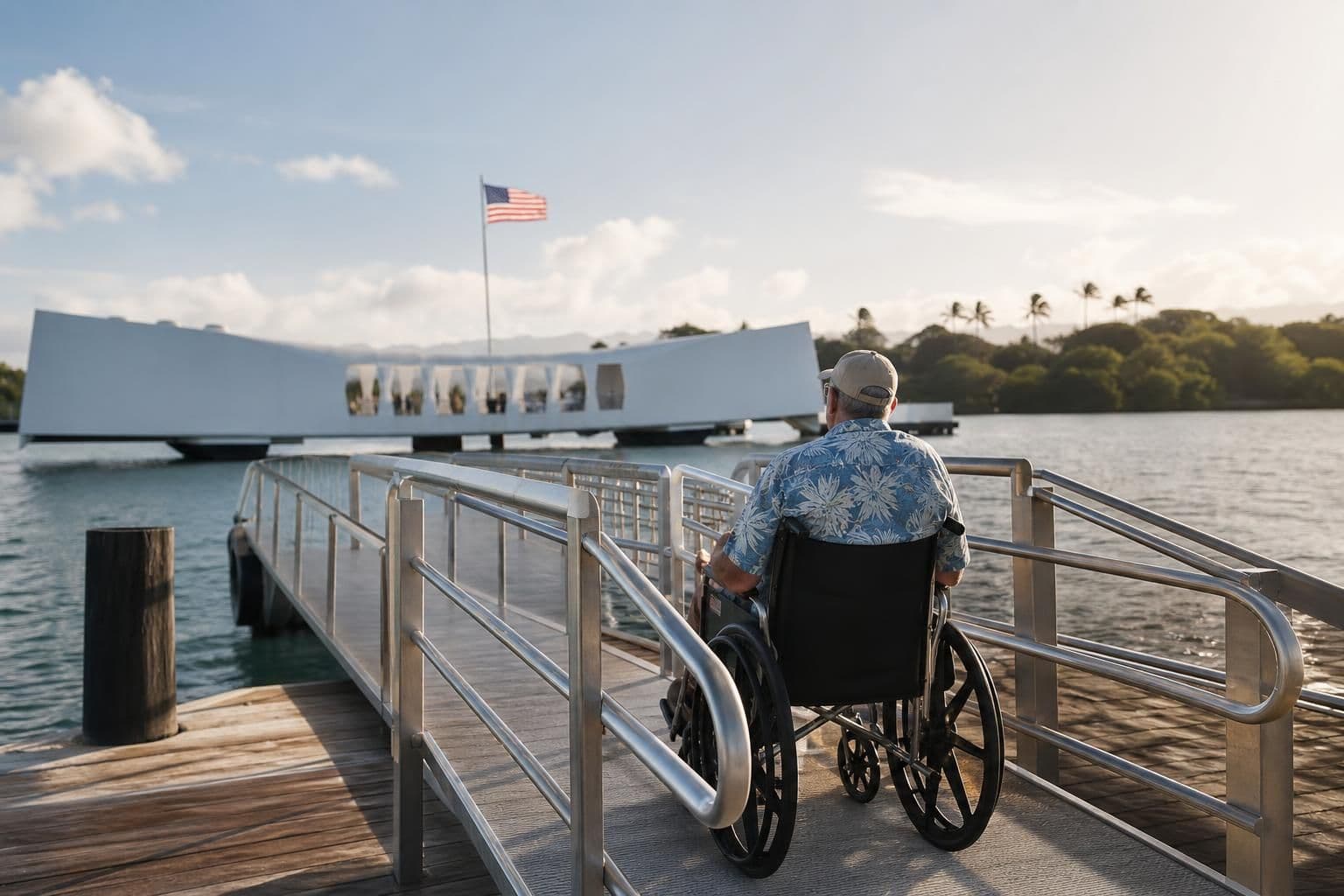
Pearl Harbor and the USS Arizona Memorial are accessible to wheelchair users: the National Park Service shuttle boats to the memorial have wheelchair-securement spaces, the visitor center and museum grounds are step-free, and Battleship Missouri and Pacific Aviation Museum both offer elevators or ramps to upper decks and exhibit halls. Guided bus tours with accessible vehicles can handle hotel pickup, transfers, and timed memorial tickets so travelers using wheelchairs or with mobility limitations don't have to coordinate each leg separately.
Key takeaways
- The USS Arizona Memorial shuttle boat has a designated wheelchair space on each trip; arrive early since capacity per boat is limited.
- Battleship Missouri has elevators to the main deck and interior spaces, but some historic areas below deck remain stairs-only.
- Booking a guided tour with an accessible bus removes the guesswork around parking, transfers, and coordinating separate tickets for each site.
What "accessible" actually means at each Pearl Harbor site
Pearl Harbor isn't a single building — it's a cluster of sites (the visitor center, the USS Arizona Memorial itself, Battleship Missouri, the USS Bowfin submarine, and Pacific Aviation Museum on Ford Island), and accessibility varies by site.
- Visitor center and grounds: paved, step-free pathways connect the entry, museum exhibits, bookstore, and dock area.
- USS Arizona Memorial: reached only by a National Park Service shuttle boat; the memorial structure itself is step-free once you're aboard, with railings along the open-air walkways.
- Battleship Missouri: elevators serve the main deck and several interior exhibit spaces; the engine room and some crew quarters are accessible only via stairs or ladders due to the ship's original construction.
- USS Bowfin submarine: the interior of a WWII fleet submarine involves narrow hatches and ladders and is generally not wheelchair accessible; an above-deck viewing area is typically available instead.
Because the memorial can only be reached by boat, and boat capacity is limited, the National Park Service manages timed-entry tickets to the USS Arizona Memorial program to control crowding and boarding.
Getting to the USS Arizona Memorial in a wheelchair
The memorial shuttle boats are operated by the Navy and NPS staff, and each boat includes a secured space for a wheelchair rather than requiring transfer to a standard seat. Staff at the dock typically ask wheelchair users to board first or in a designated order so the chair can be locked in place before the boat departs. Because the ride is short — a few minutes each way across the harbor — most wheelchair users find the boat itself the easiest part of the visit; the bigger planning factor is arriving with enough buffer time before your assigned shuttle slot, since tickets are tied to a specific departure window and are not reissued if you miss it.
If you're joining a group or guided outing, a guided Pearl Harbor tour with Waikiki hotel pickup can build that buffer into the schedule automatically, since the bus arrival time is planned around the reserved memorial ticket rather than the other way around.
Battleship Missouri and Ford Island accessibility
Battleship Missouri Memorial sits on Ford Island, a short shuttle bus ride from the main Pearl Harbor visitor center across the Admiral Clarey Bridge. The ship has been retrofitted with elevators connecting the pier-level entrance to the main deck, where most exhibits, the surrender deck, and the ship's store are located. Wheelchair users can typically cover the majority of the self-guided or docent-led route this way. Areas like the engine room, bridge tower, and some berthing compartments require navigating steep interior ladders original to the ship's 1944 construction, and those sections are not retrofitted for wheelchair access.
Pacific Aviation Museum, also on Ford Island, is housed in restored hangars with level concrete floors throughout both exhibit hangars, making it one of the more straightforward stops for wheelchair users touring Ford Island.
Planning logistics: parking, shuttles, and timing
A few practical details make the difference between a smooth visit and a stressful one:
- Accessible parking is available near the visitor center, but the lot fills early, particularly in mid-morning; arriving before 8:30 a.m. improves your odds of a close spot.
- Security screening at the entrance uses a walk-through process similar to airport screening; wheelchairs and mobility devices go through separately from bag screening, and staff can assist with the process.
- Restrooms and shaded seating are available near the visitor center and dock area, useful for breaking up a visit that otherwise involves a fair amount of outdoor waiting between the museum, shuttle boat, and Ford Island ferry.
- Personal care items like collapsible wheelchairs, medical bags, and diaper bags are generally permitted; large bags and backpacks are not allowed inside the memorial complex, per posted NPS visitor guidelines.
Group and family travelers coordinating a Pearl Harbor tour from Waikiki often find that having a single bus handle hotel pickup, parking, and the walk to the ticket counter reduces the number of separate accessibility questions they'd otherwise have to solve piecemeal.
What guided tours can and can't control
A guided bus tour can reserve memorial tickets in advance, plan pickup timing around your shuttle boat window, and use a bus equipped to accommodate a wheelchair or mobility scooter for the ride from Waikiki or Ko Olina. What a tour operator cannot change is the physical layout of an 80-year-old battleship or a WWII-era submarine — those constraints come from the historic structures themselves, not from how the tour is booked. When comparing tour options, it's worth asking directly whether the vehicle has a lift or ramp, how many wheelchair spaces it holds, and whether the itinerary allows enough time at each stop for a slower pace, since the Americans with Disabilities Act sets standards for transportation accessibility that reputable operators design their vehicles and booking processes around.
Frequently Asked Questions
Q: Is the USS Arizona Memorial wheelchair accessible?
Yes. The memorial is reached by a National Park Service shuttle boat with a designated wheelchair-securement space, and the memorial structure itself is step-free once aboard.
Q: Can a wheelchair user tour Battleship Missouri?
Most of the main deck and primary exhibit areas are reachable by elevator, but some original spaces like the engine room and bridge require stairs or ladders that haven't been retrofitted.
Q: Is the USS Bowfin submarine accessible?
No, the submarine's interior involves narrow hatches and ladders that aren't wheelchair accessible, though an above-deck viewing area is typically available.
Q: Do I need to request accessibility accommodations in advance?
It's a good idea to mention mobility needs when booking a tour or reserving memorial tickets so pickup timing, vehicle type, and shuttle boarding order can be planned ahead of your visit.
Q: Are large bags allowed if I need to carry medical equipment?
Personal medical items and mobility aids are generally permitted, but large bags and backpacks are restricted inside the Pearl Harbor memorial complex, so it helps to pack light and check current entry rules before arrival.