What Happened at Pearl Harbor on December 7, 1941?
Key takeaway
On the morning of December 7, 1941, Japan launched a surprise military attack on the United States naval base at Pearl Harbor, Oahu, sending 353 aircraft in two waves against ships, aircraft, and airfields. The attack killed 2,403 Americans and sank or damaged 19 U.S. Navy vessels, including the USS Arizona, which lost 1,177 crew members in under nine minutes. The next day, President Franklin D. Roosevelt asked Congress for a declaration of war against Japan, bringing the United States into World War II.
Key takeaways
- The attack lasted about 90 minutes, in two waves starting at 7:55 a.m. Hawaii time.
- The USS Arizona alone accounts for nearly half of all American deaths that day.
- The site is now a working memorial and cemetery, not just a historical landmark, so visiting requires the same quiet respect owed to any grave site.
The Timeline of the Attack
Japanese carrier-based aircraft launched from six aircraft carriers positioned roughly 230 miles north of Oahu. The first wave of 183 planes struck shortly before 8:00 a.m., targeting Battleship Row and nearby airfields to cripple U.S. air defenses before the second wave arrived. A second wave of 170 aircraft followed around 8:40 a.m., focusing on ships that had survived the initial assault and on hangars at Hickam, Wheeler, and Bellows fields. By 9:45 a.m., the attack was over, according to the National Park Service, which now administers the Pearl Harbor National Memorial.
Why the Attack Happened
Japan's military leadership sought to neutralize the U.S. Pacific Fleet before expanding its control across Southeast Asia and the Pacific, where it wanted access to oil, rubber, and other resources the United States had restricted through trade embargoes. Japanese planners believed a decisive strike would buy time to secure those territories before the U.S. Navy could respond. The attack was intended to be a knockout blow, not the opening move of a prolonged war — a miscalculation that shaped the rest of the conflict.
What Was Destroyed and Lost
The human and material toll was concentrated in a narrow stretch of harbor known as Battleship Row.
- Four battleships sank, including the USS Arizona and USS Oklahoma.
- Four additional battleships were damaged but later repaired and returned to service.
- Nearly 350 aircraft were destroyed or damaged, most while still parked on the ground.
- Total American deaths reached 2,403, with more than 1,000 additional people wounded.
The USS Arizona could not be raised like most of the other damaged ships; a magazine explosion had broken the ship apart, and it remains on the harbor floor today, still holding the remains of most of the sailors and Marines who died aboard it.
Why the USS Arizona Became the Symbol of the Attack
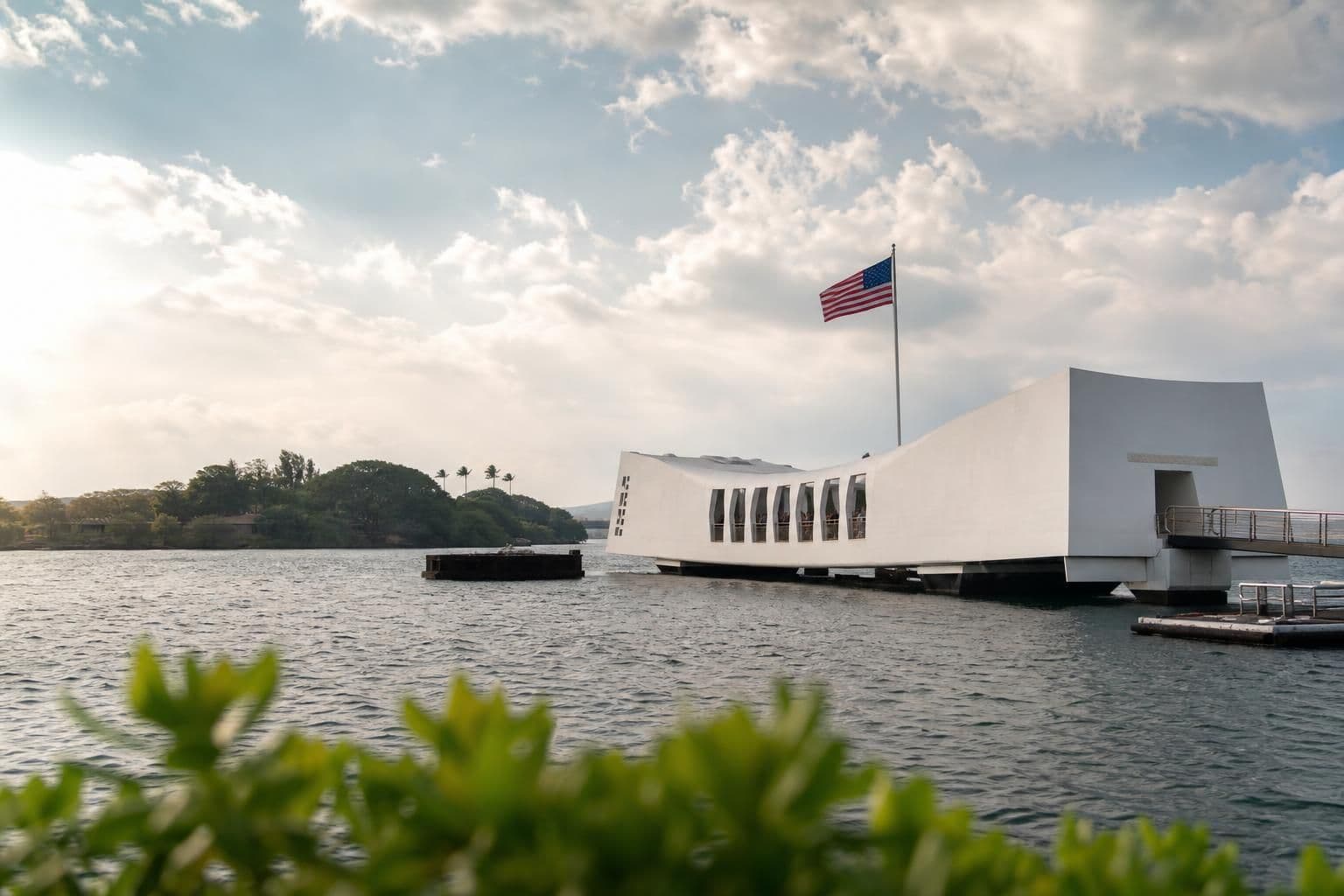
The Arizona's forward ammunition magazine detonated after being struck by an armor-piercing bomb, and the resulting explosion sank the ship in minutes. Because recovering the remains was not feasible, the U.S. Navy designated the wreck a permanent gravesite, and the white memorial structure built over it in 1962 straddles the sunken hull without touching it. Visitors can still see oil occasionally rising from the wreckage — sometimes called "the tears of the Arizona" — more than eight decades later. For travelers planning a visit around the anniversary date itself, this guide to visiting on December 7 covers what's different about that day, including memorial ceremonies and access changes.
How the Attack Changed the Course of the War
On December 8, 1941, Congress approved Roosevelt's request for a declaration of war against Japan with only one dissenting vote. Germany and Italy, allied with Japan, declared war on the United States days later, pulling the country fully into both the Pacific and European theaters. The attack ended a period of American isolationism and mobilized the country's industrial base for a war effort that would last nearly four more years, according to the U.S. National Archives.
Visiting the Sites Where It Happened Today
The USS Arizona Memorial sits directly above the sunken battleship in Pearl Harbor, and access is managed through timed, reserved tickets rather than walk-up entry, since the National Park Service limits how many visitors move through the site each day. Guided bus tours from Waikiki typically combine the memorial with nearby sites like Battleship Missouri and Ford Island, which lets visitors understand the full arc of the war from its start at Pearl Harbor to Japan's formal surrender aboard the Missouri in 1945. Pearl Harbor Official operates guided tours built around this reserved-ticket structure, with hotel pickup from Waikiki and Ko Olina, which removes the guesswork of navigating base security and parking on your own.
Because tickets are limited and often booked well ahead, it helps to understand your options before you land — including what to do if same-day memorial tickets are unavailable. Deciding how much time to set aside also matters: some visitors budget only a few hours, while others spend most of a day moving between the memorial, the museum, and Battleship Missouri, a question covered in detail in this breakdown of how long a full Pearl Harbor visit takes.
Frequently Asked Questions
Q: How many people died at Pearl Harbor on December 7, 1941?
A total of 2,403 Americans were killed in the attack, and more than 1,000 others were wounded. The USS Arizona accounted for 1,177 of those deaths, nearly half the total.
Q: How long did the attack last?
The attack unfolded in two waves over roughly 90 minutes, beginning around 7:55 a.m. and ending by about 9:45 a.m. Hawaii time on December 7, 1941.
Q: Why can't the USS Arizona be raised from the harbor?
A magazine explosion broke the ship's structure apart when it sank, making recovery impractical, and the Navy instead designated the wreck a permanent gravesite for the sailors and Marines still aboard. The memorial built above it in 1962 does not touch the hull.
Q: Did the attack lead directly to the United States entering World War II?
Yes. Congress declared war on Japan on December 8, 1941, the day after the attack, and Germany and Italy declared war on the United States shortly after, pulling the country into both the Pacific and European theaters.
Q: Can visitors still see the USS Arizona today?
Yes, the USS Arizona Memorial stands directly above the sunken ship and is open to the public through timed, reserved tickets managed by the National Park Service. Many visitors combine the memorial with a guided tour that also includes Battleship Missouri and Ford Island.