Espresso Maker for Beginners: A Simple Starter Guide
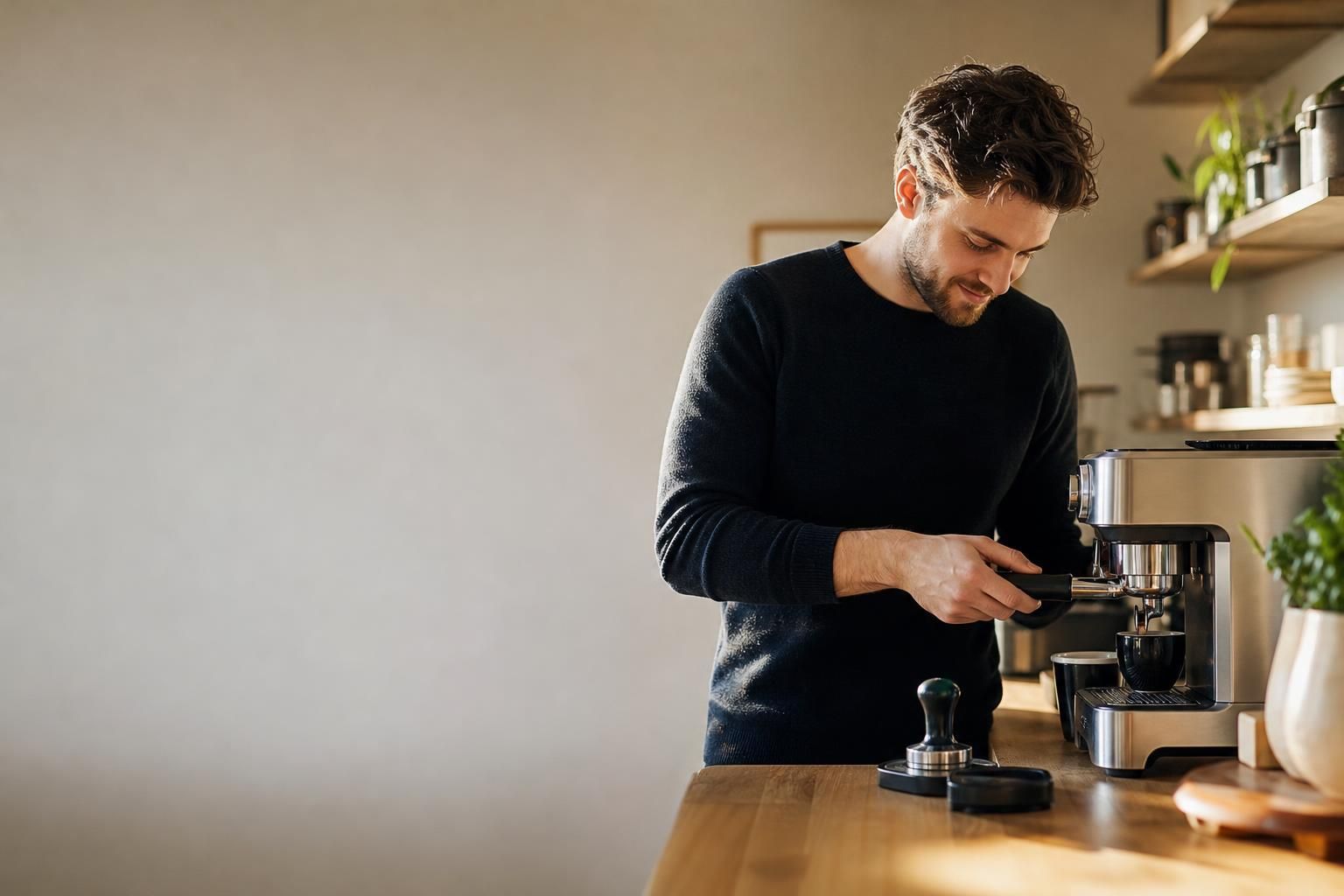
Key takeaway
The best espresso maker for beginners is one with few manual settings, a built-in milk frother, and clear water/dose markings — this usually means a semi-automatic or capsule-free pump machine rather than a manual lever press. Beginners generally get more consistent shots from machines that control pressure and temperature automatically, since those are the two variables most new users get wrong first.
Key takeaways
- Look for a machine with preset pressure and auto-shutoff rather than a manual lever, so you're only learning grind and dose, not pressure timing.
- Use pre-ground espresso roast or a burr grinder set fine; blade grinders produce uneven grounds that cause sour or bitter shots.
- Descale every 4-8 weeks depending on water hardness to protect the pump and keep flavor consistent.
What Makes an Espresso Maker "Beginner-Friendly"?
Espresso requires forcing hot water through finely-packed coffee at roughly 9 bars of pressure, a method first commercialized in Italy in the early 1900s and standardized by machine makers through the 20th century, according to the National Coffee Association. A beginner-friendly machine handles that pressure automatically so the user only manages two variables: grind size and dose weight. Machines that require manual pressure control (like lever or piston models) add a third variable that takes longer to master.
For someone making their first purchase, a compact all-in-one unit that combines grinding-ready design, steaming, and brewing in one body reduces the number of separate tools and settings to learn. Valenza's 3-in-1 Espresso Maker is built around that idea — combining the core functions a new user needs into a single countertop unit instead of separate machines for brewing and frothing.
Types of Espresso Makers to Consider
Not every machine labeled "espresso maker" works the same way. Broadly, beginners run into three categories:
- Pump-driven semi-automatics — electric pump controls pressure; user controls grind, dose, and tamp.
- Capsule/pod machines — pressure and dose are pre-set by the pod; fastest learning curve but less control over the final cup.
- Manual lever or moka-style brewers — no electric pump; pressure or steam comes from the user's own hand or stovetop heat, and the learning curve is steepest.
If you want more control than a pod machine but don't want a separate grinder and steamer taking up counter space, a compact semi-automatic or all-in-one unit is usually the easier starting point. For a side-by-side look at ongoing costs between these categories, the espresso maker cost breakdown covers what pods, beans, and maintenance typically add up to over time.
What to Look for Before You Buy
A short checklist keeps the decision simple instead of overwhelming:
- Automatic pressure control — removes one of the hardest variables for new users.
- Built-in milk frother or steam wand — lets you make lattes and cappuccinos without a separate tool.
- Clear water reservoir markings — helps you measure consistently shot after shot.
- Removable, dishwasher-safe parts — faster cleanup means you'll actually maintain the machine.
- Compact footprint — matters if you're working with limited counter space, a common issue in small kitchens; see gadgets for small apartments for more space-saving picks.
If you expect to travel or work from different locations often, a dedicated compact or travel unit may suit you better than a countertop model — the portable espresso maker guide walks through what changes when portability is the priority.
Basic Steps to Pull Your First Shot
- Fill the water reservoir to the marked line — overfilling can flood the brew chamber.
- Add finely-ground espresso roast to the portafilter or basket; a standard single shot uses about 7-9 grams of coffee, per general brewing guidelines from the Specialty Coffee Association.
- Tamp the grounds level and firm, but don't force it — even pressure matters more than hard pressure.
- Lock the portafilter or basket in place and start the brew cycle.
- Watch the extraction: a shot should typically finish in 20-30 seconds and look thick, not watery.
- Froth milk separately if your machine includes a steam function, then combine.
If a shot runs too fast and thin, the grind is likely too coarse. If it runs too slow and bitter, it's likely too fine — adjust one notch at a time and test again.
Common Beginner Mistakes
New users tend to repeat the same few errors:
- Using drip-ground coffee instead of an espresso-fine grind, which under-extracts and tastes sour.
- Skipping the preheat cycle, which leaves the first shot noticeably cooler than the rest.
- Overfilling the portafilter, which blocks even water flow and produces uneven extraction.
- Ignoring water quality — hard water speeds up mineral buildup inside the boiler and pump.
Maintenance and Cleaning Basics
Mineral buildup from tap water is the main reason espresso machines lose pressure or leak over time. The U.S. Environmental Protection Agency notes that water hardness varies significantly by region, which is part of why descaling frequency isn't one-size-fits-all — machines in hard-water areas may need descaling closer to every 4 weeks, while soft-water areas can often stretch to 8 weeks or more. Wipe down the steam wand after every use (dried milk is harder to remove and can clog the tip), and empty the drip tray daily so standing water doesn't attract bacteria or odor.
If you're shopping for a coffee-loving friend or family member rather than yourself, the ideas in gifts for a coffee lover cover a few accessory options beyond the machine itself.
Frequently Asked Questions
Q: Do I need a separate grinder for an espresso maker?
Not if your machine accepts pre-ground espresso roast, but a burr grinder gives more control over freshness and grind size as you improve. Blade grinders are not recommended because they cut unevenly, which leads to inconsistent shots.
Q: How much pressure does a real espresso shot need?
Most standard espresso machines are built to deliver around 9 bars of pressure during extraction, which is the industry reference point cited by groups like the Specialty Coffee Association. Machines with lower fixed pressure can still produce coffee, but it may not meet the traditional espresso definition.
Q: Is a capsule machine better for beginners than a manual one?
Capsule machines have the shortest learning curve since pressure and dose are pre-set, but they offer less control over strength and flavor than a semi-automatic machine. If you'd rather avoid pods long-term, the espresso maker without pods guide compares pod-free alternatives.
Q: How long should an espresso shot take to pull?
A typical single or double shot finishes in about 20-30 seconds from the time water first hits the coffee. A much faster shot usually means the grind is too coarse, and a much slower one usually means it's too fine.
Q: How often should I descale a new espresso machine?
Descaling every 4-8 weeks is a common general guideline, depending on how hard your tap water is and how often you use the machine. Checking your local water hardness report, which the EPA publishes resources on, can help you pick a more exact schedule.