How Do Resistance Bands Work? A Simple Explanation
Key takeaway
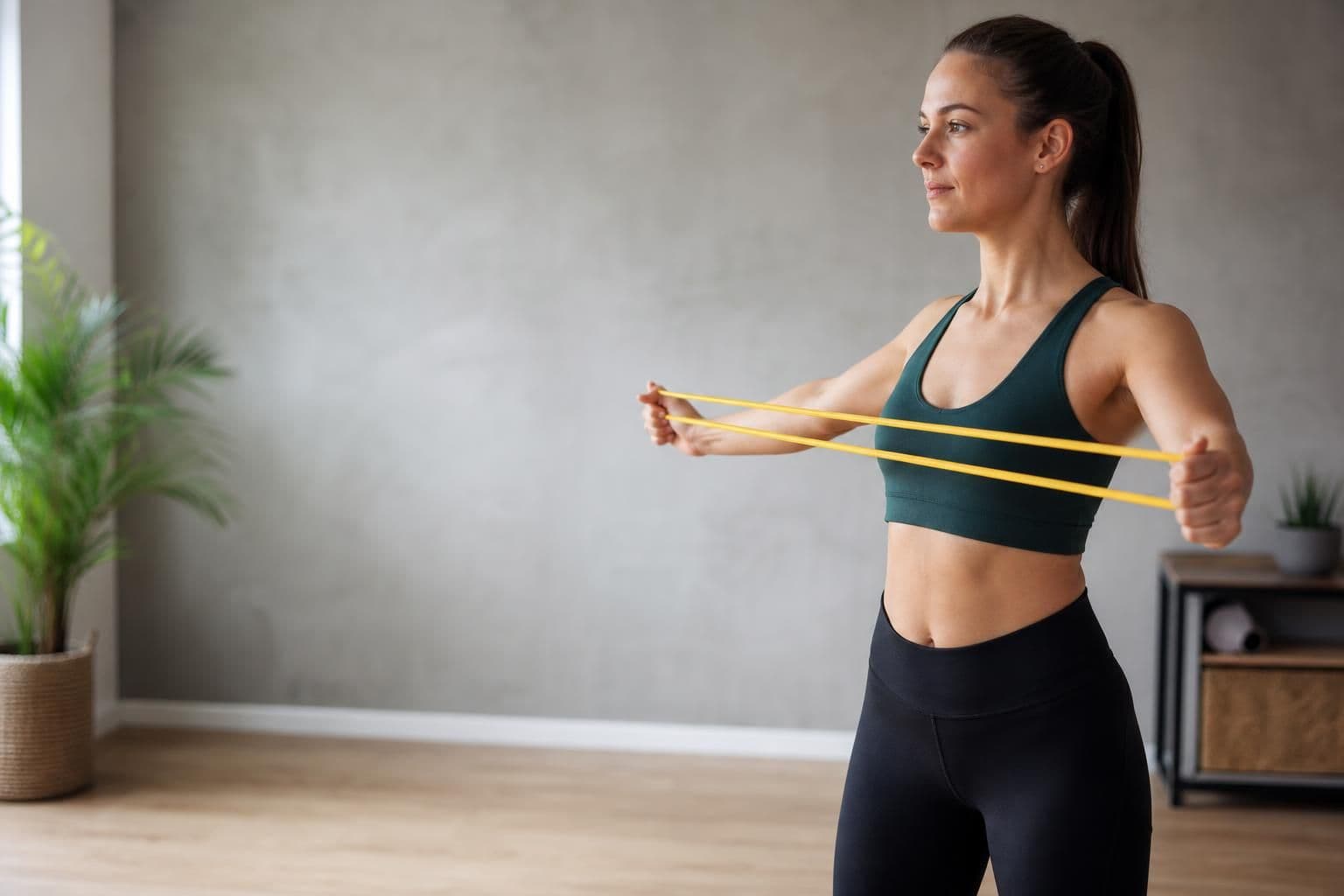
Resistance bands work by stretching to create tension that your muscles have to fight against, and that tension gets stronger the farther you stretch the band. This is called variable resistance — unlike a dumbbell, which weighs the same at every point of a movement, a band gets harder to pull the closer you get to full extension. That changing load is what makes bands useful for building strength, improving mobility, and rehabbing injuries without needing heavy equipment.
Key takeaways
- Resistance bands rely on variable resistance: tension increases as the band stretches further, unlike the constant load of free weights.
- Color-coded bands (light to extra-heavy) let you match resistance to the exercise and your current strength.
- Bands are commonly used for strength training, physical therapy, and mobility work because they're low-impact and joint-friendly.
The Basic Mechanics of Resistance Bands
A resistance band is made of stretchable material, usually latex or a synthetic rubber blend, that stores elastic energy when pulled. As you stretch it, the material resists being deformed and pulls back toward its original shape — that pull-back force is the resistance your muscles work against.
The key difference from traditional weights is the resistance curve. With a dumbbell, gravity applies a constant force no matter where your arm is in the movement. With a band, resistance starts low and builds progressively as it stretches, which means the hardest part of the movement is usually the top of the rep, not the bottom. This makes bands especially effective for exercises like rows, presses, and squats, where muscles are often strongest at full extension.
Types of Resistance Bands and What They're Good For
Not all bands are built the same, and the type affects how you'll use them:
- Loop bands — continuous loops of rubber, often used for lower-body work like glute bridges or lateral walks.
- Tube bands with handles — resemble cables and are common for upper-body strength exercises like curls and presses.
- Flat therapy bands — thin and non-tubular, frequently used in physical therapy and rehab settings for controlled, low-load movements.
Most bands are also color-coded by resistance level, from light to extra-heavy, a system that traces back to physical therapy supply companies standardizing tension levels so patients could progress predictably. Picking the right level matters: too light and you won't challenge the muscle, too heavy and your form breaks down.
Why Resistance Bands Are Used in Strength Training and Rehab
Bands are popular in both gyms and clinics because they're low-impact on joints while still creating real muscular tension. Physical therapists often use them for controlled range-of-motion work after an injury, since the resistance can be dialed up gradually as strength returns. The Mayo Clinic notes that resistance-based exercise, including bands, is a common component of rehabilitation programs because it allows graded loading without the joint stress of free weights.
For general strength training, the CDC's physical activity guidelines recommend muscle-strengthening activities for all major muscle groups at least twice a week — resistance bands are one accessible way to meet that without needing a full weight rack, which is part of why they've become a staple for home workouts and office stretch breaks alike.
How Resistance Bands Compare to Weights
Bands and weights both build strength, but they load muscles differently:
- Constant vs. variable load — weights apply the same resistance throughout a rep; bands increase resistance as they stretch.
- Portability — a set of bands weighs a fraction of a dumbbell set and rolls up small enough for a bag or suitcase.
- Joint stress — bands generally place less shock load on joints, which is why they're favored in early-stage rehab.
- Cost and space — bands are cheaper and take up almost no storage space compared to a weight rack.
Neither is strictly better — many strength programs use both, with bands adding accommodating resistance to barbell lifts or serving as a standalone option when space or mobility is limited.
Choosing the Right Resistance Level
Start by picking a band that lets you complete 10-15 controlled reps of an exercise with the last two or three feeling genuinely hard. If you can breeze through 20 reps without fatigue, size up. If your form collapses before rep 8, size down. Because resistance builds through the stretch, the same band can feel light at the start of a movement and quite heavy near full extension — that's expected, not a sign you picked the wrong one.
If you're building a small home or office setup for regular stretch breaks, it's worth pairing bands with a stable, comfortable spot to work from — something covered in this guide to office desk accessories that actually improve your workday.
Safety Basics
Bands are generally low-risk, but a few habits prevent most injuries:
- Check for nicks or thinning material before each use — a worn band can snap under tension.
- Anchor the band securely; a slipped anchor point is the most common cause of band-related injury.
- Control the return phase of the movement instead of letting the band snap back, which keeps tension on the muscle and reduces joint strain.
The American Council on Exercise recommends inspecting bands regularly and replacing them once they show visible wear, since elastic materials degrade with repeated stretching and UV exposure over time.
Because bands pack flat and weigh almost nothing, they're also a popular add-on for anyone traveling with workout gear — something touched on in this rundown of travel gadgets that actually earn their carry-on space. If you're looking for something to keep bands, shoes, and gym clothes organized in one place, a Magnetic Gym Bag can be a simple way to keep a home band routine grab-and-go.
Frequently Asked Questions
Q: Do resistance bands actually build muscle?
Yes. Bands create mechanical tension on muscle fibers, which is the same basic stimulus that drives strength adaptation with free weights, provided the resistance is challenging enough for the exercise.
Q: How do I know what resistance level to start with?
Choose a band that lets you complete 10-15 reps of an exercise with the last few feeling difficult but controlled; if your form breaks down early, drop to a lighter band.
Q: Are resistance bands safe for beginners?
Generally yes — they're low-impact and adjustable, but beginners should inspect bands for wear before each session and anchor them securely to avoid snap-back injuries.
Q: What's the difference between loop bands and tube bands?
Loop bands are continuous circles of rubber often used for lower-body exercises, while tube bands have handles and are more commonly used for upper-body movements like rows and presses.
Q: Can resistance bands replace weights entirely?
They can for many goals, especially mobility, rehab, and general strength maintenance, but bands and weights load muscles differently, so many training programs use both rather than choosing one exclusively.