How Does a Magnetic Phone Mount Work?
Key takeaway
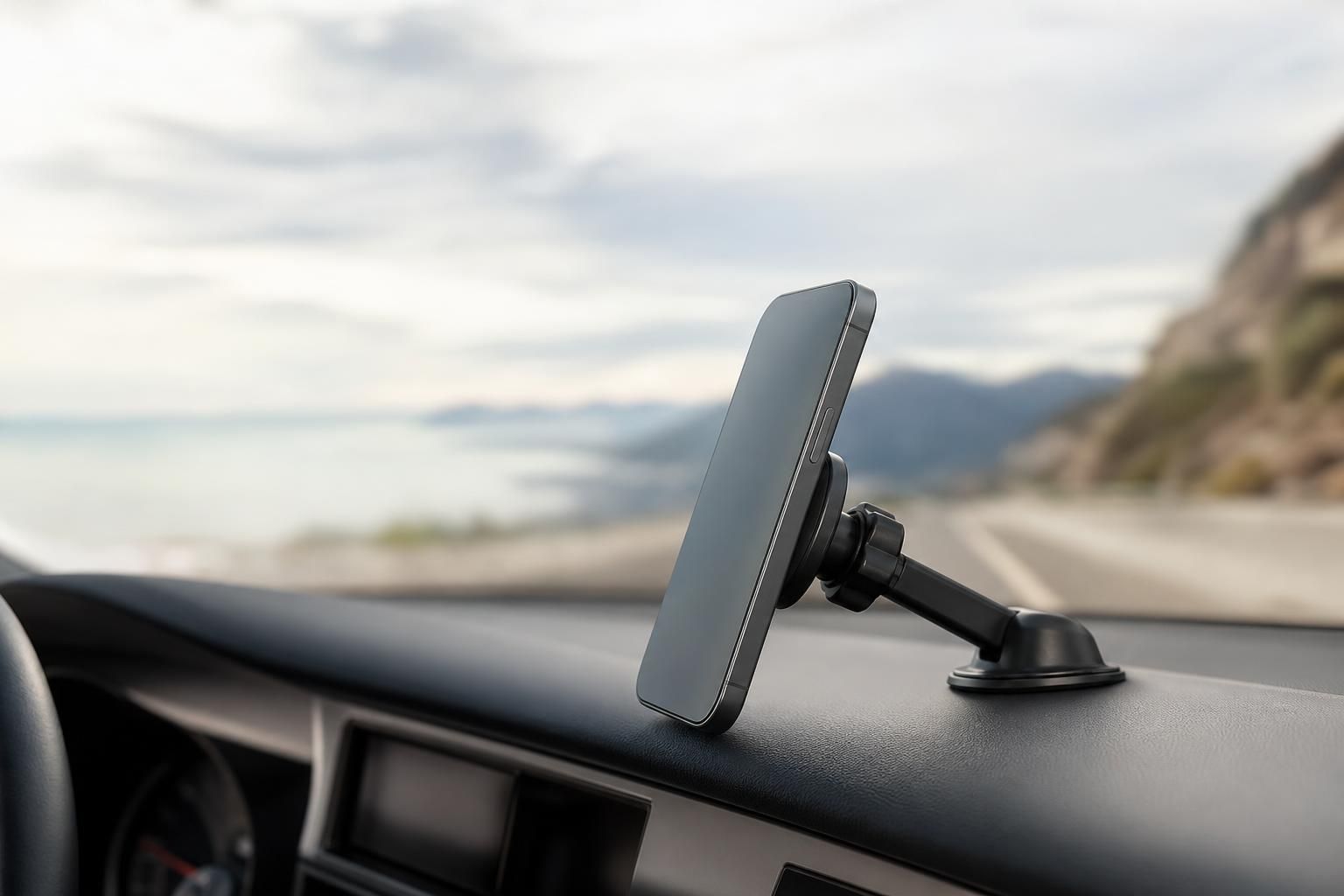
A magnetic phone mount works by pairing a strong permanent magnet, usually neodymium, with a thin metal plate attached to your phone or case. The magnet's field pulls the plate toward it and holds it in place through friction and magnetic force rather than clips, clamps, or suction. Because the hold depends on magnet strength and plate contact, alignment and surface flatness matter more than how "sticky" the mount looks.
Key takeaways
- The hold comes from a neodymium magnet attracting a metal plate on your phone or case — no mechanical clamp is involved.
- Thicker cases, wallets, or PopSockets weaken the magnetic connection because they increase the gap between magnet and plate.
- Keep magnetic mounts away from items with magnetic stripes (hotel keys, older credit cards) and ask a doctor before use near a pacemaker or ICD.
The Magnet Science Behind the Hold
Most magnetic phone mounts use neodymium (NdFeB) magnets, which are rare-earth magnets known for producing a strong magnetic field relative to their size. This is why a mount small enough to fit on a car vent can still support the weight of a phone, even while driving over bumps. The strength of the hold is generally described by manufacturers as "pull force," rated in pounds — it's a useful spec to compare, but always check the actual product listing rather than assuming one mount matches another just because both say "magnetic."
What's Actually in a Magnetic Mount Kit
A typical kit includes three parts:
- The mount base — attaches to a vent, dashboard, windshield, or desk using a clip, adhesive pad, or vent clamp.
- The magnetic head — the visible disc or array of magnets the phone sits against.
- The metal plate(s) — thin adhesive-backed plates you stick inside or behind your case so the phone itself can respond to the magnet.
Some phones with built-in magnetic charging systems skip the plate step entirely because the alignment ring is already inside the phone. Everyone else needs the plate for the connection to work.
Where Magnetic Mounts Work Best
Magnetic mounts are popular in cars because they let you glance at navigation without picking the phone up, and because the mount itself takes up very little dashboard or vent space. They also work well on desks, refrigerators, and metal shelving for hands-free video calls or recipe-following. A multi-angle option like the 5-in-1 Magnetic Phone Stand is built around this same magnet-and-plate concept, letting one mount shift between car, desk, and bedside use depending on the angle you need.
If you're setting up a hands-free view for something other than a phone — like a wearable camera — the mounting logic is different since those rely on clips or straps rather than magnets; see our wearable camera mount ideas for that use case.
Magnetic Mounts and Wireless Charging
Some magnetic mounts are designed to work alongside wireless charging, using a ring of magnets to center the phone over a charging coil — Apple's MagSafe system is the best-known example of this alignment approach. Not every magnetic mount supports charge-through, though. A plate-based mount holds the phone magnetically but does not transmit power unless the mount specifically includes a charging coil. Check a product's own listing for charging claims rather than assuming all magnetic mounts behave the same way.
Safety Notes Worth Knowing
Magnets strong enough to hold a phone can also affect nearby magnetic-stripe cards, older hotel key cards, and external hard drives if placed directly against them for extended periods. The American Heart Association notes that people with pacemakers or implantable defibrillators should keep strong magnets, including those in phone cases and mounts, at a reasonable distance from the device and consult their doctor about specific precautions — see the American Heart Association for general guidance on living with an implanted device.
Mounting a phone in a vehicle also intersects with distracted-driving rules. The National Highway Traffic Safety Administration recommends setting up navigation and mount position before driving, not while the vehicle is moving, since manual adjustment is one of the most common forms of distracted driving.
Choosing One That Actually Fits Your Case
Case thickness is the single biggest factor in whether a magnetic mount feels secure or flimsy. Thick rugged cases, wallet cases, and cases with built-in kickstands all add distance between the phone and the mount's magnet, weakening the hold even if the magnet itself is strong. If your case is bulky, look for a mount or plate kit designed with a slightly stronger pull rating, and check whether the plate needs to sit inside the case rather than behind it.
Frequently Asked Questions
Q: Will a magnetic mount work with any phone case?
It works with most slim and mid-thickness cases once a metal plate is attached, but very thick, textured, or wallet-style cases can weaken the magnetic hold enough that the phone slips.
Q: Does a magnetic mount affect phone charging or the battery?
A standard magnetic mount does not drain or damage the battery; it only affects charging if the mount includes a wireless charging coil, in which case charge-through depends on alignment with the phone's coil.
Q: Are magnetic phone mounts safe for pacemakers?
People with pacemakers or ICDs should keep strong magnets at a safe distance and check with their doctor, since medical guidance on implanted devices varies by individual case; this is general information, not medical advice.
Q: Do magnetic mounts damage credit cards or hard drives?
Brief contact is usually fine, but prolonged direct contact with a strong magnet can disrupt magnetic-stripe cards and, in rare cases, older spinning hard drives, so it's safer to keep those items away from the mount.
Q: Why does my phone keep falling off a magnetic mount?
The most common causes are a thick case adding too much distance from the magnet, a misaligned metal plate, or a magnet that isn't rated for the phone's weight — repositioning the plate or using a stronger-rated mount usually fixes it.