How to Organize Your Car Trunk for Road Trips
Key takeaway
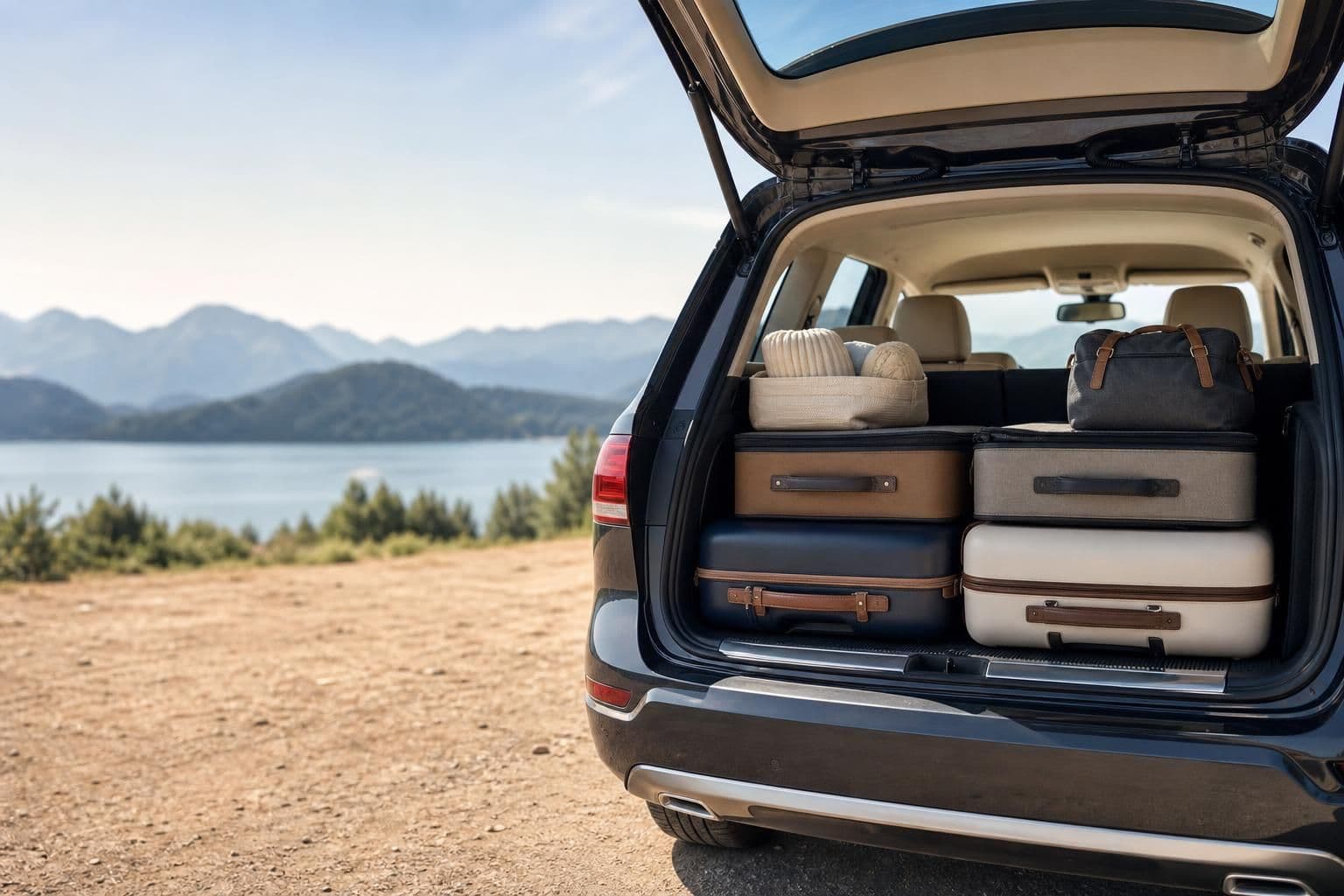
To organize your car trunk for a road trip, group items by category (luggage, food, emergency gear, recreation), place heavy items flat against the seatback and low in the trunk, and keep anything you'll need mid-drive — snacks, chargers, a first-aid kit — in a bin near the opening. Use soft-sided bags instead of hard suitcases where possible since they flex into gaps, and leave a clear sightline through the rear window if you're stacking items above the seat line.
Key takeaways
- Pack heaviest items low and against the back seat, lightest items on top and near the opening.
- Use labeled bins or bags by category so nothing gets buried for a mid-trip stop.
- Secure loose gear — unrestrained cargo becomes a safety hazard during sudden braking or a crash.
Why trunk organization actually matters
A disorganized trunk isn't just annoying when you're digging for a phone charger at a gas station — it's a safety issue. The National Highway Traffic Safety Administration notes that unsecured cargo can shift or become a projectile during hard braking or a collision, which is why loose items should be contained rather than left to slide around. On a multi-day trip, that pile of loose gear only grows as you add snacks, souvenirs, and laundry bags.
Good organization also saves time. Knowing exactly where the tire pressure gauge or rain jacket lives means you're not unpacking half the trunk at a rest stop in the rain.
Step 1: Sort everything into categories before you pack
Lay out everything you plan to bring and sort it into groups instead of loading item by item. A simple four-category system works for most trips:
- Luggage — suitcases, duffel bags, backpacks
- Food and drinks — cooler, snacks, reusable water bottles
- Emergency and car-care items — jumper cables, first-aid kit, flashlight, tire gauge
- Comfort and recreation — blankets, games, folding chairs, sports gear
Sorting first means you can decide placement logically instead of reshuffling the trunk twice. It also makes it obvious if you're overpacking in one category before you've even started loading the car.
Step 2: Load heavy items first, low and flat
Heavier bags belong on the trunk floor, pushed against the back seat. This keeps your car's center of gravity stable and prevents heavy items from sliding forward under braking. Lighter, softer items — like duffel bags or pillows — go on top, where they can flex into odd-shaped gaps.
If your trunk has a false floor or underfloor storage well, that's the right spot for items you won't need until you arrive: extra blankets, off-season clothing, or tools you hope not to use.
Step 3: Keep a "mid-drive" bin near the opening
Dedicate one open bin or tote bag to things you'll want without fully unpacking the trunk: phone chargers, napkins, a change of clothes, medication, and snacks. Keep this bin closest to the trunk opening or, if your car allows it, within reach from the back seat. This single step eliminates most of the "why are we unpacking everything at a rest stop" frustration.
A collapsible seat is worth keeping in this zone too — it folds flat for storage but opens up fast for roadside breaks, picnic stops, or watching kids at a playground along the way.
Step 4: Use soft bags and compressible gear
Soft-sided duffel bags and packing cubes outperform hard suitcases for trunk packing because they compress into leftover space around wheel wells and uneven trunk floors. If you're bringing gym or workout gear for stops along the way, a magnetic gym bag can stick to the trunk's metal surfaces, keeping it from tipping over every time you take a turn.
Step 5: Protect visibility and secure loose items
Don't stack items above the rear seatback to the point where they block your view through the rear window — reduced visibility is one of the more overlooked road trip hazards. The American Automobile Association advises securing cargo with nets or straps rather than letting it sit loose, especially for anything stacked near window height.
If you're also storing a car sunshade for midday stops, a foldable windshield sunshade folds down small enough to slide into a side pocket or seatback gap rather than taking up trunk floor space — useful background reading if you want more detail in our guide to SUV windshield sunshades.
Packing with kids in the car
If you're traveling with children, trunk organization gets more complicated fast — diaper bags, extra shoes, and toys multiply quickly. It helps to designate one bag per child that stays together rather than spreading their items across multiple bins. For a deeper system built specifically around family trips, see how to keep a car organized with kids.
Maintaining order on multi-stop trips
Trunk organization isn't a one-time task on a road trip — it degrades every time you stop, shop, or swap drivers. A quick reset habit helps: before closing the trunk at each stop, push loose items back into their category zone and return the mid-drive bin to its spot near the opening. For more structural ideas on keeping a car's interior and trunk tidy long-term, this guide to car organizer ideas covers bins, nets, and dividers that hold up over repeated trips.
Frequently Asked Questions
Q: What's the best way to pack a small trunk for a road trip?
Prioritize soft-sided bags over hard suitcases since they compress into odd gaps, and pack heaviest items low and against the back seat. Keep a small "mid-drive" bin near the trunk opening for items you'll need without unpacking everything.
Q: Should heavy items go on top or bottom of the trunk?
Heavy items belong on the bottom, flat and pushed toward the back seat, to keep the car's weight balanced and prevent shifting during braking. Lighter items go on top where they can flex into remaining space.
Q: Is it safe to stack luggage above the back seat in the trunk?
It's not recommended if it blocks your rear window visibility or leaves items unsecured, since loose cargo can become a hazard during sudden stops. Use cargo nets or straps if you need to stack higher than the seatback.
Q: How do I keep snacks and essentials accessible during a long drive?
Dedicate one open bin near the trunk opening (or within reach of the back seat) for snacks, chargers, and anything else you'll need mid-drive. This avoids having to unpack the whole trunk at every stop.
Q: What should go in an emergency kit for a road trip trunk?
A basic kit typically includes jumper cables, a flashlight, a tire pressure gauge, a first-aid kit, and a reflective triangle or flares. Keeping these together in one labeled bag makes them easy to find if something goes wrong on the road.