Hardwood Flooring Installation Cost Per Square Foot
Key takeaway
Hardwood flooring installation typically costs $6 to $12 per square foot installed, including both materials and labor, with most homeowners spending around $8 per square foot for a mid-range solid or engineered wood floor. Budget oak or pine can run as low as $4 to $6 per square foot, while exotic species like Brazilian cherry or wide-plank walnut can exceed $18 to $25 per square foot. For a typical 300-square-foot room, total project costs generally fall between $1,800 and $3,600.
Average Cost Breakdown by Wood Type
Hardwood pricing varies significantly by species, plank width, and finish. Here's a general breakdown of installed cost per square foot (materials plus labor):
- Red or white oak: $6–$11 per sq. ft.
- Maple: $7–$12 per sq. ft.
- Hickory: $8–$13 per sq. ft.
- Engineered hardwood: $5–$10 per sq. ft.
- Brazilian walnut/cherry (exotic): $12–$25 per sq. ft.
- Bamboo (hardwood alternative): $5–$9 per sq. ft.
Oak remains the most popular choice in the U.S. because it balances durability, wide availability, and moderate cost. Exotic hardwoods cost more due to import fees, density, and limited supply.
Labor Costs vs. Material Costs
Labor typically accounts for $3 to $8 per square foot, depending on region, subfloor condition, and installation pattern. Material costs range from $2 to $12+ per square foot based on species and grade.
A few labor-related cost drivers:
- Removal of old flooring: adds $1–$3 per sq. ft.
- Subfloor leveling or repair: adds $2–$8 per sq. ft.
- Installation pattern: herringbone or chevron layouts cost 20–40% more in labor than standard straight-plank installs.
- Stairs and transitions: often billed per piece, $40–$100 each.
In high cost-of-living metro areas, labor rates can run 15–30% above the national average, while rural markets often price below it.
Solid vs. Engineered Hardwood Cost Differences
Solid hardwood is milled from a single piece of wood and can be sanded and refinished multiple times over 50+ years, but it costs more upfront and is sensitive to moisture and temperature swings. Expect $8–$15 per square foot installed.
Engineered hardwood consists of a real wood veneer bonded over plywood layers, making it more stable in basements, kitchens, and homes with radiant heat. It typically costs $5–$10 per square foot installed — often 15–25% less than comparable solid wood.
For homes in humid climates or with concrete slab subfloors, engineered hardwood is usually the more practical and cost-effective choice.
Factors That Affect Installation Price
Several variables push the price of a hardwood installation up or down:
Subfloor Condition
Uneven, damaged, or squeaky subfloors require leveling compound or plywood underlayment before installation, adding $1.50–$4 per square foot.
Room Size and Layout
Smaller rooms and spaces with many corners, closets, or cutouts (like kitchens with islands) take longer per square foot, raising labor costs by 10–20%.
Installation Method
- Nail-down: most common for solid wood over wood subfloors; moderate cost.
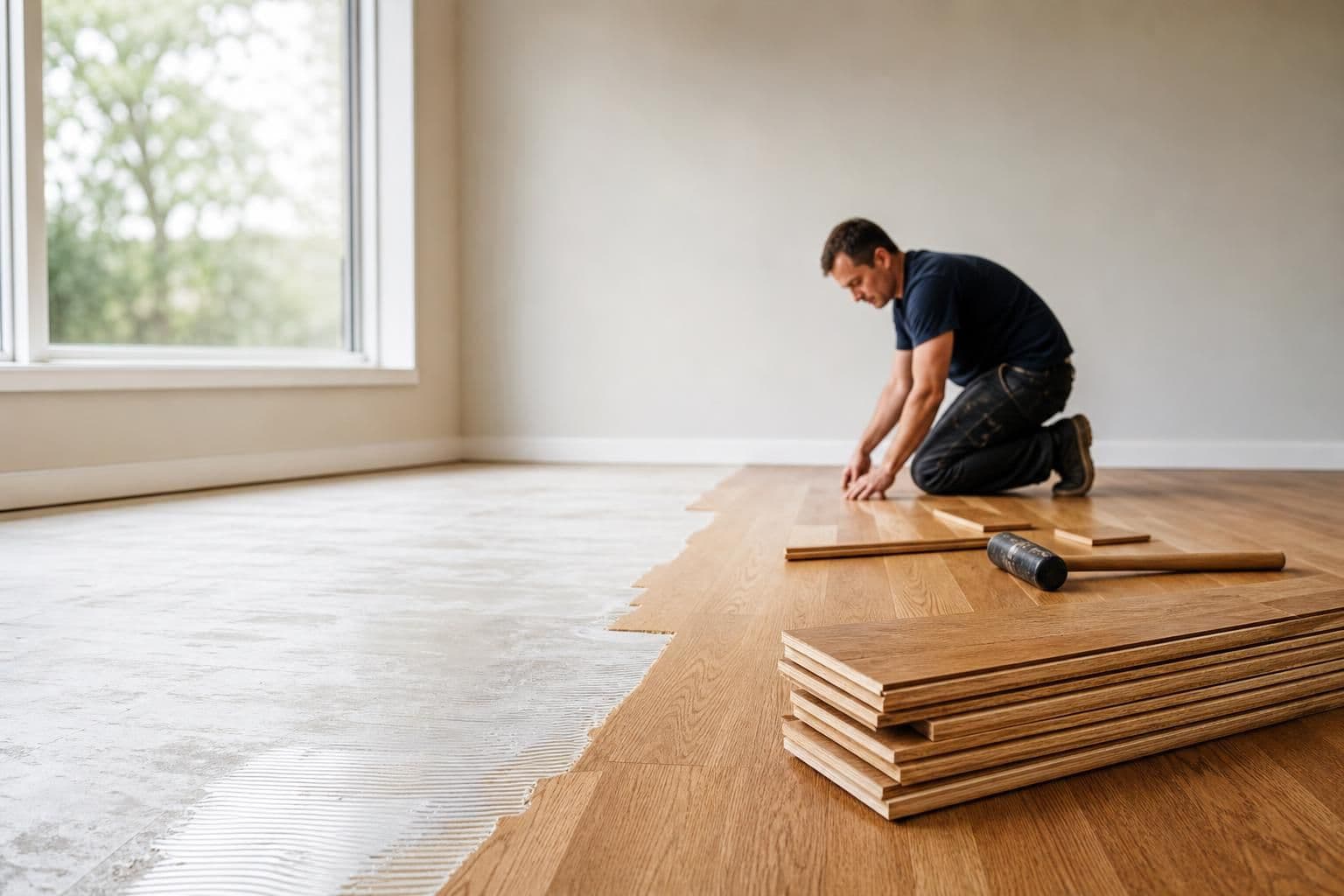
- Glue-down: common for engineered wood over concrete; adds $1–$2 per sq. ft. for adhesive.
- Floating floor: fastest and cheapest, typically $1–$3 per sq. ft. in labor, but limited to certain engineered products.
Removal and Disposal
Tearing out carpet, tile, or old wood flooring adds $1–$3 per square foot, plus disposal fees that can range from $50–$200 per haul.
Finish Type
Pre-finished planks are ready to install and typically cheaper in labor. Unfinished planks require on-site sanding, staining, and sealing, which adds $2–$4 per square foot but allows custom stain colors.
Additional Costs to Budget For
Beyond the base installation price, homeowners should plan for:
- Moisture barrier or underlayment: $0.30–$1 per sq. ft.
- Baseboards or trim replacement: $1–$3 per linear foot.
- Furniture moving: $50–$200 flat fee if not done by the homeowner.
- Permits: rarely required for flooring alone, but some municipalities charge $50–$150 for large renovation projects.
- Old floor disposal: $0.50–$1.50 per sq. ft.
A realistic total project budget should add 10–15% on top of the base per-square-foot estimate to cover these extras.
How to Save Money on Hardwood Flooring Installation
- Choose engineered over solid wood for comparable looks at a lower price point.
- Select domestic species like oak or maple instead of imported exotics.
- Get multiple quotes from licensed flooring contractors — prices for the same job can vary by 20–30% between installers.
- Bundle rooms together in one project to reduce per-trip labor costs.
- Ask about pre-finished planks to skip on-site sanding and sealing labor.
- Schedule during off-peak seasons (late fall/winter in many regions) when contractors may offer lower rates.
Frequently Asked Questions
Q: What is the average cost per square foot for hardwood flooring installation?
The average cost is $6 to $12 per square foot installed, covering both materials and labor. Most homeowners pay around $8 per square foot for a mid-range oak or engineered hardwood floor.
Q: Is engineered hardwood cheaper than solid hardwood?
Yes, engineered hardwood typically costs $5–$10 per square foot installed, compared to $8–$15 per square foot for solid hardwood. It's also more stable in humid or below-grade spaces.
Q: Does removing old flooring add to the cost?
Yes, removing carpet, tile, or old wood flooring typically adds $1 to $3 per square foot for labor, plus disposal fees of $50–$200 depending on volume and local hauling rates.
Q: How much does it cost to install hardwood flooring in a 300-square-foot room?
At the typical $6–$12 per square foot rate, a 300-square-foot room costs roughly $1,800 to $3,600 for materials and labor combined.
Q: Are herringbone or patterned wood floors more expensive to install?
Yes, herringbone, chevron, and other decorative patterns increase labor costs by 20–40% compared to standard straight-plank installation due to the extra cutting and alignment required.