How to Choose Flooring for a Home With Pets in Hawaii
Key takeaway
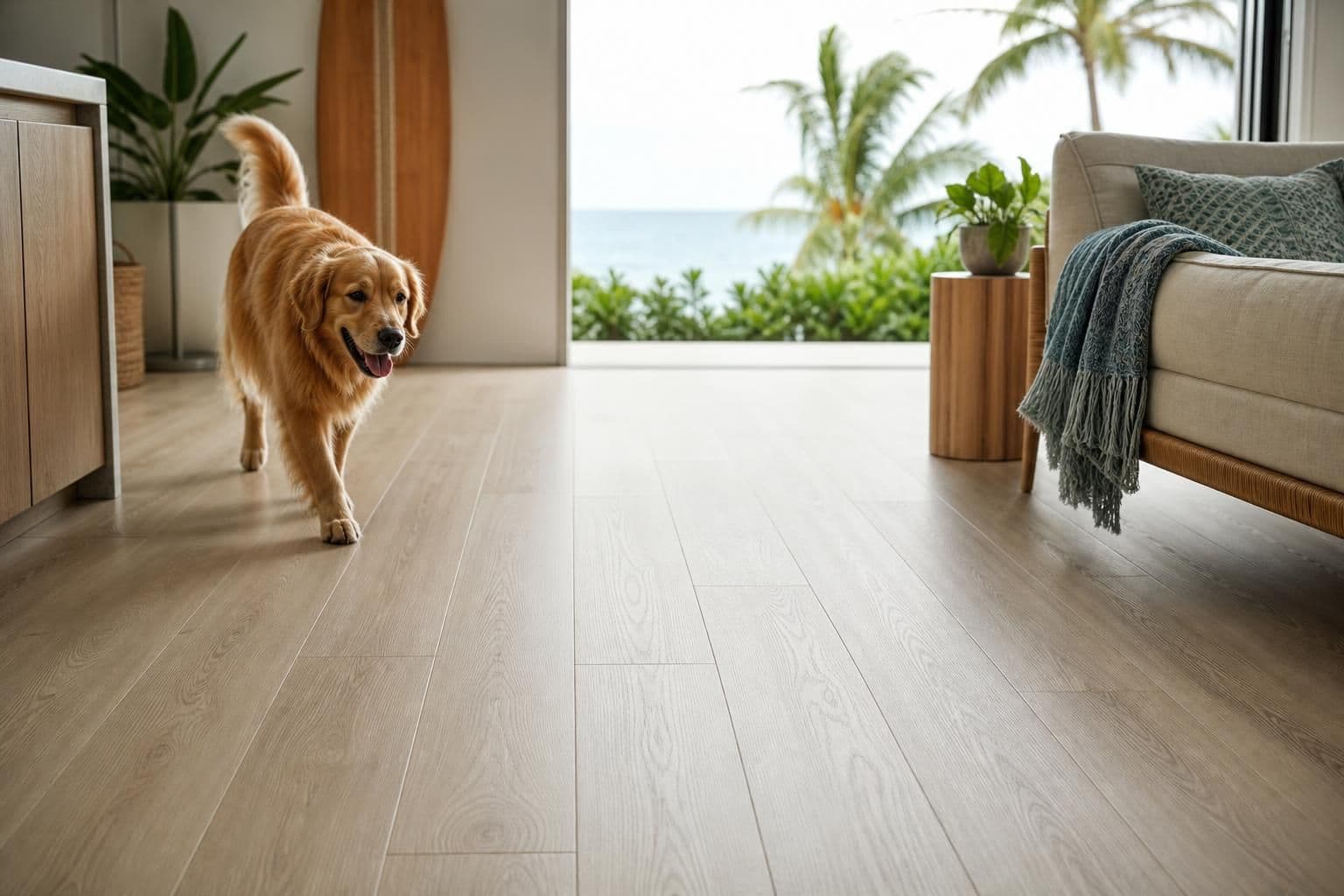
The best flooring for a home with pets is a waterproof, scratch-resistant surface with a textured, slip-resistant finish — rigid-core luxury vinyl plank (often called SPC) is usually the top pick because it shrugs off claws, accidents, and humidity better than hardwood, laminate, or carpet. Tile is a close second for durability but feels harder and colder underfoot for older pets. Carpet is the least practical choice in a humid, pet-heavy household because it traps moisture, odor, and allergens.
Key takeaways
- Choose a waterproof core (SPC or WPC vinyl) over laminate or engineered wood if pet accidents are a real possibility.
- Look for a wear layer of at least 12–20 mil and a textured, low-gloss finish for scratch resistance and traction.
- Avoid wall-to-wall carpet in Hawaii's humidity — it holds moisture, odor, and dust mites longer than hard surfaces.
Why Pet Owners Need Different Flooring Priorities
A floor built for a pet-owning household has to survive four things at once: claws, accidents, weight shifts from running and jumping, and repeated wet mopping. Standard residential flooring specs are usually written around foot traffic and light spills, not the daily wear of a 40-pound dog sprinting across a living room. That gap is why so many pet owners end up replacing floors within a few years of installation.
In Oahu homes, this is compounded by climate. Trade-wind humidity keeps indoor moisture levels elevated for much of the year, and that moisture combines with pet dander and any accidents to create conditions where mold and odor can take hold in porous materials. The EPA's guidance on indoor mold notes that mold needs moisture to grow — a relevant fact for anyone choosing between a water-resistant floor and one that can absorb liquid into a fiber pad or wood substrate.
Scratch and Claw Resistance
Scratch resistance mostly comes down to the wear layer and core material, not the surface design:
- Rigid-core SPC vinyl uses a stone-plastic composite core topped with a urethane or aluminum-oxide wear layer, which resists surface scuffing from nails far better than soft vinyl sheet or laminate's melamine coating.
- Solid hardwood scratches visibly under claws unless it's a very hard species with a commercial-grade finish, and refinishing it in a humid climate adds maintenance most owners don't want.
- Porcelain tile is essentially scratch-proof from claws, though grout lines can wear or stain over time if not sealed and maintained — a topic covered in more depth in this site's guide to choosing grout for Hawaii's humid climate.
- Laminate looks similar to hardwood but its printed wear layer can dull or scratch through with heavy claw traffic, exposing the core layer underneath.
Water and Accident Resistance
Even well-trained pets have accidents, and puppies, senior dogs, and cats mid-adjustment to a new home are especially prone to them. The flooring choice that matters most here is what happens when liquid sits on the seams for an hour instead of being wiped up in five minutes.
Waterproof SPC and WPC vinyl plank are built with a fully sealed core, so liquid can't wick down into the subfloor through the seams the way it can with laminate or engineered wood, where swelling and delamination are common after repeated moisture exposure. This is one reason waterproof vinyl has become the standard recommendation for condo and vacation-rental renovations across Oahu, where turnover between guests or tenants makes floor durability a financial as well as practical concern. For a deeper look at how these products perform specifically in island conditions, see this breakdown of flooring built for Hawaii's humid climate.
Traction and Comfort for Aging Pets
Slip resistance matters as much as scratch resistance, particularly for older dogs or cats with arthritis. A glossy, polished floor — whether tile, stone, or high-shine vinyl — offers very little grip and can cause a pet to slide on turns or struggle to stand up from a resting position. A textured, matte or low-sheen finish gives paws more traction without sacrificing the waterproof qualities that matter for accident cleanup.
Area rugs with rubber, non-slip backing in high-traffic zones (hallways, in front of food bowls, near stairs) can add traction on any hard surface without committing to wall-to-wall carpet.
Why Carpet Usually Isn't the Right Call
Carpet is comfortable and quiet, but it's the hardest flooring type to keep sanitary in a pet household, especially in a climate as humid as Oahu's. Fibers and padding absorb urine, dander, and moisture, and once odor-causing bacteria get into the pad, steam cleaning often only masks the smell rather than removing it. The CDC's guidance on pet-related allergens points out that dander and allergens accumulate in soft surfaces and textiles far more than on hard flooring, which is a practical argument for hard-surface flooring in any home with asthma or allergy concerns in the household.
If carpet feel is important in a bedroom, a low-pile, stain-treated option paired with hard flooring in living areas, kitchens, and hallways is a reasonable compromise — but wall-to-wall carpet throughout a pet-heavy home rarely holds up in Hawaii's humidity over the long run.
Matching Flooring to Your Pet and Household
A few practical questions help narrow the decision:
- Do you have a large or heavy-clawed dog? Prioritize wear layer thickness and a rigid core over softer vinyl or laminate.
- Are accidents still a possibility (puppy, senior pet, new adoption)? Waterproof core flooring with sealed seams is worth the investment over engineered wood.
- Is the home a rental or vacation property? Durability and easy cleaning between turnovers matter more than in an owner-occupied home, which is why many condo and short-term rental owners lean toward waterproof vinyl plank throughout.
- Do you have multiple pets or high humidity rooms (lanai-adjacent living rooms, ground-floor units)? Combine a waterproof floor with good ventilation to keep moisture from building up around pet bedding and water bowls.
Cost for pet-friendly flooring in Hawaii runs above mainland averages, largely because most materials are shipped in and labor rates reflect the local market — a local in-home consultation is the most reliable way to get an accurate number for a specific space.
Frequently Asked Questions
Q: What is the most scratch-resistant flooring for dogs?
Rigid-core SPC luxury vinyl plank with a thick wear layer (generally 12–20 mil) and a textured finish holds up best against dog claws, followed closely by porcelain tile.
Q: Is luxury vinyl plank safe for pet urine?
Yes — waterproof SPC and WPC vinyl have a sealed core, so urine that sits on the surface doesn't wick into the subfloor the way it can with laminate or hardwood, as long as seams are properly installed.
Q: Should I avoid carpet entirely if I have pets?
Not necessarily, but wall-to-wall carpet throughout a home is harder to keep sanitary with pets, especially in humid climates; a low-pile carpet limited to a bedroom paired with hard flooring elsewhere is a common compromise.
Q: Does tile work well for households with pets?
Tile is very scratch- and water-resistant, but it's harder and colder underfoot, which can be uncomfortable for aging pets with joint issues, and glossy finishes can be slippery without a textured or matte surface.
Q: How does humidity affect flooring choice for pet owners in Hawaii?
Humidity accelerates moisture damage in porous materials like engineered wood, laminate, and carpet padding, which is why waterproof vinyl and sealed tile are generally recommended over those options in island homes with pets.