Best Indestructible Dog Toys for Aggressive Chewers
Key takeaway
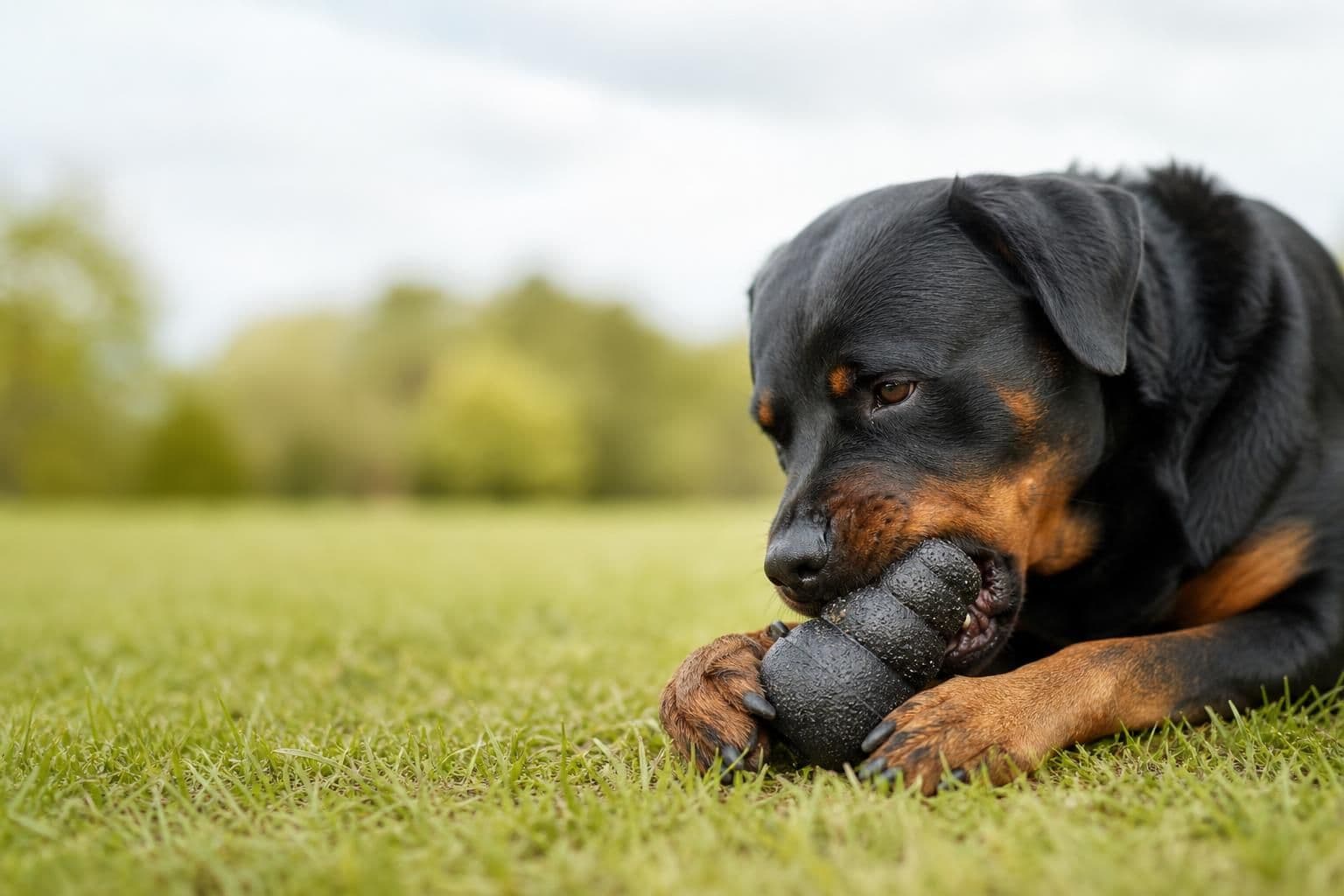
The best indestructible dog toys for aggressive chewers are made from solid natural rubber, reinforced nylon, or thick fire-hose fabric rated for heavy use, not thin plush or softer latex. No toy is truly indestructible, but rubber chews like dense Kong-style shapes and nylon bones hold up longest against strong jaws because they resist puncture and don't shred into swallowable pieces. The right choice also depends on matching toy hardness to your dog's bite strength and size, not just picking the toughest-looking option on the shelf.
Key takeaways
- Solid rubber and nylon chews outlast rope, plush, and latex toys for dogs that chew hard or often.
- Match toy firmness to your dog's jaw strength: a toy too soft for a strong chewer will be destroyed in minutes, risking swallowed fragments.
- Inspect every chew toy weekly and retire it at the first crack, tear, or exposed edge, regardless of how "tough" it was marketed as.
What Actually Makes a Toy Chew-Resistant
Durability comes down to material density and construction, not branding. Solid rubber chews (not hollow or foam-filled) flex under pressure instead of cracking, which is why they tend to survive longer with powerful chewers. Nylon bones are harder and more rigid, so they resist punctures well but can be tough enough to wear down teeth if a dog gnaws on the same spot repeatedly. Fire-hose or ballistic nylon fabric, often used in tug toys, resists shredding better than standard canvas because of its tight weave, though stitching is usually the first point of failure.
How to Match Toy Durability to Your Dog's Chew Strength
Not every dog needs the heaviest-duty chew on the market, and over-hard toys can be as risky as ones that break apart. A rough way to think about it:
- Light chewers (occasional, gentle mouthing): softer rubber, plush with reinforced seams, or rope toys are usually fine.
- Moderate chewers (daily chewing, some destruction of soft toys): look for medium-density rubber or nylon with some give.
- Power chewers (toys destroyed within a day, strong jaw pressure): solid rubber, dense nylon, or rubber-nylon hybrid chews built for aggressive use.
- Senior dogs or dogs with dental issues: choose slightly softer rubber even if they chew hard, to protect worn teeth.
Supervision matters more than the label. The American Veterinary Medical Association notes that chewing is a normal behavior dogs use to explore, relieve boredom, and maintain jaw and dental health, but any chew toy can pose a risk if it's the wrong hardness or size for the dog using it.
Comparing Common "Indestructible" Toy Types
| Toy Type | Material | Best For | Typical Weak Point |
|---|---|---|---|
| Solid rubber chew (Kong-style) | Dense natural or synthetic rubber | Power chewers, food-stuffing enrichment | Surface wear over months, not sudden failure |
| Nylon bone | Hard nylon, sometimes with flavor coating | Heavy, prolonged gnawing | Can crack if dropped on hard surfaces when very cold |
| Rubber-rope hybrid | Rubber core wrapped in rope | Tug play plus chewing | Rope fibers fray and should be trimmed or retired |
| Ballistic nylon tug | Tight-weave nylon fabric | Interactive tug-of-war, not solo chewing | Stitched seams loosen with repeated tugging |
| Reinforced plush | Plush with double-stitched seams, no stuffing | Light chewers, comfort/squeak play | Not suitable for dogs who shred fabric |
Safety Considerations Before You Buy
Size matters as much as material. A toy small enough to be swallowed or lodged in the throat is dangerous regardless of how tough the material is. The U.S. Consumer Product Safety Commission has issued guidance on choking hazards from small parts in pet products, and the same logic that applies to children's toys — bigger than the mouth, no small detachable pieces — is worth applying to dog toys too. A few practical rules:
- Choose a toy sized for your dog's mouth, erring larger rather than smaller.
- Avoid toys with squeakers or stuffing if your dog tends to tear through the outer layer quickly.
- Never leave a dog unsupervised with a brand-new toy until you've watched how they interact with it.
- Replace any toy that develops sharp edges, cracks, or exposed wire or foam.
Signs a Toy Should Be Retired
Even the most durable chew has a lifespan. Watch for:
- Visible cracks or splits in rubber, which can trap bacteria and eventually break off.
- Flattened or gouged nylon with deep tooth marks that create sharp ridges.
- Loose threads or frayed rope that a dog could swallow.
- A toy that's been chewed down enough to fit entirely in the mouth, changing its choking risk.
A quick weekly check takes seconds and prevents most toy-related injuries before they happen.
Enrichment Beyond the Chew Toy
Aggressive chewing is sometimes less about teeth and more about boredom or excess energy, especially in dogs left alone for long stretches. Rotating a handful of tough chews with puzzle feeders or treat-dispensing toys gives dogs a mental outlet, not just a physical one, which can reduce destructive chewing on furniture or shoes. If your dog's chewing intensifies at night alongside restlessness or barking, it may be worth looking at the underlying routine rather than just the toy, as covered in this guide to nighttime barking. Ziva Paws' toy collection includes puzzle boxes and squeaky plush alongside tougher chew options, since most households end up needing a mix rather than one single "indestructible" toy.
A Note on Testing at Home
Durability claims on packaging rarely account for an individual dog's bite force, which varies enormously by breed and age. The most reliable way to judge a toy is to watch how it holds up after the first few real sessions with your own dog, rather than trusting marketing language alone. Buying one toy at a time and observing wear patterns before stocking up is a more cost-effective approach than committing to a full set of an unfamiliar brand.
Frequently Asked Questions
Q: What material is best for dogs that destroy every toy?
Solid natural rubber and dense nylon tend to hold up best against powerful chewers because they resist puncture and don't shred into pieces. No single material is truly indestructible, so regular inspection still matters.
Q: Are nylon bones safe for all dogs?
Nylon bones are generally safe for moderate to heavy chewers, but they're hard enough that dogs with dental issues or a habit of chewing in one spot can wear down or chip teeth. Softer rubber is a better choice for senior dogs or those with known dental sensitivity.
Q: How often should I replace a dog's chew toy?
There's no fixed schedule since it depends on how hard and how often your dog chews, but a weekly inspection for cracks, fraying, or missing pieces is a reasonable habit. Replace the toy immediately if you notice any sharp edges or if a piece could be swallowed.
Q: Can a toy be too hard for a dog?
Yes. Extremely rigid materials like antlers or very hard nylon can crack teeth under strong bite pressure, so "tough" doesn't always mean "safe." A toy with slight give is usually a better balance of durability and dental safety.
Q: Is rope a good option for aggressive chewers?
Rope toys are better suited to light or moderate chewers and interactive tug play rather than solo heavy chewing, since the fibers fray and can be swallowed. For dogs that chew hard and unsupervised, rubber or nylon is a safer primary option.