How Long Do Cats Sleep a Day? Typical Hours by Age
Key takeaway
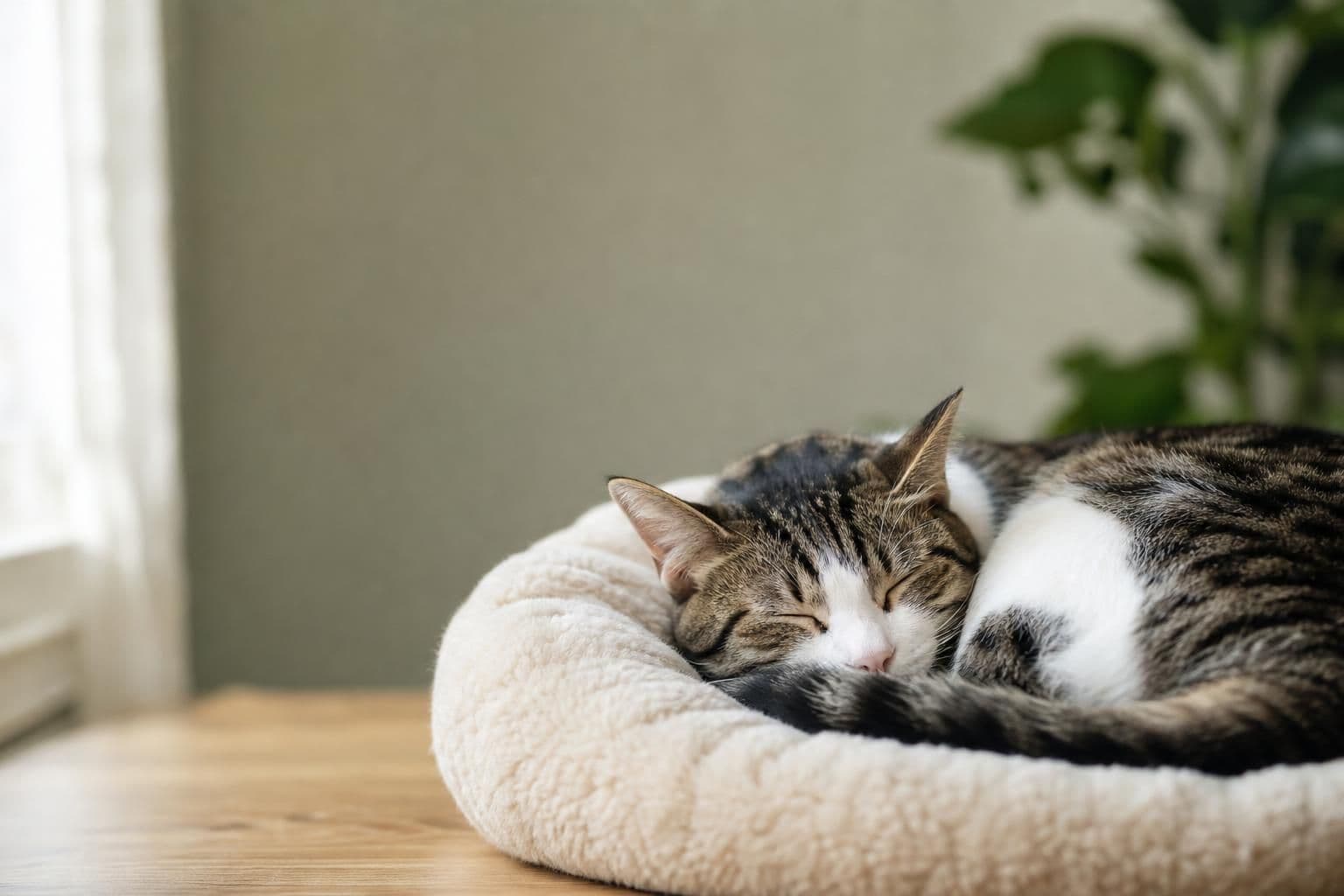
Most adult cats sleep between 12 and 16 hours a day, with many settling around 13 to 14 hours on average. Kittens and senior cats sleep even more, often 18 to 20 hours, because growth and aging both demand extra rest. The exact number varies with age, health, activity level, and how much mental stimulation a cat gets while awake.
Key takeaways
- Healthy adult cats sleep 12–16 hours daily; kittens and seniors can reach 18–20 hours.
- Cats are crepuscular, so expect bursts of activity at dawn and dusk rather than one long waking stretch.
- A sudden jump in sleep, lethargy, or refusal to move can signal pain or illness and warrants a vet check.
Why Cats Sleep So Much
Cats evolved as small predators that rely on short, intense bursts of energy to hunt, then recover with long rest periods. Much of what looks like sleep is actually light dozing — a cat can wake instantly if it hears something interesting, which is a leftover survival instinct rather than laziness. According to the Cornell Feline Health Center, cats are naturally most active at dawn and dusk (a pattern called crepuscular behavior), which is why many owners notice their cat sprinting around the house early in the morning or right before bedtime.
Indoor cats without much to do also tend to sleep more simply because there's less to stay awake for. A cat with nothing to chase, climb, or investigate will often default to napping through the day.
Typical Sleep by Life Stage
Sleep needs shift noticeably as a cat ages:
- Kittens (under 6 months): 18–20 hours a day, since growth hormone is released mostly during sleep.
- Adult cats (1–10 years): 12–16 hours a day, often broken into many short naps rather than one long block.
- Senior cats (11+ years): Often 18–20 hours, similar to kittens, as older joints and slower metabolisms need more downtime.
If a normally playful adult cat starts sleeping like a senior — or a senior suddenly seems restless at night — that shift is worth watching rather than dismissing.
Deep Sleep vs. Light Dozing
Not all of a cat's "sleep" hours are equal. Roughly two-thirds of a cat's resting time is light dozing, where the ears and whiskers stay alert to sound and movement, and the remaining third is deeper sleep with more complete muscle relaxation, sometimes with visible twitching paws or whiskers. This pattern lets a cat rest for most of the day while still being able to react quickly if needed — a trait inherited from wild ancestors who couldn't afford to be caught fully off guard.
When Sleep Patterns Signal a Problem
A change in sleep is one of the more reliable early clues that something is off. According to the ASPCA, noticeable changes in appetite, activity, or sleep are among the signs that warrant a veterinary visit, since cats are skilled at masking pain and illness until symptoms are fairly advanced.
Watch for:
- Sleeping significantly more or less than usual for that cat specifically.
- Difficulty getting comfortable, or restlessness after settling down.
- Sleeping in unusual places, especially hiding spots away from family activity.
- Reduced interest in food, play, or grooming alongside the sleep change.
Any of these, especially in combination, is a reasonable reason to call a vet rather than wait it out.
Setting Up a Space That Supports Good Rest
Because cats spend most of their lives asleep, where they sleep matters more than it might seem. A draft-free spot away from foot traffic, combined with a bed that actually retains warmth and supports the joints, tends to produce more settled, uninterrupted rest. Elevated perches or enclosed hideaways also appeal to a cat's instinct to sleep somewhere it feels safe from above and behind — you can read more about why cats gravitate toward specific resting spots in our guide on whether cats really need beds. At Ziva Paws, Ai and Dudu test cat beds and nests before they're listed, and one thing that's obvious watching them is how much they prefer a bed with raised sides or a hood over a flat cushion when they want a deeper, uninterrupted nap.
Enrichment Affects Sleep Quality
A cat that gets regular play sessions tends to sleep more soundly and wake less restless than one that's understimulated. Short bursts of chase-and-pounce play that mimic hunting — even 10–15 minutes twice a day — can shift a bored, pacing cat toward calmer, more predictable sleep. Scratching and climbing also play a role in burning off pent-up energy before rest; if a cat is waking you up at 3 a.m., it's worth looking at daytime enrichment rather than just the sleep schedule itself, a topic covered in more depth in this guide to choosing a cat scratching post.
Grooming routines can factor in too — a cat that's uncomfortable from matted fur or skin irritation may sleep less soundly or in unusual positions to avoid pressure on sore spots, which is one more reason a regular grooming schedule is worth keeping consistent.
Frequently Asked Questions
Q: Is it normal for a cat to sleep 20 hours a day?
Yes, for kittens and senior cats this is within the normal range, since both groups need extra rest for growth or recovery. In a healthy adult cat, 20 hours consistently is on the high end and worth mentioning at the next vet visit if it's a new pattern.
Q: Why does my cat sleep so much more than my dog?
Cats are built for short, intense bursts of hunting activity followed by long recovery periods, while dogs historically had more sustained activity patterns tied to pack behavior. This difference in evolutionary history is a major reason cats average several more hours of daily sleep than most dogs.
Q: Do indoor cats sleep more than outdoor cats?
Often, yes, because indoor cats typically have fewer things competing for their attention and less need to patrol territory. Adding play sessions and vertical spaces to climb can help an under-stimulated indoor cat stay active during waking hours instead of sleeping out of boredom.
Q: Can too much sleep mean a cat is sick?
A noticeable increase in sleep combined with reduced appetite, hiding, or reluctance to move can indicate pain, illness, or a condition like hyperthyroidism or arthritis. It's the change and the combination of symptoms that matters most, not sleep duration alone.
Q: What time of day are cats most active?
Cats are crepuscular, meaning they're naturally most active around dawn and dusk rather than throughout the day or night. This is why many cats have a burst of energy — sometimes called the "zoomies" — early in the morning or in the evening before settling into a longer rest period.