How Deep Is the USS Arizona Sunk in Pearl Harbor?
Key takeaway
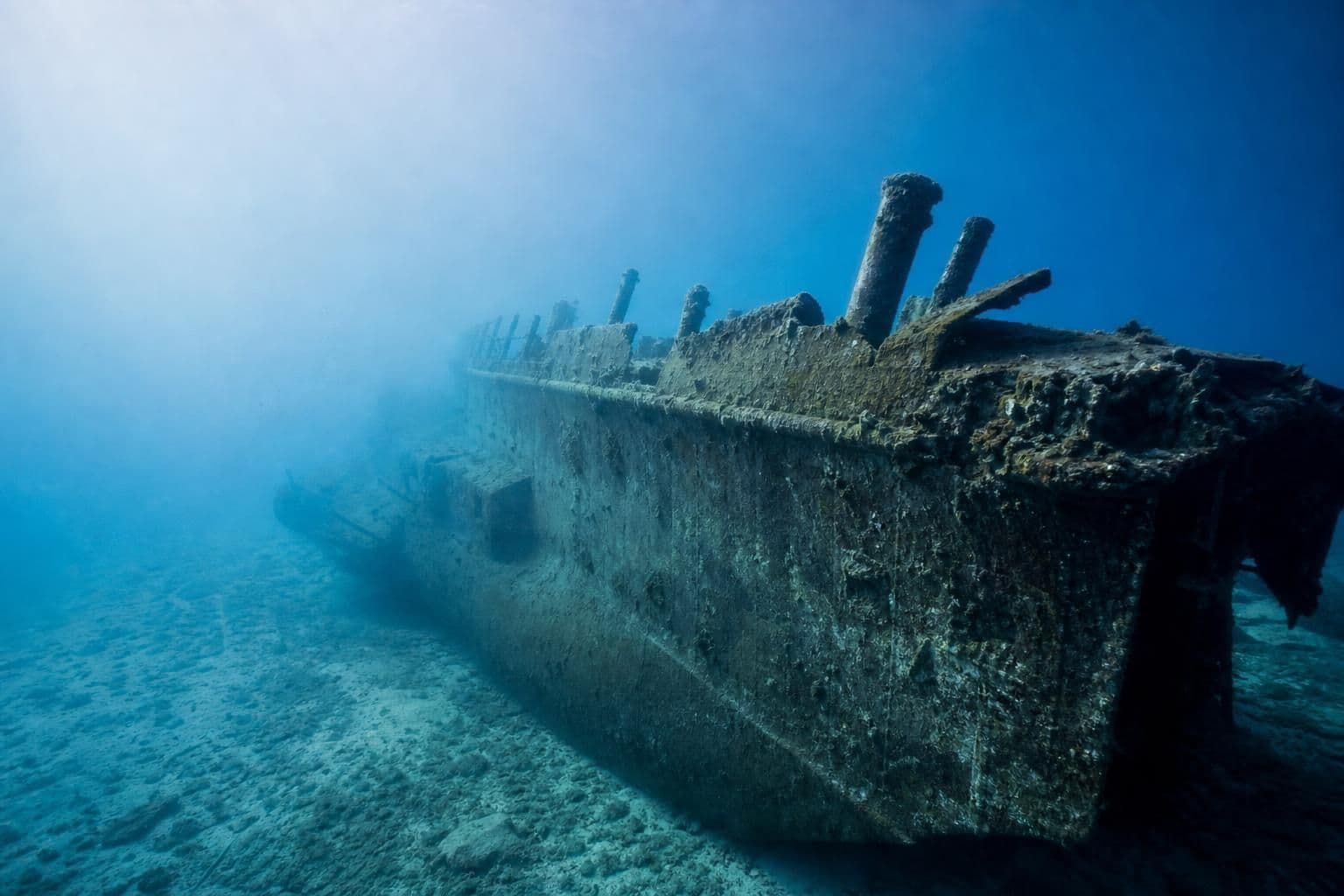
The USS Arizona rests in roughly 38 feet (about 11.6 meters) of water on the bottom of Pearl Harbor, just off Ford Island. Because the harbor is relatively shallow, portions of the battleship's deck and superstructure originally rose above the waterline after she sank on December 7, 1941, and parts of the submerged structure remain close enough to the surface that the memorial above it was built to straddle the wreck without touching it.
Key takeaways
- The Arizona sits in about 38 feet of water, shallow enough that remnants of the ship were visible above the surface for years after the attack.
- The white memorial structure spans the hull but does not rest on it, a design choice tied directly to the ship's depth and position.
- More than 900 of the 1,177 sailors and Marines killed aboard the Arizona remain entombed in the wreck, which is treated as a war grave rather than a dive or salvage site.
Why the Water Is Shallow Enough to See the Wreck
Pearl Harbor's main channel and berthing areas were dredged to accommodate battleships, but the depth near Ford Island's moorings, where the Arizona was tied up on Battleship Row, is far shallower than the open ocean. At roughly 38 feet, the ship's hull sits with its deck not far below the surface, which is why oil droplets rising from the wreck are still visible today, a phenomenon covered in more detail in this look at whether oil is still leaking from the Arizona. The shallow depth also explains why, in the months after the attack, parts of the superstructure and mast remained exposed above the waterline before being removed.
How the Memorial Was Designed Around the Depth
Architect Alfred Preis designed the USS Arizona Memorial to float above the hull without making physical contact with it, a structural decision made possible precisely because the wreck sits in shallow, calm harbor water rather than a deep channel. The memorial's distinctive sagging-in-the-middle, strong-at-the-ends shape is often described as symbolizing the low point of the attack followed by the nation's recovery, but functionally it is simply a platform engineered to span the submerged hull. Visitors standing on the memorial are looking almost straight down at a ship resting only a few dozen feet below.
What Remains on the Bottom
The Arizona's hull is largely intact on the harbor floor, though the attack and subsequent explosion destroyed much of the forward section. Key points about the wreck's condition:
- The forward magazine explosion on the morning of the attack caused catastrophic damage, and the ship sank in place within minutes rather than drifting.
- Because the water is shallow and the harbor floor is silty, divers and researchers from the National Park Service periodically conduct condition surveys to monitor corrosion and structural integrity.
- The wreck is legally a military gravesite administered jointly by the National Park Service and the U.S. Navy, and public diving or disturbance of the site is prohibited.
Why Depth Matters for How the Site Is Presented
The shallow resting depth is part of why the USS Arizona Memorial feels so immediate to visitors compared with other historic shipwrecks, which often sit hundreds or thousands of feet down and are inaccessible without specialized equipment. Here, the proximity of the hull to the surface is central to the experience: you can see the shape of the ship beneath the water, watch the oil sheen, and read the names of the fallen on the wall inside the memorial, all within a few feet of where they remain. For background on how this history is presented to visitors, see this overview of USS Arizona Memorial history.
Comparing the Arizona's Depth to Other Pearl Harbor Sites
Not every vessel at Pearl Harbor sits at the same depth or in the same condition. The Battleship Missouri, by contrast, is a preserved museum ship moored at Ford Island rather than a submerged wreck, and visitors can walk its decks. Those deciding how to split time between the two often compare the USS Arizona Memorial and USS Missouri experiences before building a visit itinerary, since one is a reflective memorial over a shallow underwater grave and the other is a fully accessible historic warship.
Planning a Visit With the Depth in Mind
Understanding the shallow depth helps set expectations: the memorial is not a deep-sea dive site or a distant shipwreck tour, it's a short boat ride from the visitor center to a structure sitting almost directly above the hull. Reserved tickets are required to board the boat out to the memorial, and timing matters because sailings run on a schedule set by the National Park Service. If you're mapping out logistics from your hotel, this guide on getting to Pearl Harbor from Waikiki covers transportation options, and how long a Pearl Harbor visit typically takes can help you budget the right amount of time for the memorial and nearby sites.
Frequently Asked Questions
Q: How deep is the USS Arizona sunk in Pearl Harbor?
The USS Arizona rests in approximately 38 feet (about 11.6 meters) of water near Ford Island, shallow enough that parts of the ship were visible above the surface for a time after it sank in 1941.
Q: Can divers visit the USS Arizona wreck?
No. The wreck is a designated war grave administered by the National Park Service and U.S. Navy, and public diving or disturbing the site is prohibited; only authorized researchers conduct periodic condition surveys.
Q: Why doesn't the memorial touch the sunken ship?
Architect Alfred Preis designed the structure to span the hull without resting on it, a design made feasible by the shallow depth, so visitors can view the wreck below without physically contacting the gravesite.
Q: Are sailors still entombed in the USS Arizona?
Yes, more than 900 of the 1,177 crew members killed aboard remain inside the hull, which is why the site is treated with the same respect as a cemetery rather than a typical shipwreck attraction, according to the National Park Service.
Q: Is the depth of the USS Arizona the same today as in 1941?
The ship's position on the harbor floor has remained essentially unchanged since it sank, though natural settling and corrosion over the decades have altered the hull's structural condition even as its overall depth stays about the same.