What to Wear: The Pearl Harbor Dress Code Explained
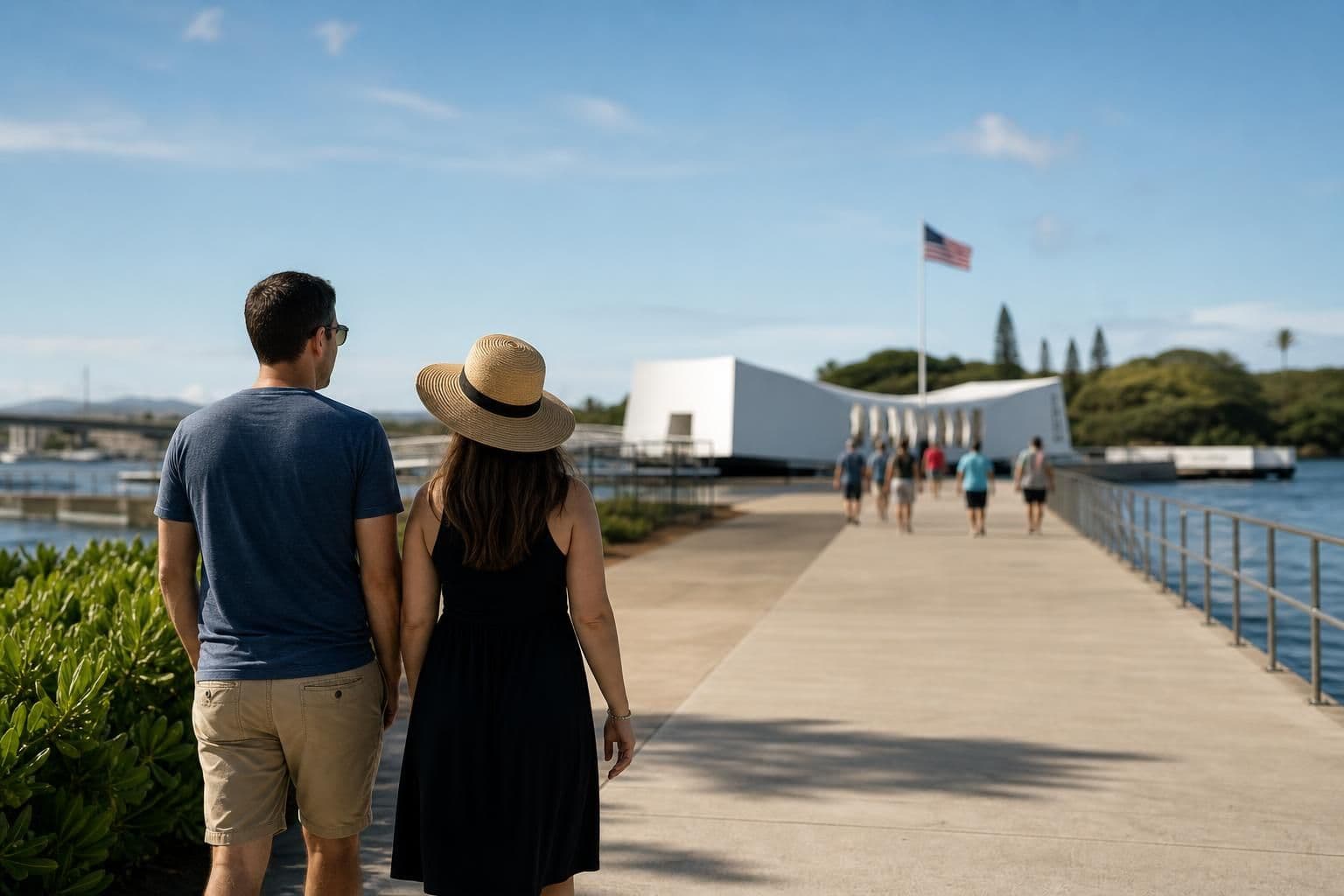
Key takeaway
There is no strict, enforced dress code at Pearl Harbor, but the site's status as a military installation and active memorial calls for modest, respectful clothing: think casual resort wear without swimsuits, tank tops that reveal midriffs, or offensive graphics, plus closed-toe shoes for walking on boat docks and uneven pavement. Because the USS Arizona Memorial sits atop a sunken warship and war grave, many visitors and guides treat the visit more like a memorial service than a typical tourist stop.
Key takeaways
- Casual, modest clothing is fine — swimwear, bare midriffs, and offensive slogans are not appropriate for a war memorial.
- Closed-toe shoes are strongly recommended for the boat ride and walking areas; flip-flops are allowed but not ideal.
- Security screening bans large bags and backpacks, so plan your outfit and belongings accordingly before you arrive.
Is there an official Pearl Harbor dress code?
The National Park Service, which co-manages the Pearl Harbor National Memorial with the U.S. Navy, does not publish a formal list of banned clothing items the way some religious sites do. Instead, guidance centers on common sense and respect: this is the final resting place of more than 900 sailors and Marines still entombed in the sunken USS Arizona. Visitors are asked to behave, and by extension dress, as they would at any memorial honoring the dead — the National Park Service manages the site with that reverence in mind.
In practice, that means most everyday tourist clothing works fine. Shorts, sundresses, t-shirts, and light layers are all common on the memorial's shuttle boat and grounds.
What to wear to Pearl Harbor
Comfortable, warm-weather clothing suited to Oahu's climate is the standard choice, since visitors spend time outdoors walking between the visitor center, the boat dock, and the memorial itself.
- Tops: T-shirts, polos, or blouses that cover the midriff and shoulders comfortably.
- Bottoms: Shorts, capris, skirts, or light pants — anything you'd wear to an outdoor museum.
- Footwear: Closed-toe walking shoes or sturdy sandals; flip-flops are permitted but offer less grip on the boat and dock.
- Layers: A light jacket or wrap for the harbor breeze during the boat crossing.
- Sun protection: A hat and sunglasses, since much of the grounds tour happens outdoors with little shade.
If your visit is part of a guided Pearl Harbor tour from Waikiki with hotel pickup, plan your outfit around a full day: you'll be outdoors at the memorial, then often touring the Battleship Missouri or Ford Island sites afterward, so breathable layers matter more than formality.
What not to wear
A few categories of clothing are discouraged or outright inappropriate given the site's purpose as a war grave and active memorial:
- Swimwear — bikinis, board shorts as standalone outerwear, or beach cover-ups are not appropriate.
- Offensive graphics or language — shirts with profanity, political slogans, or disrespectful imagery are out of place at a military memorial.
- Excessively revealing clothing — very short shorts, bare midriffs, or sheer fabrics can draw unwanted attention in a solemn setting.
- High heels or unstable footwear — the boat dock and memorial floor can be slippery, especially after rain.
None of these are enforced by a security guard checking hemlines, but tour guides and fellow visitors notice, and many people find it uncomfortable to be dressed for the beach while standing over a war grave.
Practical security and packing rules that affect what you bring
Clothing choices intersect with security rules that every visitor should know before arriving. The memorial site enforces a strict bag policy: purses, backpacks, camera bags, diaper bags, and fanny packs are not allowed inside the visitor center or on the shuttle boat. A small clear bag or none at all is the easiest way through screening, and there is typically a paid storage facility on-site for anything you must bring.
This matters for dress-code planning because visitors often try to compensate by wearing cargo shorts or jackets with extra pockets to carry a phone, wallet, and sunscreen instead of a bag. That's a practical, common workaround among repeat visitors and tour guides alike.
Weather considerations for Oahu visits
Pearl Harbor sits on Oahu's leeward side, which tends to be drier and warmer than Waikiki on any given day, with outdoor waiting areas and minimal shade near the boat dock. Average highs in Honolulu run in the mid-80s Fahrenheit year-round, according to NOAA climate data, so lightweight, breathable fabric is more important than warmth for most of the year. Sudden showers are possible, particularly in winter months, so a compact rain layer is a reasonable addition to a day bag — provided that bag isn't a banned backpack.
Dressing for the full Pearl Harbor experience
Many visitors combine the USS Arizona Memorial with stops at the Battleship Missouri Memorial, the USS Bowfin submarine, and Ford Island. Each of these involves different walking surfaces: steep ladders and narrow passages aboard the Missouri, open tarmac on Ford Island, and the tight confines of a submarine hull on the Bowfin. Closed-toe shoes become more than a suggestion on these stops, since ship ladders and hatches are unforgiving in sandals. If your day includes multiple sites, dressing once for the most demanding stop — usually the battleship tour — is easier than changing outfits midday.
Group visitors, including school and military tour groups, often coordinate matching shirts or lanyards for easy identification; this is a logistical choice rather than a dress-code requirement, but it's common enough that tour guides plan for it when organizing large parties.
Frequently Asked Questions
Q: Can I wear shorts to Pearl Harbor?
Yes, shorts are common and acceptable at Pearl Harbor. Choose a modest length and pair them with closed-toe or sturdy sandals for the boat ride and walking areas.
Q: Are swimsuits allowed at the USS Arizona Memorial?
Swimsuits and bare beachwear are discouraged because the memorial is a war grave and active military site, not a beach destination. Cover up with a shirt and shorts or a light dress instead.
Q: Do I need closed-toe shoes for the Pearl Harbor boat tour?
Closed-toe shoes are strongly recommended, though not legally required, because the shuttle boat dock and memorial floor can be slippery. Flip-flops are permitted but offer less stability during boarding.
Q: What should I bring instead of a backpack or purse?
Because backpacks, purses, and diaper bags are prohibited inside the visitor center and on the boat, many visitors use pockets or a small clear bag for essentials like a phone, ID, and sunscreen. Paid storage lockers are typically available on-site for larger items.
Q: Is there a specific policy for military or veteran attire?
There is no requirement to wear military attire, but many veterans and active-duty visitors choose to wear service caps, unit shirts, or medals, which is welcomed and often acknowledged by staff and fellow visitors. This is a personal choice rather than a dress-code rule.