What Happened to the USS Missouri After WWII?
Key takeaway
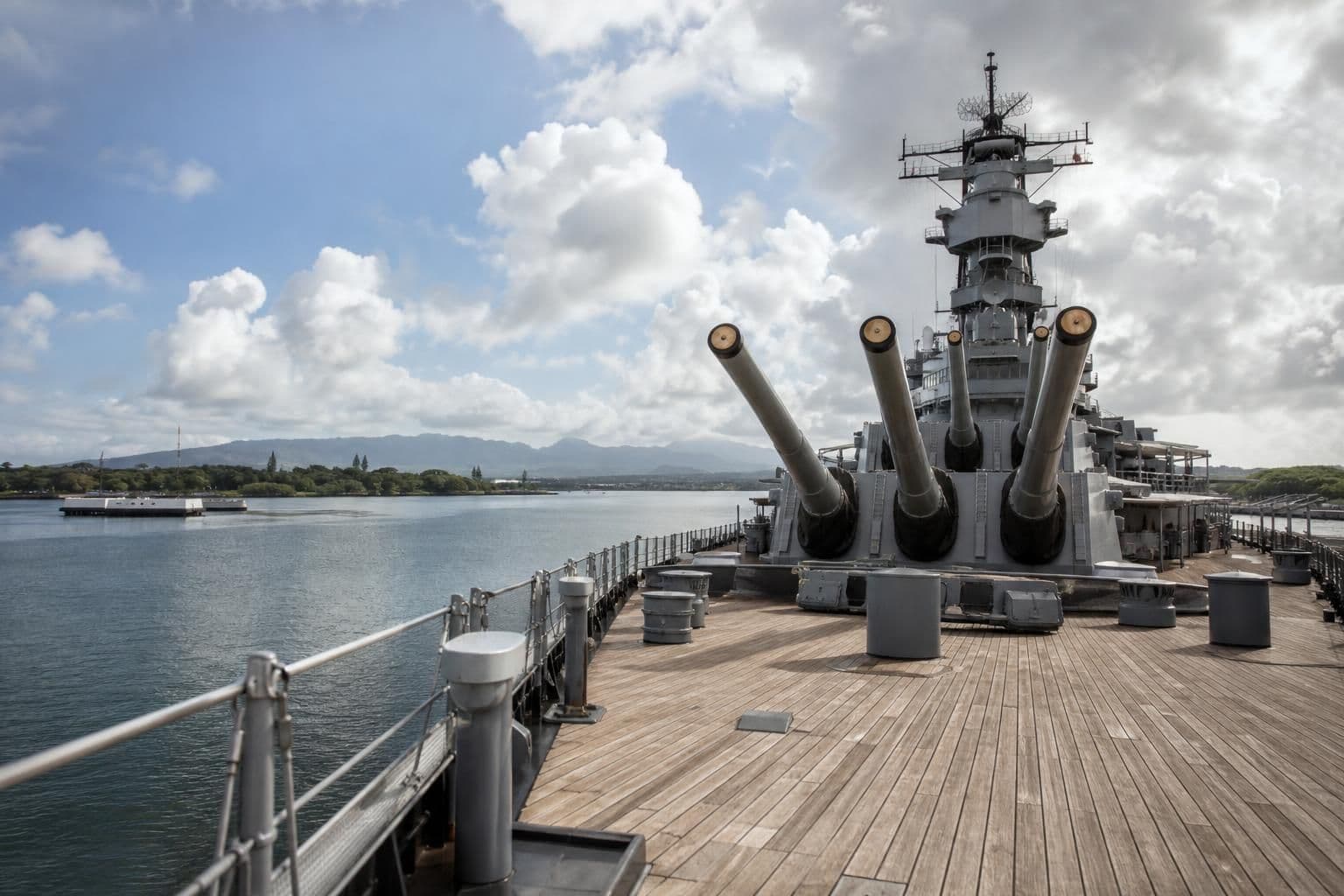
After the Japanese surrender was signed on its deck in Tokyo Bay on September 2, 1945, the USS Missouri continued active naval service for decades—serving in the Korean War, undergoing a modernization and recommissioning in the 1980s, and fighting in the Gulf War—before being decommissioned in 1992 and permanently docked at Pearl Harbor's Ford Island in 1998, where it now operates as a museum ship.
Key takeaways
- The Missouri wasn't retired right after WWII; it served in Korea (1950-53) and again in the 1991 Gulf War after a 1980s modernization.
- The battleship was decommissioned twice: first in 1955, then again in 1992 after its final active service.
- Since 1998, the Missouri has been moored at Ford Island, just a few hundred yards from the USS Arizona Memorial, open to the public as Battleship Missouri Memorial.
The Surrender Ceremony and Immediate Postwar Role
The USS Missouri earned its place in history on September 2, 1945, when Japanese officials signed the Instrument of Surrender on its deck in Tokyo Bay, formally ending World War II. The ship was chosen for the ceremony partly because it was President Harry Truman's home state battleship. In the months that followed, "Mighty Mo" remained in the Pacific supporting occupation duties and troop transport before returning to the United States for peacetime training cruises. Its role as the surrender site is preserved today with a plaque marking the exact spot on deck, a detail that draws visitors who also want to understand the broader history of what happened at Pearl Harbor that drew the U.S. into the war.
Korean War Service (1950-1953)
Rather than fading into retirement, the Missouri was called back into combat duty just five years after WWII ended. It deployed to Korea in 1950, firing its 16-inch guns in shore bombardment missions supporting United Nations forces, including operations near Inchon and along both coasts of the Korean peninsula. This combat tour added a second war to its record before it returned stateside.
First Decommissioning in 1955
After Korea, the Navy placed the Missouri in the Pacific Reserve Fleet, often called the "mothball fleet," at Bremerton, Washington, in February 1955. For nearly three decades it sat in reserve, maintained but inactive, as naval priorities shifted toward newer vessels. During this long dormancy, the ship became something of a historical artifact rather than an active warship—until Cold War defense policy brought it back.
Reactivation and Modernization in the 1980s
In 1984, as part of President Reagan's 600-ship Navy initiative, the Missouri was recommissioned after an extensive modernization. Engineers added Tomahawk cruise missiles, Harpoon anti-ship missiles, and the Phalanx close-in weapons system, pairing Cold War-era technology with its original WWII-era hull and 16-inch gun turrets. This refit let a battleship design from the 1940s operate alongside modern guided-missile ships.
Gulf War Combat and Final Active Duty
The Missouri saw its last combat action during the 1991 Gulf War, where it launched Tomahawk missiles and shelled Iraqi positions along the Kuwaiti coast—the first time it had fired its big guns in combat since Korea. Shortly after, the Navy decommissioned the ship for the second and final time, in Long Beach, California, in 1992, closing out nearly 50 years of service that spanned three wars.
From Decommissioned Battleship to Museum Ship
Following decommissioning, the Missouri was again laid up in reserve, this time in Bremerton. A nonprofit association formed to bring the ship to Hawaii, and in 1998 it was towed to Pearl Harbor and moored at Ford Island, directly across the water from the USS Arizona Memorial. The symbolism was deliberate: the Arizona marks where WWII in the Pacific began for the U.S., and the Missouri marks where it ended. The ship opened to the public in 1999 under the stewardship of the USS Missouri Memorial Association, and it remains a National Historic Landmark today, according to the National Park Service. For travelers planning a visit, it's worth reading about how the Arizona and Missouri experiences compare before deciding how to split time between the two sites.
Why Pearl Harbor Was Chosen for Its Final Berth
Ford Island made sense as a permanent home for several reasons beyond symbolism. The Navy already maintained historic ship operations nearby, the harbor's protected waters suited a vessel of the Missouri's draft, and pairing it with the Arizona Memorial created a single visitor destination spanning the full arc of the Pacific war—from the attack on December 7, 1941, to the surrender in 1945. The U.S. Navy continued to support preservation efforts even after the ship left active service, reflecting its status as a national landmark rather than ordinary surplus hardware.
Visiting the Missouri Today
The battleship sits a short boat ride from the Arizona Memorial visitor center, and most guided tours that include Pearl Harbor sites build in time for both. Self-guided walking tours aboard the Missouri let visitors see the surrender deck, the gun turrets, and crew quarters, while guided options add context that's easy to miss on your own—including details about kamikaze damage still visible on the hull. If you're weighing which historic ships to prioritize on a tight schedule, it also helps to understand how ticket pricing works across Pearl Harbor sites before booking.
Frequently Asked Questions
Q: Is the USS Missouri still a commissioned Navy ship?
No. The Missouri was decommissioned for the final time in 1992 and is no longer an active naval vessel. It now operates as a museum ship managed by the nonprofit USS Missouri Memorial Association.
Q: Did the USS Missouri serve in any wars besides WWII?
Yes. After WWII, the Missouri served in the Korean War (1950-1953) and again in the 1991 Gulf War following a 1980s modernization that added missile systems.
Q: Where is the USS Missouri located now?
The ship has been permanently moored at Ford Island in Pearl Harbor since 1998, close to the USS Arizona Memorial.
Q: Can visitors go aboard the USS Missouri today?
Yes, the Battleship Missouri Memorial is open to the public for self-guided and guided tours, including access to the deck where the WWII surrender was signed.
Q: Why is the USS Missouri paired with the USS Arizona Memorial on tours?
The two ships bookend the Pacific war—the Arizona marks the attack that began U.S. involvement, while the Missouri marks where Japan formally surrendered—so many itineraries visit both in one trip.