Best Espresso Maker for Small Kitchens
Key takeaway
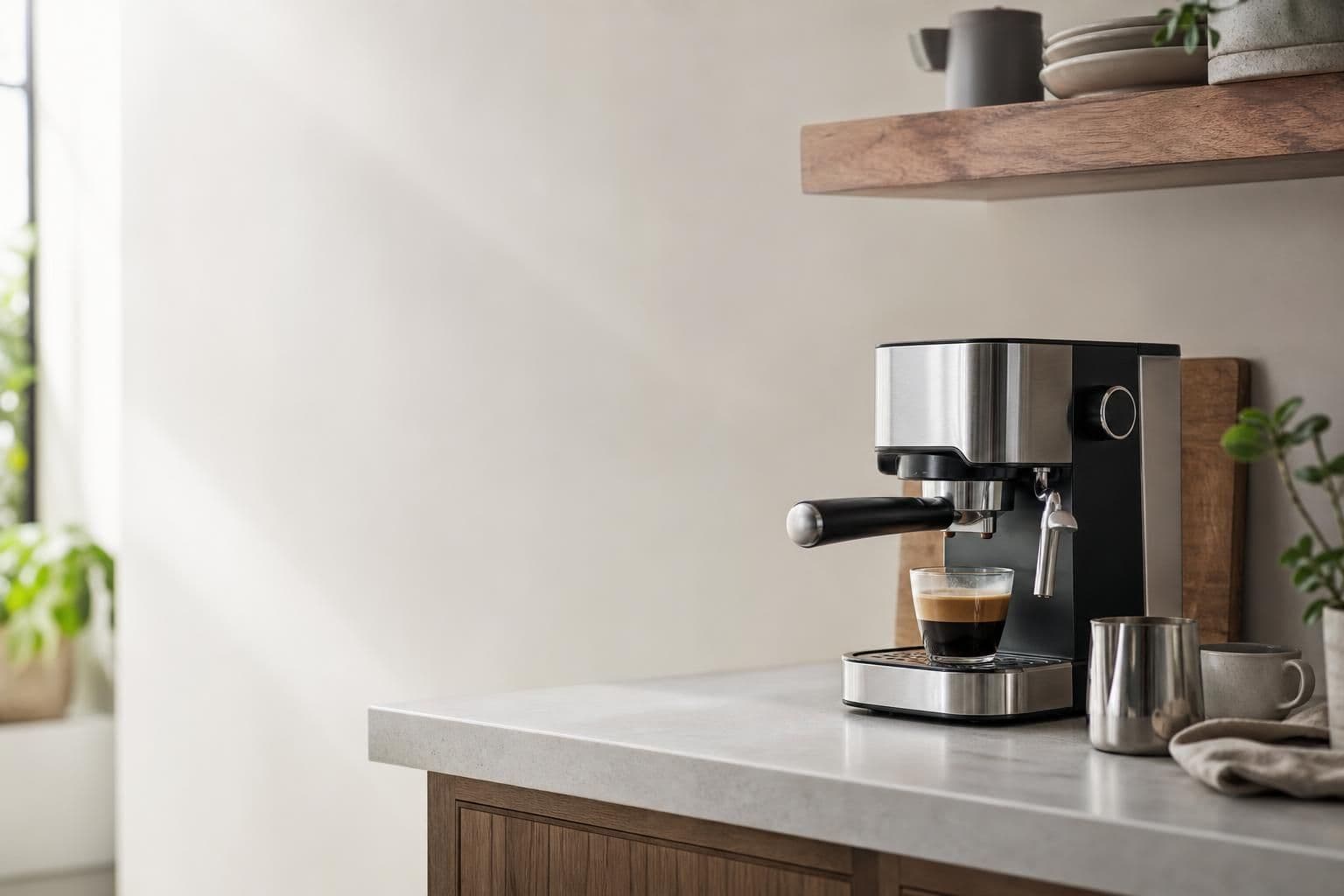
The best espresso maker for small kitchens is a compact, multi-function machine that combines brewing, frothing, and sometimes grinding into one footprint under about 12 inches wide, so you're not sacrificing counter space for a single-purpose appliance. Look for a unit that stores upright, has a removable water tank for easy refills in tight spots, and doesn't require a separate grinder or milk frother taking up additional room. A 3-in-1 design that handles espresso, milk frothing, and grinding in one body is generally the most space-efficient option available to home users.
Key takeaways
- Prioritize multi-function machines (espresso + froth + grind) over single-task appliances to save counter and cabinet space.
- Measure your counter depth and outlet placement before buying — most compact espresso makers need 8–12 inches of width and clearance for steam venting.
- A removable, top-loading water tank beats a rear-fill design in kitchens where you can't pull the machine away from the wall.
What "small kitchen friendly" actually means for espresso machines
A machine can be inexpensive and still be a bad fit for a small kitchen if it's tall, needs rear access for filling, or requires a separate grinder sitting next to it. The practical checklist is footprint, height under upper cabinets, and whether the water reservoir can be filled without pulling the unit forward.
Most apartment kitchens have between 24 and 36 inches of usable counter run near an outlet, according to general kitchen design guidance from the National Kitchen and Bath Association. That means an espresso setup — machine, cup, and maybe a small canister of grounds — needs to fit in a fraction of that run, which rules out anything wider than roughly 12–14 inches if you still want room to work.
Features that matter more than price in a tight space
- All-in-one function. A machine that grinds, brews, and froths milk removes the need for a separate grinder and frother, which is often the bigger space problem than the espresso machine itself.
- Top-fill water tank. Rear-access tanks force you to pull the unit away from the wall every time you refill, which isn't realistic if it's wedged next to a toaster or microwave.
- Vertical storage or slim profile. A narrower, taller unit usually beats a wide, short one on a counter where width is the constraint, not height.
- Simple cleanup. Removable drip trays and dishwasher-safe parts matter more in small kitchens because there's rarely a dedicated spot to let parts air-dry.
The 3-in-1 Espresso Maker fits this pattern — it combines brewing, milk frothing, and grinding in one compact body, which suits studio apartments, office break rooms, or any kitchen where a full espresso station isn't practical.
Manual vs. pump vs. capsule: what fits a small kitchen best
Not all espresso mechanisms take up the same footprint or effort. Here's how the common types compare for small-kitchen use:
| Type | Typical footprint | Effort | Best for |
|---|---|---|---|
| Manual lever | Small, no cord needed for brewing | High (manual pressure) | Minimalists, campers, no-outlet spots |
| Pump-driven multi-function | Compact, single outlet | Low (mostly automatic) | Everyday home use, small kitchens |
| Capsule machine | Small but needs pod storage | Very low | Convenience-first, less counter clutter tolerance |
| Stovetop moka pot | Smallest footprint | Medium (stovetop watching) | Kitchens with no outlet space left |
| Full-size prosumer machine | Large, often 14+ inches wide | Low once set up | Larger kitchens, frequent daily users |
For most people in a small kitchen, a pump-driven or moka-style option offers the best trade-off between space and quality without adding capsule storage to the clutter problem.
How much counter space you actually need
A good rule of thumb is to leave at least 6 inches of clearance on either side of any countertop appliance for ventilation and ease of use — a standard followed loosely across small-appliance safety guidance from bodies like UL. For espresso machines specifically, also account for steam venting space above the unit if it froths milk, since blocked vents can trigger auto shut-off on some machines.
If your kitchen counter is already crowded, it's worth doing a broader pass on the space before adding another appliance — the same logic used in decluttering a small apartment applies directly to countertops: fewer single-purpose items, more multi-function ones.
Where else these compact machines make sense
Small-kitchen espresso makers aren't just for studio apartments. They show up just as often in:
- Office break rooms where counter space is shared
- Dorm rooms with a mini-fridge and one outlet
- RVs, boats, or vacation rentals
- Guest kitchens where you don't want a permanent large appliance
If you're shopping for a coworker who lives in any of these setups, a compact espresso maker tends to land better than another mug — see gift ideas for coworkers for more low-clutter options that read as thoughtful rather than random.
A simple buying checklist
- Measure your available counter width and depth before comparing machines.
- Confirm the water tank can be filled from the top or front, not just the back.
- Check if it grinds and froths, or if you'll need separate tools for those steps.
- Look at cord length and outlet placement — many small kitchens have outlets in awkward spots.
- Decide if capsule storage is worth the convenience trade-off versus loose grounds.
For a broader look at compact gadgets that punch above their price point, the roundup of everyday gadgets under $50 covers a few other space-saving picks worth comparing against a dedicated espresso maker.
Frequently Asked Questions
Q: What size espresso machine is best for a small kitchen?
Look for a unit no wider than about 12–14 inches with a top-loading water tank. Multi-function machines that combine grinding, brewing, and frothing in one body typically save more space than buying separate single-task tools.
Q: Do I need a separate grinder for good espresso?
Not necessarily. Machines with a built-in grinder are a common solution for small kitchens, since they remove the need for a second countertop appliance, though dedicated grinders can offer more consistency for enthusiasts.
Q: Is a moka pot a good alternative to an espresso machine?
Yes, for kitchens with almost no spare counter space, a stovetop moka pot produces a strong, espresso-style coffee without needing an outlet or dedicated storage spot, though it requires manual attention on the stove.
Q: How much clearance does a countertop espresso machine need?
A general safety guideline is roughly 6 inches of clearance on each side for ventilation, plus overhead space if the machine vents steam during frothing. Check the manufacturer's manual for exact clearance requirements.
Q: Are capsule espresso machines more space-efficient than pump machines?
The machines themselves are often similarly sized, but capsule machines add ongoing storage needs for pods, while pump-driven machines only need space for loose grounds, which store more compactly over time.