Best Foldable Sunshade for Car Windshield: What to Look For
Key takeaway
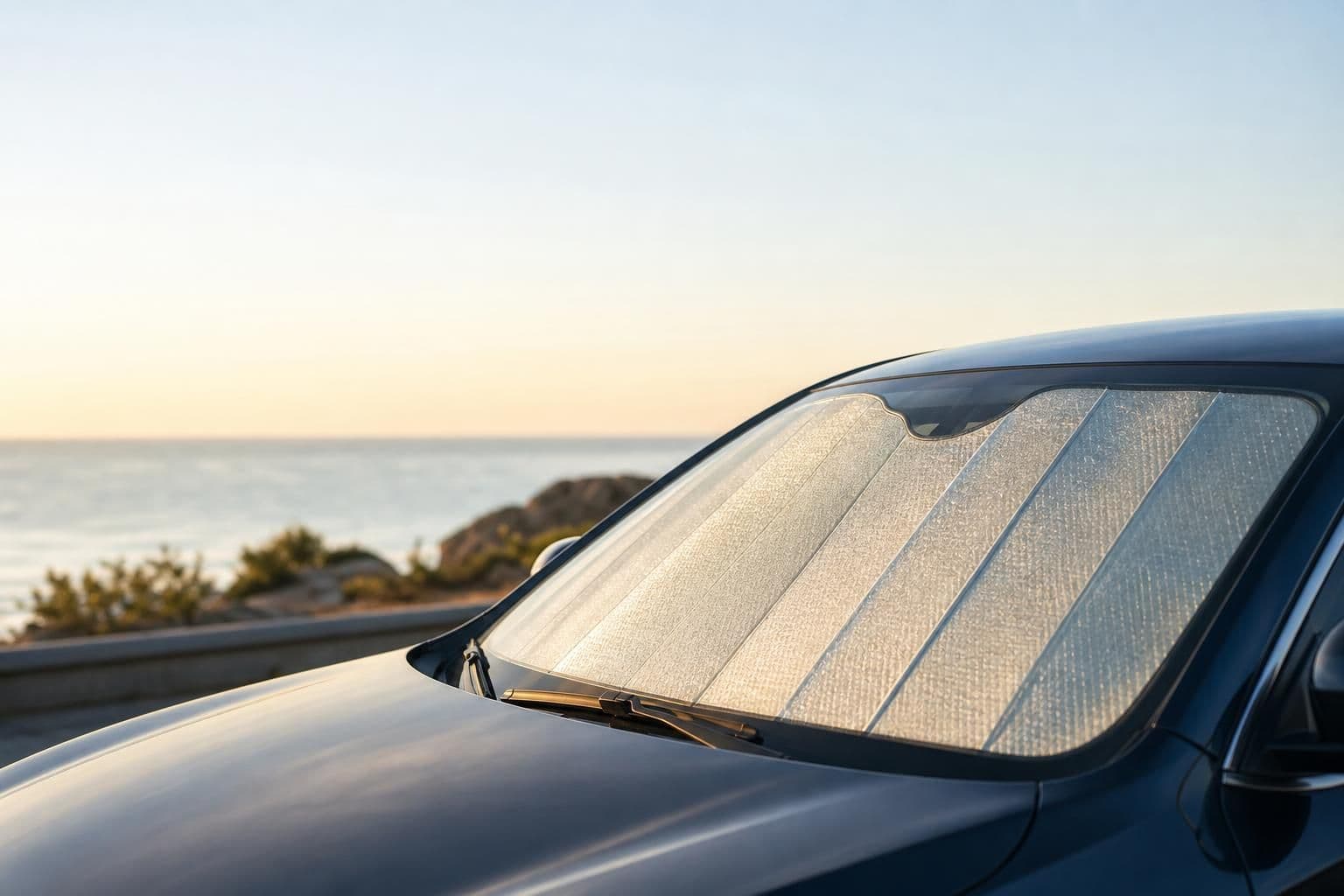
The best foldable sunshade for a car windshield is one that fully covers the glass edge-to-edge, folds down small enough to fit in a glovebox or door pocket, and sets up in under 15 seconds without you needing to line up suction cups. Umbrella-style folding shades tend to beat accordion-fold panels on setup speed and edge coverage, since they spring open to the shape of the windshield instead of needing manual adjustment. Reflective, multi-layer material matters more than size alone, because it's what blocks radiant heat rather than just shading light.
Key takeaways
- Prioritize edge-to-edge coverage over sheer size — gaps at the corners let heat and UV in regardless of how big the shade is.
- Umbrella-style folding shades set up faster than accordion or static panels and store back down to a compact size.
- Look for reflective, multi-layer material (not just a single silver sheet) since that's what actually blocks radiant heat, not just glare.
Why a Windshield Sunshade Matters More Than People Think
A car parked in direct sun on a warm day can see its interior temperature climb well past outside air temperature within an hour, even with windows cracked. The National Weather Service has documented how quickly closed vehicles heat up, which is also why child and pet safety campaigns push so hard on "never leave them in a parked car." A windshield sunshade won't turn a hot car cold, but it blocks the single largest source of solar heat gain — the windshield — and measurably cuts down on dashboard and steering wheel surface temperature, which is where most sun damage and burn risk actually happens.
Beyond comfort, UV exposure through glass over time contributes to dashboard cracking, faded upholstery, and degraded interior plastics. A sunshade is cheap insurance against that kind of slow cosmetic damage, especially for anyone who parks outside daily rather than in a garage.
Types of Foldable Sunshades Compared
Not all "foldable" shades fold the same way, and the mechanism affects both setup time and how well they hold their shape against the glass.
| Type | Setup time | Storage size | Typical weak point |
|---|---|---|---|
| Umbrella-style spring fold | Under 15 seconds | Folds to a flat disc, fits in a door pocket | Can shift in strong wind if car doors are open |
| Accordion/concertina panel | 20–30 seconds | Folds flat but wider than umbrella-style | Corners often leave small gaps |
| Bubble/foam shade | 10–20 seconds | Bulkier when folded | Loses shape and springiness over time |
| Static cling or suction-cup panel | 30–60+ seconds | Rolls or folds, less compact | Suction cups fail in heat, panel can fall |
For most everyday drivers, the umbrella-style fold hits the best balance of speed and coverage, which is the design behind the Foldable Car Windshield Sunshade Umbrella — it pops open like an umbrella to match the windshield's curve rather than relying on you to fold panels into place.
What to Actually Check Before Buying
A sunshade is a small purchase, but a few details separate one that gets used daily from one that ends up in the trunk.
- Coverage size relative to your windshield. Measure roughly, or check the shade's stated dimensions against your windshield's width — a shade that's too narrow leaves the corners exposed to direct sun.
- Material layers. Reflective foil bonded to foam or a heat-resistant fabric backing blocks more radiant heat than a single thin reflective sheet.
- Fold mechanism. Spring-loaded umbrella folds are faster to deploy one-handed than shades that need panel-by-panel folding.
- Storage footprint. If it doesn't fold small enough to live in the car permanently, it's less likely to get used consistently.
- Attachment method. Shades that wedge against the sun visors or dashboard edge tend to stay put better than ones relying only on suction cups, which weaken in heat.
Does Color or Reflectivity Actually Matter?
Yes — surface color affects how much heat is reflected versus absorbed. The U.S. Department of Energy notes that lighter, more reflective surfaces reduce heat absorption compared to darker ones, which is the same principle behind reflective sunshades using a silver or metallic outer layer rather than a plain dark fabric. A dark-colored shade may still block visible light but will absorb more heat itself, radiating some of it back into the cabin rather than reflecting it away.
Sunshades vs. Other Ways to Keep a Car Cool
A windshield shade is one piece of a bigger heat-management routine, especially for long drives or all-day parking. Cracking windows slightly, using a vented dashboard cover, or parking in shade when possible all help, but none of them address the windshield itself the way a shade does — that's still the single largest glass surface facing the sun on most vehicles. For people who spend a lot of time in the car during summer road trips, pairing a sunshade with a few other car accessories for long road trips covers both heat and general comfort in one pass.
If you're building out a broader kit for regular driving or travel days, it's worth checking a travel accessories checklist to see what else typically gets left behind until it's needed.
Frequently Asked Questions
Q: How much cooler does a windshield sunshade actually make a car?
The exact temperature drop depends on outside heat, parking duration, and shade quality, but the mechanism is consistent: blocking direct sun on the windshield reduces radiant heat hitting the dashboard and steering wheel, which are usually the hottest surfaces in a closed car. It won't bring interior air down to outside temperature on its own.
Q: Can I leave a foldable sunshade in the car permanently?
Most foldable shades are designed to be stored in the vehicle, typically in a door pocket, glovebox, or under a seat, since that's part of their appeal over rigid non-folding shades. Just avoid leaving them balled up under heavy pressure for long periods, since that can weaken the fold springs over time.
Q: Do windshield sunshades protect against UV damage, not just heat?
Yes — most reflective sunshades block a significant portion of UV rays along with visible light, which helps slow fading and cracking of dashboard materials over time. They work as a physical barrier rather than a chemical UV filter, so coverage matters more than any stated UV rating.
Q: What size sunshade fits most cars?
There's no universal size since windshields vary by vehicle, but umbrella-style shades are generally designed to expand and adjust to a range of windshield widths rather than being cut to one fixed size. Checking a product's stated maximum coverage against your vehicle type is the most reliable way to confirm fit before buying.
Q: Is a foldable sunshade better than a roll-up or accordion shade?
Foldable umbrella-style shades usually set up and pack away faster, since they spring into shape rather than needing manual panel folding. Accordion and roll-up shades can still work well, but they're more prone to leaving small gaps at the corners if not folded precisely each time.