Best Windshield Sunshade for Pickup Trucks: Buying Guide
Key takeaway
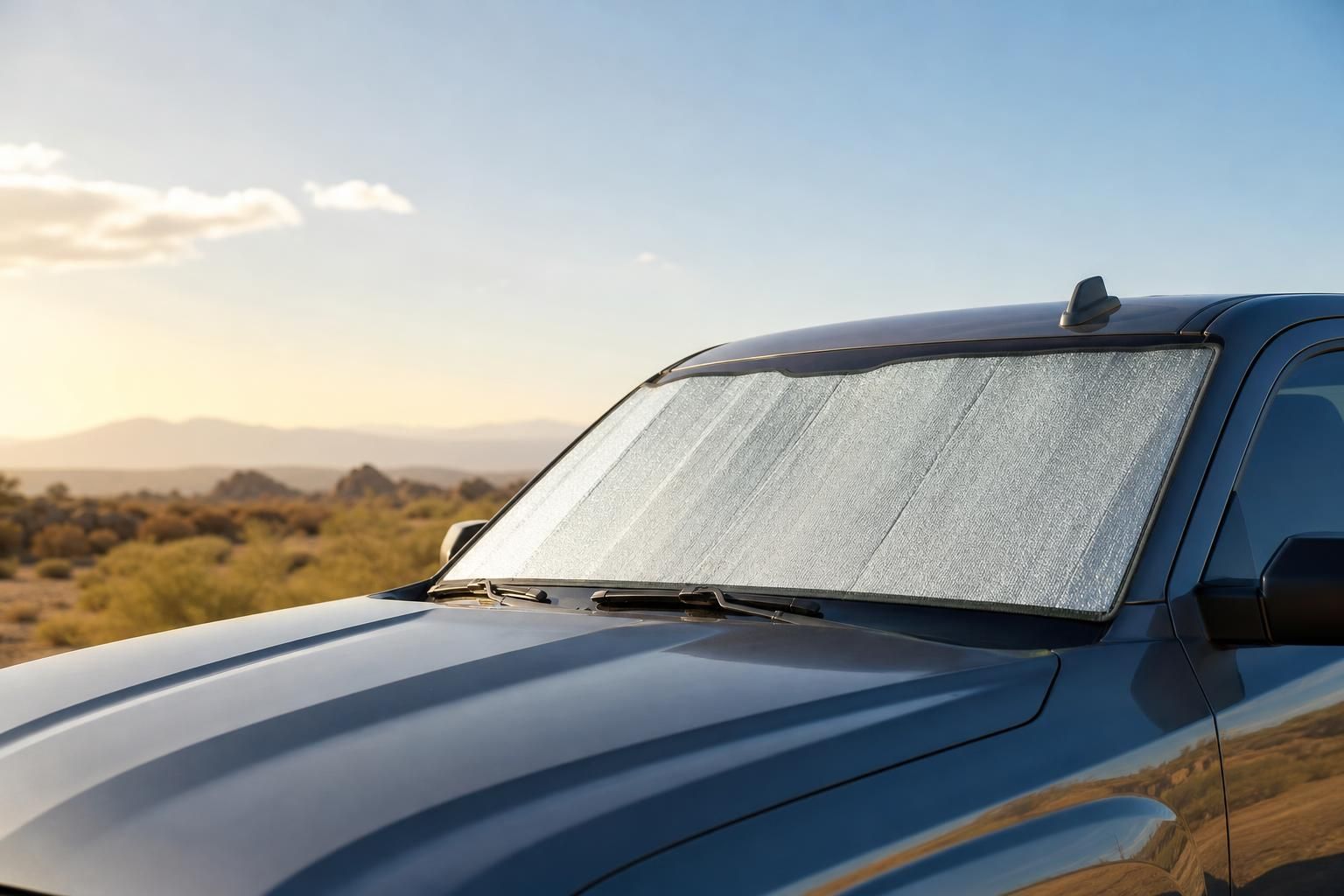
The best windshield sunshade for pickup trucks is one sized for a wide, tall windshield, foldable for easy glovebox or seat-back storage, and reflective enough to bounce sunlight instead of absorbing it. Accordion-style panels and umbrella-style folding shades both work, but fit and ease of folding matter more than brand for most truck owners. A reflective surface on both sides generally keeps the cabin cooler than a single-sided shade.
Key takeaways
- Pickup windshields are wider and more upright than sedan windshields, so measure your actual glass before buying a "universal" shade.
- A shade that folds down small enough to fit in a door pocket or under a seat gets used daily; one that doesn't, gets left in the garage.
- Reflective silver or foil-laminate surfaces block more radiant heat than plain fabric, which matters most for dark-interior trucks parked nose-first into the sun.
Why Pickup Truck Windshields Need a Different Fit
Truck windshields sit more upright than most passenger cars and are often wider across the top, especially on full-size models. A shade cut for a compact sedan will sag or leave gaps at the corners on a truck, which lets sunlight through anyway and defeats the purpose. Look for shades described as adjustable or expandable, or ones with enough overall surface area to cover a wide dash-to-roofline gap. The Foldable Car Windshield Sunshade Umbrella uses a folding umbrella-style design rather than a fixed panel, which lets it flex to irregular shapes instead of relying on an exact factory cut.
Comparing Sunshade Styles
| Style | Typical Fold Size | Best For | Watch-outs |
|---|---|---|---|
| Umbrella-style folding | Compresses to a small bundle | Trucks and SUVs with large, irregular windshields | Needs to be opened/closed each use |
| Accordion panel | Folds flat into a few sections | Vehicles with a consistent, flat windshield shape | Can leave gaps on curved or wide glass |
| Custom-cut dash cover | Doesn't fold, stays in place | Daily commuters who rarely remove it | Bulkier to store, model-specific |
| Reflective bubble wrap style | Rolls or folds loosely | Budget buyers, occasional use | Less rigid, can blow off in wind without clips |
What Actually Keeps the Cabin Cooler
Reflective surface area matters more than thickness. A shade with a foil or silver-laminate face reflects radiant heat before it passes through the glass, while a plain cloth shade mostly just blocks visible light. The National Highway Traffic Safety Administration notes that a parked car's interior can climb well above the outside air temperature within minutes, which is also why sunshades are recommended alongside cracked windows and shaded parking as basic heat-reduction steps (NHTSA). Pair a shade with parking in shade when possible rather than relying on the shade alone during extreme heat days.
Fit and Storage Checklist
- Measure the width of your windshield at its widest point and the height from dash to roofline before buying.
- Confirm the shade folds small enough to store somewhere you'll actually reach for it — door pocket, center console, or behind a seat.
- Check for a reflective coating described on the product page rather than assuming "silver-colored" means reflective-grade material.
- If you drive a crew-cab or extended-cab truck, the windshield rake angle can be steeper; an adjustable or flexible shade adapts better than a rigid panel.
Setup and Everyday Use
Most folding sunshades go in through the driver's or passenger's door with the vehicle parked, then unfold against the inside of the glass and wedge against the dash or visor clips. There's no installation and no tools — the trade-off is that you have to put it up and take it down each time you park, unlike a permanent tint. For truck owners who park outdoors at work or on job sites, that daily step is usually worth it for the drop in steering-wheel and seat temperature when you get back in. If you're also outfitting the truck for winter driving, a practical car accessories guide for winter covers the gear that complements a sunshade once the seasons change.
Budgeting for a Sunshade
Folding windshield sunshades are one of the more affordable car accessories on the market, and price differences usually come down to size, material thickness, and whether the shade includes extra features like suction cups or a storage pouch. For a fuller breakdown of what drives the price up or down, see this guide to what a windshield sunshade actually costs.
Frequently Asked Questions
Q: Do pickup trucks need a bigger sunshade than cars?
Yes. Pickup windshields are typically wider and more upright than sedan windshields, so a shade needs more surface area and better adjustability to cover the glass fully without gaps.
Q: Does a sunshade actually lower interior temperature?
It reduces radiant heat coming through the glass, particularly with a reflective surface, though actual cooling depends on outside temperature, parking angle, and how long the vehicle sits. The National Highway Traffic Safety Administration and National Weather Service both note that parked-vehicle interiors heat up quickly regardless of outside air temperature, which is why shade and ventilation are recommended together (National Weather Service).
Q: Can one sunshade fit multiple truck models?
Foldable, flexible designs adapt better to different windshield shapes than rigid custom-cut panels, but you should still check the folded and unfolded dimensions against your own windshield measurements.
Q: How should I store a folding sunshade when not in use?
Fold it along its built-in creases and store it in the door pocket, under a seat, or in a glovebox so it's easy to grab before you park in direct sun.
Q: Is a windshield sunshade a substitute for leaving windows cracked in hot weather?
No. A sunshade reduces heat gain but doesn't replace basic precautions like parking in shade or cracking windows for airflow, especially in high outdoor temperatures.