Best Power Bank for Travel: What Actually Matters
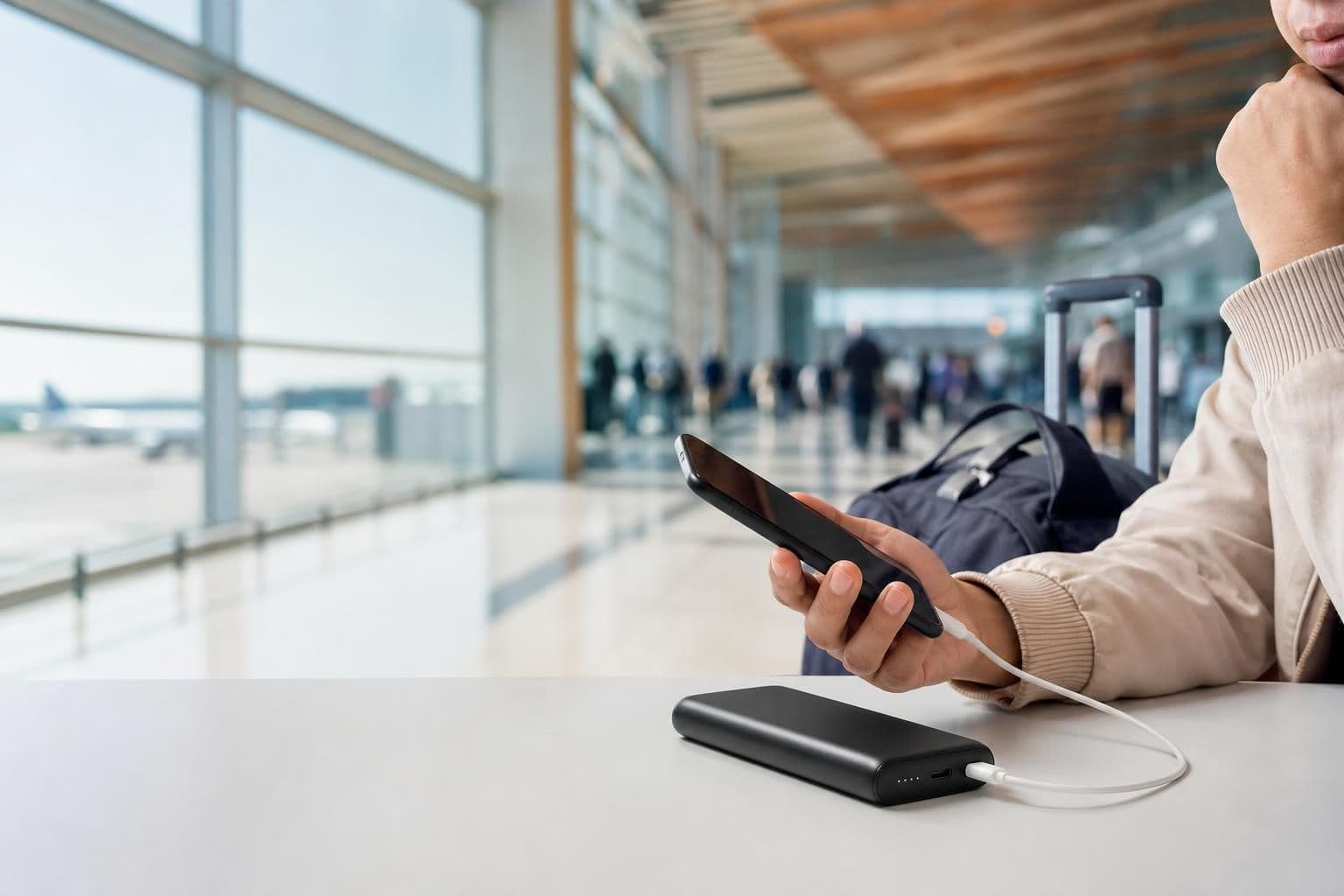
Key takeaway
The best power bank for travel is one that fits airline battery limits, holds enough charge to refill a phone at least twice, and charges fast enough that a 20-minute layover stop actually helps. For most travelers, that means a 10,000–20,000mAh lithium-ion pack with USB-C input and output, kept under the 100Wh airline limit so it can fly in carry-on without a fuss.
Key takeaways
- Stick to 10,000–20,000mAh capacity — enough for 2-4 phone charges without exceeding airline carry-on battery limits.
- Check the Wh (watt-hour) rating, not just mAh, before flying; most airlines cap spare batteries at 100Wh without approval.
- USB-C with Power Delivery (PD) charges faster than older USB-A packs, which matters most during short layovers.
Why Capacity Isn't the Only Number That Matters
A bigger mAh number sounds better, but it also means more weight, longer recharge time, and a higher chance of running into airline restrictions. A typical smartphone battery holds around 3,000–4,500mAh, so a 10,000mAh pack realistically delivers about two full charges once you account for conversion loss between the pack and the phone. Going up to 20,000mAh roughly doubles that, at the cost of extra bulk in a bag that's already carrying travel gadgets for flying.
Watt-hours (Wh) matter more than mAh when it comes to flying. The formula is Wh = (mAh ÷ 1000) × voltage, and most power banks run at 3.7V nominal, so a 20,000mAh pack lands around 74Wh — safely under the common 100Wh threshold. The TSA allows spare lithium batteries in carry-on bags but not checked luggage, and packs over 100Wh generally need airline approval, while anything over 160Wh is not allowed on passenger aircraft at all.
Charging Speed and Ports
Output speed decides how useful a power bank is when you're rushing between gates. USB-C Power Delivery (PD) and Quick Charge protocols can push 18W or higher to a compatible phone, cutting charge time significantly compared to a basic 5W USB-A port. If a pack lists both USB-A and USB-C, the USB-C side is almost always the faster one.
A few practical things to look for:
- At least one USB-C port for both charging the bank itself and outputting to a phone.
- A stated wattage output (18W, 20W, or higher) rather than just "fast charging" marketing language.
- Pass-through charging, so the bank and phone can charge at the same time from a single outlet.
Weight and Size Trade-offs
Every extra 5,000mAh typically adds roughly 100-130 grams to a pack's weight, since lithium-ion cells don't get proportionally lighter as capacity grows. For a carry-on that already has a laptop, cables, and a travel accessories checklist worth of gear, a slim 10,000mAh pack is often the more livable choice than a chunky 20,000mAh brick, even if it means one less full charge.
Comparing Common Power Bank Capacities
| Capacity | Approx. Phone Charges | Approx. Weight | Typical Watt-Hours | Best For |
|---|---|---|---|---|
| 5,000mAh | 1 charge | 100-130g | ~18Wh | Day trips, minimal carry |
| 10,000mAh | 2 charges | 180-220g | ~37Wh | Most travelers, carry-on friendly |
| 20,000mAh | 3-4 charges | 340-400g | ~74Wh | Long-haul flights, multiple devices |
| 26,800mAh+ | 4-5 charges | 450g+ | ~99Wh | Extended trips, near the airline limit |
Airline Rules Worth Knowing Before You Pack
Airline battery policy isn't just a TSA thing — it follows international air safety guidance from bodies like the International Civil Aviation Organization, which most airlines base their own rules on. In practice this means:
- Spare batteries and power banks must go in carry-on luggage, never checked bags.
- Anything over 100Wh usually needs prior airline approval, and most airlines simply don't allow it.
- Batteries over 160Wh are banned outright on passenger flights.
- Some airlines limit passengers to two spare batteries between 100-160Wh even with approval.
Because policies vary by airline and country, it's worth checking your specific carrier's page before a trip rather than assuming a pack that flew fine once will always be fine.
What Else Belongs in Your Travel Bag
A power bank solves battery life, but phone position and mounting are a separate problem on planes, trains, and in rental cars. A 5-in-1 Magnetic Phone Stand pairs well with a power bank setup since it holds a phone upright for hands-free video calls or navigation while it charges. If you're building out a fuller travel kit, the gadgets under $50 for everyday life roundup covers other small items that solve similar space and convenience problems without adding much weight.
Valenza doesn't stock power banks directly, but accessories that make charging and phone use easier on the road — like magnetic stands and cable organizers — are worth pairing with whatever battery pack you choose.
Frequently Asked Questions
Q: What size power bank is best for international travel?
A 10,000-20,000mAh pack is the practical sweet spot — enough for 2-4 phone charges while staying comfortably under the 100Wh airline limit that most carriers enforce.
Q: Can I bring a power bank in checked luggage?
No. Spare lithium-ion batteries and power banks must travel in carry-on bags; airline and aviation safety rules prohibit them in checked luggage due to fire risk.
Q: Does a higher mAh rating always mean a better power bank?
Not necessarily. Higher mAh adds weight and charge time, and going above 100Wh can create problems with airline battery limits, so matching capacity to actual trip length matters more than maximizing the number.
Q: What's the difference between USB-A and USB-C charging speed?
USB-C with Power Delivery typically outputs 18W or more, while standard USB-A ports are often limited to around 5-12W, meaning USB-C packs generally recharge a phone faster.
Q: Do I need airline approval to bring a power bank on a flight?
Only if it exceeds 100 watt-hours. Below that threshold, most airlines allow power banks in carry-on without any special approval, but it's worth checking your specific airline's policy beforehand.