Best Portable Blender for Smoothies: A Buyer's Guide
Key takeaway
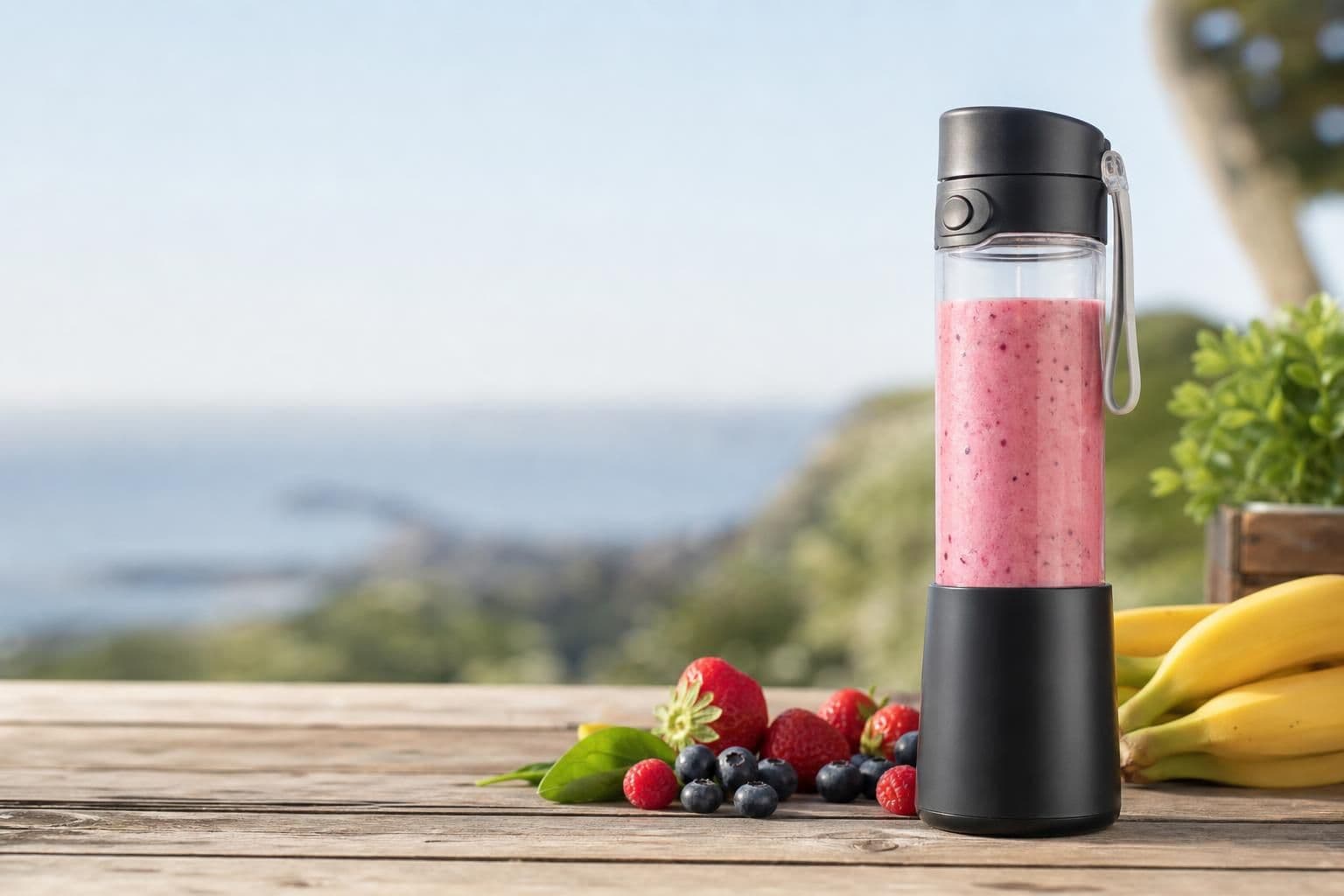
The best portable blender for smoothies is a rechargeable, USB-C model with at least 4,000mAh of battery capacity, a 300-500ml BPA-free jar, and stainless steel blades rated for soft fruit and ice. It should run 15-20 blends per charge and come apart easily for rinsing under a tap. Beyond that, the right pick depends on whether you need it for a desk, a gym bag, or a car cup holder.
Key takeaways
- Look for 4,000mAh+ battery capacity if you want more than a week of daily use between charges.
- Stainless steel blades handle ice and frozen fruit better than plastic ones, which dull faster and can crack.
- A jar under 500ml keeps the motor from straining, which is the main reason cheap portable blenders burn out early.
What Actually Makes a Portable Blender Good
Most portable blenders fail for one of three reasons: weak batteries, motors that stall on ice, or lids that leak. A blender marketed for smoothies needs enough torque to crush frozen fruit without the motor cutting out mid-blend — that usually means a minimum of 15,000 RPM on the blade, even in a compact body. Battery capacity matters just as much as motor strength; a 2,000mAh battery might sound fine on paper but often only delivers 5-8 blends before needing a recharge.
If you already own other rechargeable gadgets, you'll recognize the pattern — the same battery math that applies to a portable power bank for travel applies here. Higher mAh means longer use, but also a heavier, bulkier unit. It's a trade-off, not a free upgrade.
Battery Life, Capacity, and Blade Material Compared
Here's how the main portable blender categories stack up against each other:
| Type | Battery Capacity | Jar Size | Blade Material | Best For |
|---|---|---|---|---|
| Budget USB blenders | 1,500-2,000mAh | 250-350ml | Plastic-coated | Soft fruit, protein shakes without ice |
| Mid-range rechargeable | 3,000-4,000mAh | 350-500ml | Stainless steel | Daily smoothies with ice |
| Heavy-duty portable | 4,500-6,000mAh | 500-600ml | Hardened stainless steel | Frequent use, frozen fruit, gym routines |
| Car/cup-holder style | 2,000-3,000mAh | 300-400ml | Stainless steel | Commuters, small batches on the go |
Budget models are fine for smoothies made with soft, pre-cut fruit and no ice. Once ice enters the equation, the motor needs both stronger blades and a battery that can sustain torque for 30-60 seconds without dropping power.
Signs a Portable Blender Won't Last
A few warning signs show up before a blender actually breaks:
- The blade assembly wobbles when you twist the jar onto the base — a sign of loose seating that will leak over time.
- The manufacturer doesn't specify RPM or wattage anywhere, which usually means the motor is underpowered.
- The charging port is a generic micro-USB rather than USB-C, which is now the standard for most rechargeable electronics and easier to find cables for.
- There's no mention of a BPA-free jar, which matters for anyone blending drinks meant for daily consumption. The FDA's guidance on food-contact plastics is a useful reference point if you're comparing jar materials.
Cleaning and Food Safety Basics
Portable blenders are harder to clean than full-size ones because the motor base can't get wet. The safest routine is to rinse the jar and blade assembly immediately after use, then let it air dry fully before recharging or storing — trapped moisture near the motor seal is the most common cause of early failure. The CDC's food safety guidelines recommend washing anything that touches raw fruit within two hours to limit bacterial growth, which applies just as much to a blender jar as it does to a cutting board.
If a blender's blade assembly isn't dishwasher-safe, check the manual before assuming — some stainless steel blades corrode faster with dishwasher detergent than plain water and dish soap.
Battery Safety Matters More Than People Think
Rechargeable blenders use lithium-ion batteries, the same kind found in phones and power banks. Look for a battery that carries safety certification from a recognized testing body — UL's safety standards are one common benchmark manufacturers reference for lithium-ion consumer electronics. Overcharging or leaving a blender plugged in for days at a time is the most common way these batteries degrade early.
What Valenza Carries Instead
Valenza's current catalogue doesn't include a portable blender, so this guide is here to help you shop smart wherever you end up buying one. If you're building out a small kitchen counter and want a compact appliance that pairs well with a smoothie routine, the 3-in-1 Espresso Maker covers the coffee side of the morning routine without eating up much space — worth a look if counter room is tight. For more on compact kitchen setups generally, see this guide to choosing an espresso maker for small kitchens.
Frequently Asked Questions
Q: How long should a portable blender battery last per charge?
A good mid-range portable blender should manage 15-20 blends per full charge, assuming each blend runs 30-45 seconds. Budget models often max out at 5-8 blends before needing a recharge.
Q: Can a portable blender crush ice?
Only models with stainless steel blades and at least 15,000 RPM handle ice reliably; plastic-bladed blenders tend to stall or chip when ice is added regularly.
Q: Is it safe to leave a portable blender charging overnight?
Most manufacturers recommend against it, since lithium-ion batteries degrade faster with prolonged overcharging. Unplugging once the battery indicator shows full is the safer habit.
Q: What size jar is best for a single smoothie?
A 350-500ml jar fits most single-serving smoothies without overloading the motor. Anything larger usually needs a stronger motor than most portable models offer.
Q: Are portable blenders dishwasher-safe?
It depends on the model — the motor base should never be submerged, and even the jar and blades vary by manufacturer, so checking the included manual is the only reliable way to know.