How to Clean a Mini Washing Machine (Step-by-Step)
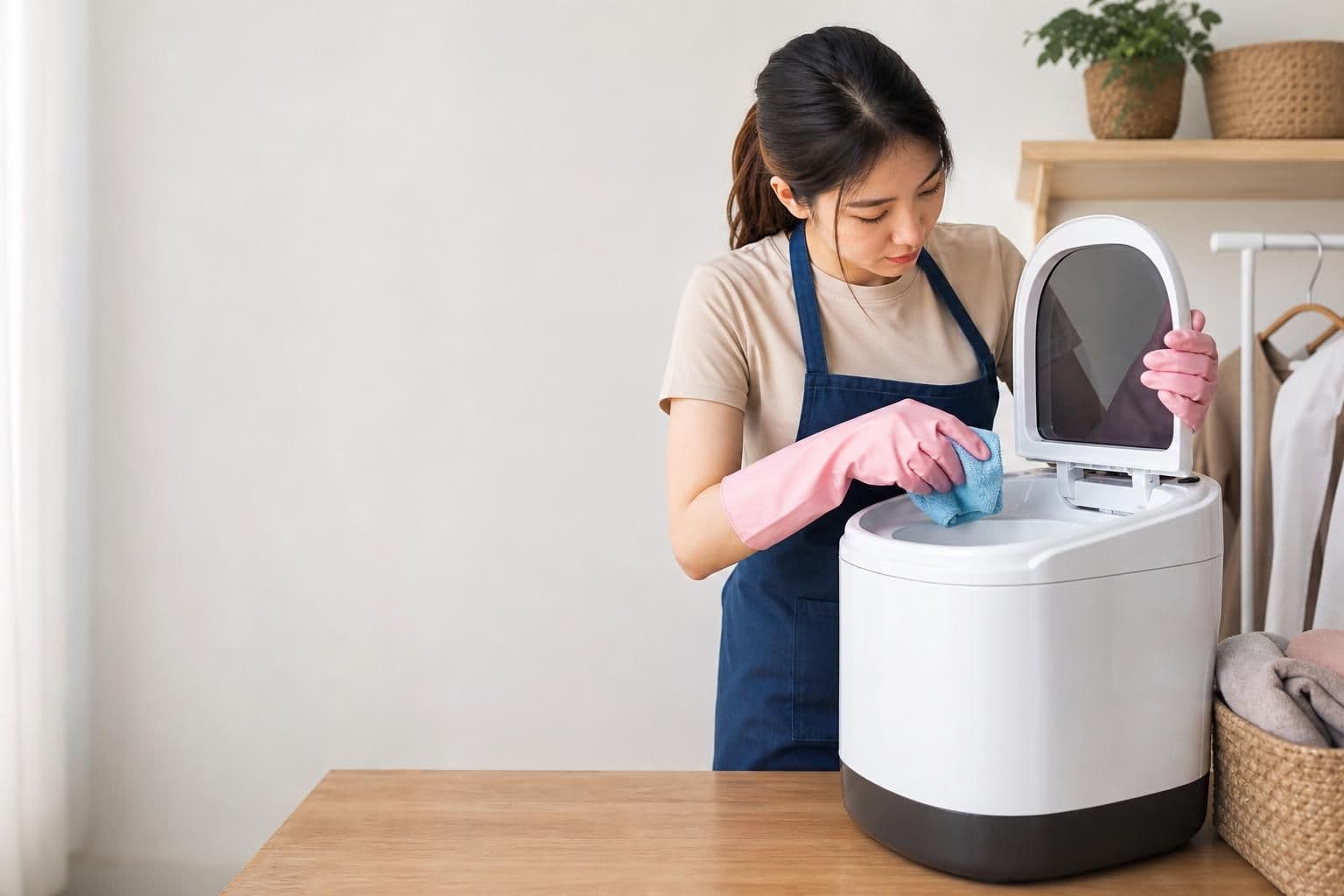
Key takeaway
To clean a mini washing machine, run an empty cycle with warm water and white vinegar to break down soap scum and mineral buildup, then wipe the drum, lid, and rubber seals with a damp cloth and mild detergent. Do this every two to four weeks with regular use, and let the unit air-dry with the lid open between washes to stop mildew from forming. A build-up of detergent residue and standing water is the most common cause of the musty smell people report with compact and portable units.
Key takeaways
- Run a vinegar-and-warm-water cycle every 2-4 weeks to dissolve soap scum and mineral scale.
- Dry the drum and seals with the lid open after each use — trapped moisture is the top cause of odor.
- Skip bleach on rubber gaskets and plastic drums unless the manufacturer's manual says it's safe, since it can dry out seals over time.
Why mini washing machines need more frequent cleaning
Compact units hold less water and detergent than a full-size machine, so residue concentrates faster in the drum and drain. Many portable and mini models also lack a self-clean cycle, which standard washers have used since the feature became common in the 2000s to flush out detergent film automatically. Without that built-in cycle, buildup is left to the user, which is why manual cleaning matters more with a smaller unit.
Hard water makes this worse. Mineral deposits from hard water can coat the inside of a drum and heating element, and the EPA notes that roughly 85% of U.S. households have some degree of hard water, which is enough to leave visible scale in small appliances over time.
Step-by-step cleaning process
- Empty the drum completely. Remove any leftover clothing or lint before you start.
- Fill with warm water to the machine's normal fill line.
- Add 1-2 cups of white vinegar (adjust for drum size) instead of detergent.
- Run a full wash cycle with no clothes inside. Vinegar's acidity helps loosen mineral scale and soap film.
- Wipe the drum, lid interior, and rubber gasket with a cloth dampened in warm, soapy water to remove any loosened residue.
- Rinse with a second cycle using plain water only, to flush out vinegar smell and leftover grime.
- Leave the lid open for at least an hour, or until fully dry, so moisture doesn't sit trapped inside.
For machines with a lint filter or drain trap, remove and rinse it separately under running water each time you do this cycle.
Dealing with odor and mold
A musty smell usually means moisture has been sitting in the drum, seal, or drain hose long enough for mildew to start. The CDC advises drying damp areas within 24-48 hours to prevent mold growth, which applies just as much to an appliance drum as it does to a damp basement. If odor persists after a vinegar cycle, wipe the gasket and drum with a solution of one part water to one part hydrogen peroxide, then rinse and air-dry fully before the next wash.
Avoid mixing bleach and vinegar in the same session — combining chlorine bleach with an acid like vinegar can release chlorine gas, so always run separate cycles and rinse thoroughly between them.
Descaling for hard water buildup
If your area has hard water, mineral scale can build up on the heating element or drum wall even between regular cleanings. Signs include a white, chalky film or a machine that seems to fill or drain more slowly than usual. Running the vinegar cycle described above every two weeks instead of monthly usually keeps scale from accumulating. For persistent buildup, a citric-acid-based descaler (sold for kettles and coffee makers) works the same way and can be used in place of vinegar for a deeper clean once a month.
Everyday maintenance habits that reduce cleaning frequency
- Wipe down the drum with a dry cloth after each wash to catch lint and residue before it dries into a film.
- Use slightly less detergent than the cap line suggests — excess soap is one of the main causes of buildup in small-capacity machines.
- Store the machine with the lid propped open when not in use, rather than sealed shut, so trapped humidity can escape.
- Empty and rinse the drain hose or removable basket weekly if your model washes daily.
A compact unit like the Rechargeable Mini Washing Machine is built for small loads — think gym clothes, baby items, or delicates — so these habits matter more than they would with a full-size laundry machine, since there's less water volume to dilute residue between washes. If you're setting up a small laundry corner as part of a broader small-space routine, it pairs well with the space-saving ideas in this guide to decluttering a small apartment.
When to replace parts instead of just cleaning
Cleaning solves buildup and odor, but it won't fix a worn gasket, a cracked drum, or a motor that struggles to spin a full load. If the rubber seal looks stretched, cracked, or discolored despite regular cleaning, or if the unit smells musty again within days of a full clean, the seal itself may need replacing rather than another wash cycle. Checking the manufacturer's manual for the specific model is the safest way to confirm whether a part is user-replaceable.
Frequently Asked Questions
Q: How often should I clean a mini washing machine?
Every two to four weeks with regular use is a reasonable baseline, and more often if you notice a musty smell, slower draining, or visible residue on the drum walls.
Q: Can I use bleach to clean a mini washing machine?
Only if the manufacturer's manual specifically allows it, since bleach can dry out rubber gaskets and plastic components over repeated use; vinegar or hydrogen peroxide are gentler alternatives for most compact units.
Q: Why does my mini washing machine smell even after cleaning?
Lingering odor usually means moisture is still trapped somewhere — check the drain hose, lint trap, and gasket folds, and leave the lid open to air-dry fully between washes rather than closing it right after use.
Q: Is vinegar safe for all mini washing machine drums?
Vinegar is safe for most plastic and stainless drums in normal, diluted amounts, but always check your specific model's manual first, since some coatings or seals may react differently to prolonged acid exposure.
Q: What causes white residue inside the drum?
White, chalky residue is typically mineral scale from hard water reacting with detergent; running a vinegar or citric-acid descaling cycle monthly usually clears it.