How to Wash Clothes Without a Washing Machine
Key takeaway
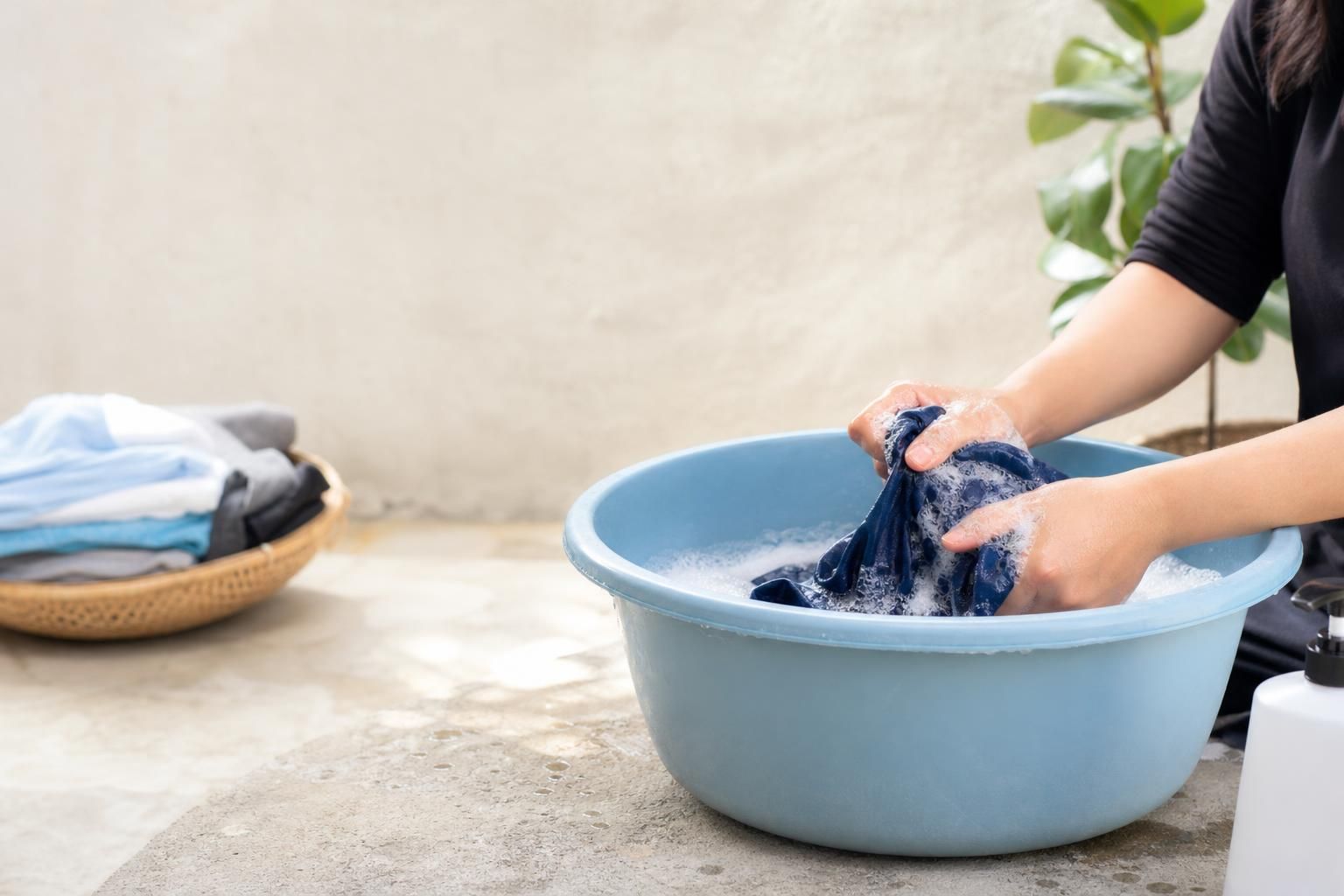
You can wash clothes without a machine by soaking them in a basin or sink with water and a small amount of detergent, agitating the fabric by hand or foot for several minutes, rinsing until the water runs clear, and wringing out excess water before air-drying. This method works for most everyday fabrics and takes roughly 20-30 minutes per load, depending on how soiled the clothes are.
Key takeaways
- Soak, agitate, rinse, and wring — in that order — for any hand wash, using cool or lukewarm water to protect colors and elastic.
- Heavily soiled items need a pre-soak of 15-30 minutes before scrubbing to loosen dirt and oils.
- A compact electric option like a rechargeable mini washing machine can cut the manual agitation step for trips, dorms, or apartments without hookups.
The Basic Hand-Washing Method
Fill a sink, bucket, or basin with enough water to fully submerge the garments. Add a small amount of liquid detergent — about a capful for a sink-sized load — and swirl it in before adding clothes so it dissolves evenly rather than sitting directly on fabric.
Let items soak for 10-15 minutes for lightly worn clothes, or up to 30 minutes for sweat-heavy or stained pieces. Soaking gives the detergent time to break down oils and loosen dirt, which matters more for cleaning than scrubbing alone. The American Cleaning Institute notes that soak time and water temperature both affect how well detergent lifts soil from fibers, which is why a quick rinse rarely gets clothes as clean as a proper soak.
After soaking, agitate the clothes by hand for two to three minutes — squeeze, knead, and rub fabric against itself, paying extra attention to collars, cuffs, and underarms where oils concentrate.
Rinsing and Wringing Without a Machine
Drain the soapy water and refill with clean water, then swish garments until no suds remain. Repeat once if the water still looks cloudy or feels slippery, since leftover detergent residue can irritate skin and leave fabric stiff once dry.
To wring without damaging fabric:
- Twist delicate items gently rather than forcefully, since wringing too hard can stretch knits and weaken seams.
- Press (don't twist) structured items like jeans against the side of the basin to push water out.
- Roll garments in a dry towel and press down to pull out extra moisture before hanging.
Drying Clothes Without a Dryer
Air-drying is slower than machine drying but works well with a bit of planning. Hang clothes on a line, rack, or sturdy hangers in a well-ventilated spot, and spread out heavier items like jeans or towels so air can reach both sides.
Indoors, a fan pointed at drying racks speeds things up noticeably, and placing items near (not on) a heat source works faster than a closed room with no airflow. The U.S. Department of Energy points out that air-drying also avoids the energy use of a dryer cycle entirely, which is useful to know if you're doing this regularly rather than as a one-off.
When You Might Need This (and a Faster Alternative)
Hand-washing comes up most often when there's no machine on-site — short-term rentals, hostels, small apartments, or mid-trip stops where laundromats aren't convenient. If you're already planning how to manage laundry on the road, it pairs well with general packing habits covered in this guide to staying organized while traveling.
For anyone doing this often enough that hand-agitation gets tiring, a compact electric washer removes that step without needing a full-size machine or plumbing hookup. The Rechargeable Mini Washing Machine is built for exactly that in-between situation — small loads, small spaces, no installation.
Fabric-Specific Notes
Not every fabric behaves the same way in a basin wash:
- Cotton and linen tolerate hand-washing well and can handle firmer scrubbing on tough stains.
- Wool and delicates need cooler water and gentle pressing rather than wringing, since heat and agitation can cause shrinkage or felting.
- Elastic-heavy items (waistbands, athletic wear) should be washed in cooler water and laid flat to dry, since high heat breaks down elastic fibers over repeated washes — the same reason stretch garments like elastic belts are built to avoid rigid hardware that can snag during a basin wash.
Frequently Asked Questions
Q: Can you wash clothes with just water and no detergent?
Water alone removes some surface dust and loose dirt, but it won't break down oils, sweat, or set-in stains as effectively as water paired with a small amount of detergent.
Q: How long should clothes soak before hand-washing?
Lightly worn clothes need about 10-15 minutes; heavily soiled or sweaty items benefit from 20-30 minutes so the detergent has time to loosen dirt before scrubbing.
Q: Is hand-washing bad for clothes?
Hand-washing is generally gentler than machine agitation, which is why it's often recommended for delicates, as long as you avoid harsh twisting or wringing that stresses seams and elastic.
Q: How do you dry clothes faster without a dryer?
Spread garments out rather than bunching them, use a fan for airflow, and hang heavier items like jeans or towels where air can reach both sides evenly.
Q: Is a portable mini washing machine worth it instead of hand-washing?
If you do laundry by hand often — in a small apartment, dorm, or while traveling — a compact electric washer saves the manual agitation step and can handle small loads without needing a full laundry hookup.