What Is a Posture Corrector? A Plain-English Guide
Key takeaway
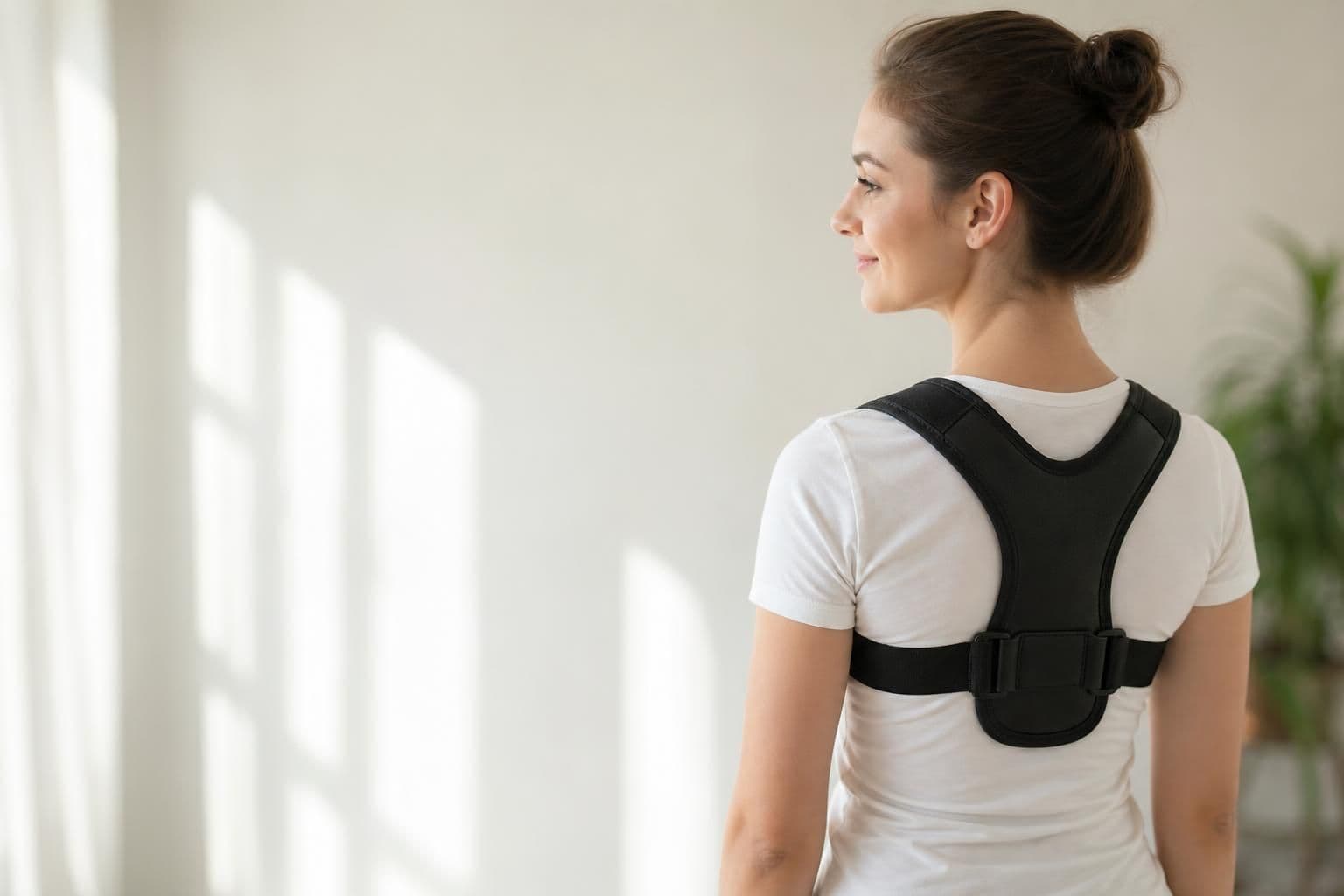
A posture corrector is a wearable brace or strap-based device designed to pull your shoulders back and align your spine into a more upright position, usually by looping around the shoulders, upper back, or torso. It works by applying gentle resistance so that slouching feels uncomfortable, prompting the wearer to sit or stand straighter. It doesn't fix posture permanently on its own — it's a physical reminder that works best alongside stretching and strengthening habits.
Key takeaways
- A posture corrector applies gentle tension across the shoulders/back so slouching becomes noticeable and mildly uncomfortable, not a permanent fix.
- Most experts recommend wearing one for short stretches (often 15–30 minutes at a time) rather than all day, since muscles need to build their own strength.
- Posture correctors pair best with ergonomic changes — desk height, chair support, screen position — rather than replacing them.
How a Posture Corrector Actually Works
Most posture correctors use straps that cross the upper back in a figure-eight or X pattern, anchoring around the shoulders. When you round your shoulders forward, the straps tighten and create resistance, which is your cue to pull your shoulders back. Some versions are simple elastic pull-back braces; others are more structured with padding along the spine. None of them physically force your spine into shape — they rely on your own muscles reacting to the tension.
This is the same basic mechanism behind resistance-based training: repeated small corrections, done consistently, help your body "remember" a better position over time. The Mayo Clinic notes that posture is largely a function of muscle strength and habit, which is why a brace works better as a training aid than as a standalone cure.
Who Typically Uses One
- Office workers who sit for long stretches and notice shoulder or neck rounding by mid-afternoon
- People recovering from an injury who need a gentle reminder to avoid slouching while muscles heal
- Anyone doing repetitive forward-leaning tasks — typing, driving, phone scrolling — where the head drifts forward over hours
If your day is mostly desk-bound, the brace addresses the symptom, but the root cause is often the workstation itself. Adjusting your desk setup so your screen sits at eye level and your chair supports your lower back tends to reduce the slouching trigger in the first place, rather than just correcting it after it happens.
What It Won't Do
A posture corrector won't strengthen your core or back muscles by itself, and it won't reverse structural spine conditions like scoliosis or kyphosis. The National Institute of Arthritis and Musculoskeletal and Skin Diseases points out that chronic poor posture is often tied to weak or imbalanced muscles, meaning long-term improvement usually requires targeted exercise, not just external support. Wearing a brace 24/7 can also cause muscles to become dependent on the tension rather than doing the work themselves, which is why most guidance suggests limited daily use rather than all-day wear.
Signs Poor Posture Might Be an Office Problem, Not a Body Problem
Sometimes what feels like "bad posture" is really a mismatch between your body and your workspace. Common culprits:
- A monitor positioned too low, forcing the neck to tilt forward for hours
- A chair without lumbar support, letting the lower back round
- A desk that's too high or too low relative to your elbows when typing
- No footrest, causing the hips to tilt and the spine to compensate
Small adjustments to how you organize a compact desk setup — repositioning the monitor, adding a footrest, or clearing clutter that forces awkward reaching — often reduce the slouching that a posture corrector is trying to counteract.
Choosing Between a Brace and a Supportive Seat
For people who spend long hours sitting rather than standing, the seat itself often matters more than a strap across the shoulders. A chair or seat that keeps the hips and lower back properly supported reduces the tendency to slump in the first place. If you're setting up a home office, a car trip seat, or an outdoor workstation and want something that supports better sitting posture without a brace, a collapsible seat is a simple way to add back support wherever you're sitting, rather than relying on a strap alone.
How Long It Takes to Notice a Difference
There's no fixed timeline, since it depends on how weak or tight the surrounding muscles are and how consistently the brace is used. Physical therapists generally frame posture correction as a gradual retraining process — days to weeks of consistent, short-duration wear paired with stretching, not an overnight fix. Expecting immediate results is the most common reason people give up on these devices early.
Frequently Asked Questions
Q: Does a posture corrector actually fix bad posture permanently?
Not on its own. It acts as a physical reminder that discourages slouching, but lasting improvement comes from strengthening the muscles that hold you upright, which usually means combining the brace with stretching or exercise.
Q: How many hours a day should you wear a posture corrector?
Most guidance suggests short sessions of roughly 15 to 30 minutes at a time rather than wearing it all day, so your muscles still have to do some of the work themselves.
Q: Can a posture corrector help with neck pain from desk work?
It can reduce forward head posture that contributes to neck strain, but if the root cause is a monitor or chair positioned incorrectly, fixing the workstation setup usually has a bigger effect.
Q: Is it normal for a posture corrector to feel uncomfortable at first?
Mild tightness or awareness across the shoulders is expected since that's how the device signals slouching; sharp pain or numbness is not normal and means it's fitted too tightly or worn too long.
Q: Are posture correctors only for people with existing back problems?
No — many users are healthy adults who simply spend long hours at a desk or in a car and want a reminder to sit straighter; it's a preventive habit tool as much as a corrective one.