How Does a Personal Safety Alarm Work? A Clear Breakdown
Key takeaway
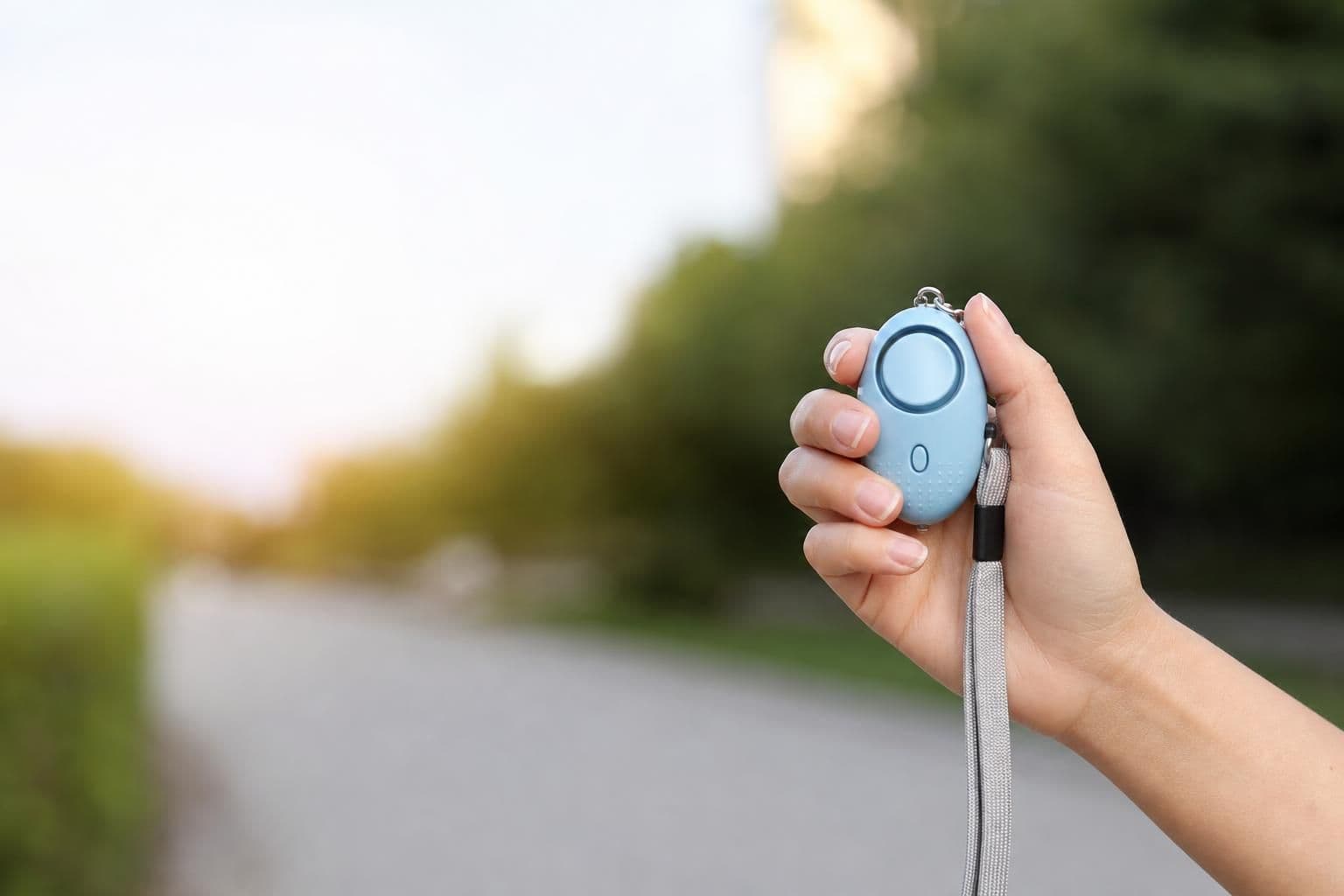
A personal safety alarm works by using a pull-pin, button, or motion trigger to activate a small internal siren, usually producing a sound between 100 and 140 decibels. The sudden noise is meant to startle a would-be attacker, draw attention from nearby people, and buy the user a few seconds to get away. Most models run on replaceable batteries and fit on a keychain, bag strap, or wristband.
Key takeaways
- The loudness (often 100-140 dB) is the core safety mechanism — it's designed to startle and attract attention, not to physically stop anyone.
- A pull-pin or button trigger means the alarm only works if it's accessible and the user has practiced using it under stress.
- Alarms are a deterrent and attention-getter, not a substitute for situational awareness, trusted contacts, or emergency services.
The Basic Mechanism Behind a Personal Alarm
Inside a typical personal safety alarm is a small circuit board, a battery, and a piezoelectric or electromechanical siren. When the pin is pulled or the button is pressed, the circuit completes and the siren activates immediately — there's no warm-up delay. Many models also include an LED strobe light, which helps in low-light situations by making the user more visible to passersby or security cameras.
The decibel rating matters more than people think. For comparison, a standard smoke detector sounds around 85 dB, while many personal alarms are built to exceed 120 dB — close to the volume of a siren or a loud rock concert. The Occupational Safety and Health Administration notes that sustained exposure to sound above 85 dB can damage hearing over time, which is part of why these alarms are effective: the noise is genuinely uncomfortable at close range, for the attacker as much as anyone nearby.
Why Loud Noise Is the Core Safety Feature
The theory behind these devices isn't that noise will physically repel someone — it's that most people, including attackers, want to avoid attention. A sudden, piercing sound can:
- Startle an attacker and break their focus for a moment
- Alert people nearby that something is wrong
- Signal a location if someone is calling for help in a public space
This lines up with general crime-deterrence research from groups like the National Institute of Justice, which has studied how visibility and noise reduce the likelihood that a crime is completed, since most opportunistic offenders prioritize not being seen or identified.
Types of Personal Safety Alarms
Not all alarms trigger the same way. The three most common types are:
- Pull-pin alarms — a cord or pin is yanked out, breaking the circuit and triggering the siren until it's reinserted.
- Push-button alarms — a single press activates the sound, often with a second press to turn it off.
- Motion or impact alarms — these trigger from sudden movement or a hard jolt, sometimes used on bags or doors rather than carried directly.
Battery life varies by model and usage pattern, but most rely on small replaceable or coin-cell batteries rather than rechargeable ones, which keeps the devices lightweight and inexpensive to maintain.
Where Personal Alarms Fit Into a Bigger Safety Routine
A personal alarm is one layer, not a complete plan. It works best alongside habits like sharing your location with someone you trust, parking under well-lit areas, and knowing your surroundings — the kind of practical awareness that also applies when you're organizing your car for a road trip and want quick access to essentials without digging through clutter. Keeping a safety alarm somewhere reachable, like clipped to a bag strap rather than buried at the bottom, is part of what makes it useful in the first place.
Common Mistakes That Make Alarms Less Effective
People often buy a personal alarm and never test it, which means the first time they pull the pin is during an actual emergency — not ideal. A few practical fixes:
- Test the alarm every few months to confirm the battery still works.
- Practice locating and triggering it without looking, since stressful moments reduce fine motor coordination.
- Store it somewhere you'll actually reach for, not in a drawer or the bottom of a bag.
A Related Option for Personal Security
Personal alarms are about sound and attention; they don't record anything. If what you're actually looking for is a way to document an incident — for a walk, a delivery route, or just peace of mind — that's a different category of device. Valenza's 4K Rotatable Body Camera is built for that kind of personal documentation rather than for making noise, and it's worth understanding the difference before choosing which tool actually solves your problem. Laws on recording people vary by state and country, so it's worth checking local rules before using any recording device, and it should never be used to covertly record someone without their knowledge.
Frequently Asked Questions
Q: How loud is a typical personal safety alarm?
Most personal safety alarms produce sound in the 100-140 decibel range, similar to or louder than a standard smoke detector, which is loud enough to be startling and to carry attention over a distance in public spaces.
Q: Do personal alarms actually stop an attack?
They're designed to deter and disrupt, not to physically restrain anyone — the loud, sudden noise is meant to startle an attacker and draw outside attention, giving the user a chance to move away or call for help.
Q: Can a personal alarm go off accidentally?
Yes, pull-pin and motion-triggered models can activate from being bumped, dropped, or caught on something, which is why many people choose a style with a secure clip or a push-button design that requires deliberate pressure.
Q: What's the difference between a personal alarm and a body camera?
A personal alarm emits sound to attract attention in the moment; a body camera records video for later reference and doesn't make noise or physically deter anyone on its own — they solve different problems and can be used together.
Q: Do personal alarms need special batteries?
Most use small replaceable batteries rather than rechargeable ones, so it's worth checking the battery type before buying and keeping a spare on hand if you plan to carry the alarm daily.