How to Choose a Cabinet Color for a Small Kitchen
Key takeaway
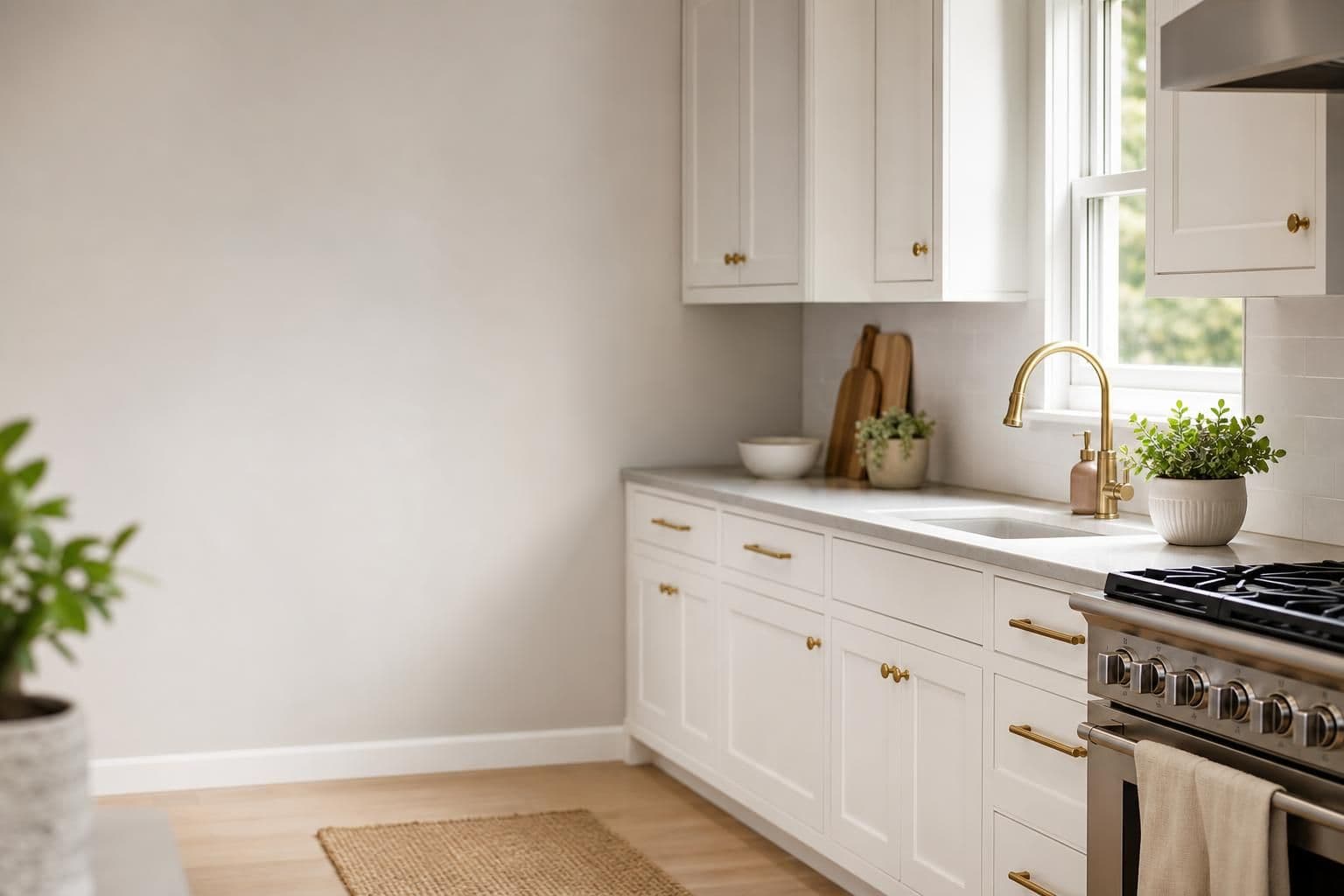
The best cabinet color for a small kitchen is usually one with a light reflectance value above 50, a warm or neutral undertone that matches your natural light, and a satin or matte finish that hides fingerprints without absorbing the room's brightness. Pale colors expand a room visually, but the right mid-tone or two-tone combination can work just as well if it's paired with a lighter countertop and enough contrast to avoid feeling boxed in. The real decision comes down to how much natural light the room gets, what's already fixed (floor, counters, walls), and how the finish holds up to daily wear.
Key takeaways
- Choose a cabinet color with a light reflectance value (LRV) of 50 or higher if the kitchen has limited windows or faces away from direct sun.
- Match undertones: warm wood floors and creamy walls pair better with warm whites and greiges than stark, cool-toned whites.
- Test large samples on the actual wall at different times of day before committing, since Hawaii's bright, shifting daylight changes how a color reads.
Start With How Much Natural Light the Room Actually Gets
Cabinet color reads differently depending on the direction a kitchen faces and how much daylight reaches the cabinet boxes themselves, not just the room overall. A kitchen with a single small window or one that backs up to a lanai with deep roof overhangs gets far less direct light than an open kitchen facing a lawn or ocean view, even in the same house. Paint and cabinet manufacturers rate color brightness using Light Reflectance Value (LRV), a 0–100 scale where 0 absorbs all light and 100 reflects nearly all of it; colors in the 50–85 range are generally what designers reach for in rooms that need to feel more open, according to Benjamin Moore's color resources. If your kitchen gets strong, direct sun for part of the day, a slightly deeper color can actually look better than a stark white, which can appear washed out or glaring.
Undertones Matter More Than the Color Name
Two cabinets labeled "white" can look completely different once installed — one leans warm and creamy, the other leans cool and almost blue-gray. This happens because of undertones, the subtle secondary colors mixed into a base paint or stain. In a small kitchen, undertone mismatches are more noticeable because there's less visual space to dilute the clash.
- If your flooring or countertop has warm veining (beige, gold, brown), pair cabinets with warm whites, creams, or soft taupes rather than cool grays.
- If your countertop is a cool white or gray quartz, a true white or soft blue-gray cabinet will feel more cohesive.
- Bring a physical sample of your flooring or countertop material to compare against cabinet door samples in the same lighting where they'll actually live.
Consider Finish, Not Just Hue
Sheen level changes how a color performs in daily use just as much as the color itself. High-gloss slab doors bounce more light around a small room and can make it feel larger, but they also show water spots and fingerprints more readily — a real consideration in a kitchen used daily for cooking and cleanup. Matte and satin finishes hide smudges better and are more forgiving in high-traffic condo kitchens, though they reflect slightly less light. The door style itself also affects how color reads: a flat slab door shows a solid block of color, while a shaker door's recessed panel creates shadow lines that can make even a light color feel slightly busier. If you're deciding between the two styles, this comparison of shaker and slab cabinet doors for Hawaii kitchens breaks down how each performs in island homes.
Two-Tone Cabinets Can Work in Small Kitchens Too
The idea that small kitchens must be all one light color is outdated. A common approach that still reads as open and airy is using a lighter color on upper cabinets and a slightly deeper tone on the lower cabinets or a single island. This keeps sightlines up toward the ceiling light while grounding the room with a richer color at eye level and below. The key ratio most designers use is roughly two-thirds light, one-third dark, so the deeper tone reads as an accent rather than dominating the room.
Don't Skip the Climate Factor
Hawaii's humidity and salt-laden air affect more than the cabinet box material — they can also affect how certain finishes age over time. Average relative humidity in Honolulu runs in the 60–70% range for much of the year, according to NOAA's climate data for Hawaii, and that moisture can cause some finishes to yellow, peel, or show wear faster near ocean-facing windows or in kitchens without much air conditioning. Darker, matte finishes on lower-quality substrates sometimes show fading or sheen changes faster in direct sun than lighter colors on moisture-resistant materials. If durability is as important to you as color, it's worth reviewing the most humidity-resistant cabinet materials for Hawaii homes before finalizing a finish, since the base material affects how well any color holds up over the years.
Test Before You Commit
Paint chips and small cabinet door samples rarely tell the full story once a color covers dozens of square feet of cabinetry. Order the largest sample size available, prop it against your actual wall and flooring, and look at it in the morning, midday, and evening — Hawaii's intense midday sun can wash out a color that looks perfectly balanced at 7 a.m. A 3D rendering tool that places your chosen color on your actual kitchen layout removes a lot of the guesswork before doors are ordered; tools like the free 3D kitchen design visualizer let you swap cabinet colors virtually against your real cabinet layout and lighting before committing. Some homeowners working with a design team, such as VC Flooring & Stone, use this step specifically to compare two or three finalist colors side by side before ordering samples in person.
Frequently Asked Questions
Q: What is the best cabinet color for a small kitchen with little natural light?
A light, warm neutral with an LRV around 60–75, such as a soft white or warm greige, generally works best because it reflects more of the available light without looking sterile. Pair it with a lighter countertop and glossy or satin hardware to bounce light further into the room.
Q: Do dark cabinets always make a small kitchen look smaller?
Not necessarily — dark lower cabinets paired with lighter upper cabinets and adequate lighting can still feel open, since the eye is drawn upward and outward rather than boxed in. Dark cabinets tend to shrink a room visually mainly when they're used on all surfaces with poor lighting and no contrast.
Q: Should cabinet color match the countertop or contrast with it?
Either can work, but the undertone needs to be consistent — a warm cabinet with a cool-toned countertop often looks mismatched even if the colors themselves are attractive individually. Matching or complementary undertones create a cohesive look, while contrast in value (light versus dark) adds visual interest without clashing.
Q: How does humidity affect cabinet color choice in Hawaii?
Humidity doesn't change the color itself, but it can affect how certain finishes age, with some matte or lower-grade finishes yellowing or losing sheen faster in consistently humid, sun-exposed kitchens. Choosing a moisture-resistant substrate and finish matters more for long-term appearance than the color selection alone.
Q: Is it better to choose cabinet color before or after selecting countertops and flooring?
Most designers recommend choosing large, hard-to-change surfaces like flooring first, then building cabinet and countertop colors around it, since flooring sets the room's overall undertone. If you're planning a full remodel, working through a kitchen remodel timeline helps clarify which decisions need to happen first.