How to Clean Kitchen Cabinets: A Hawaii Homeowner's Guide
Key takeaway
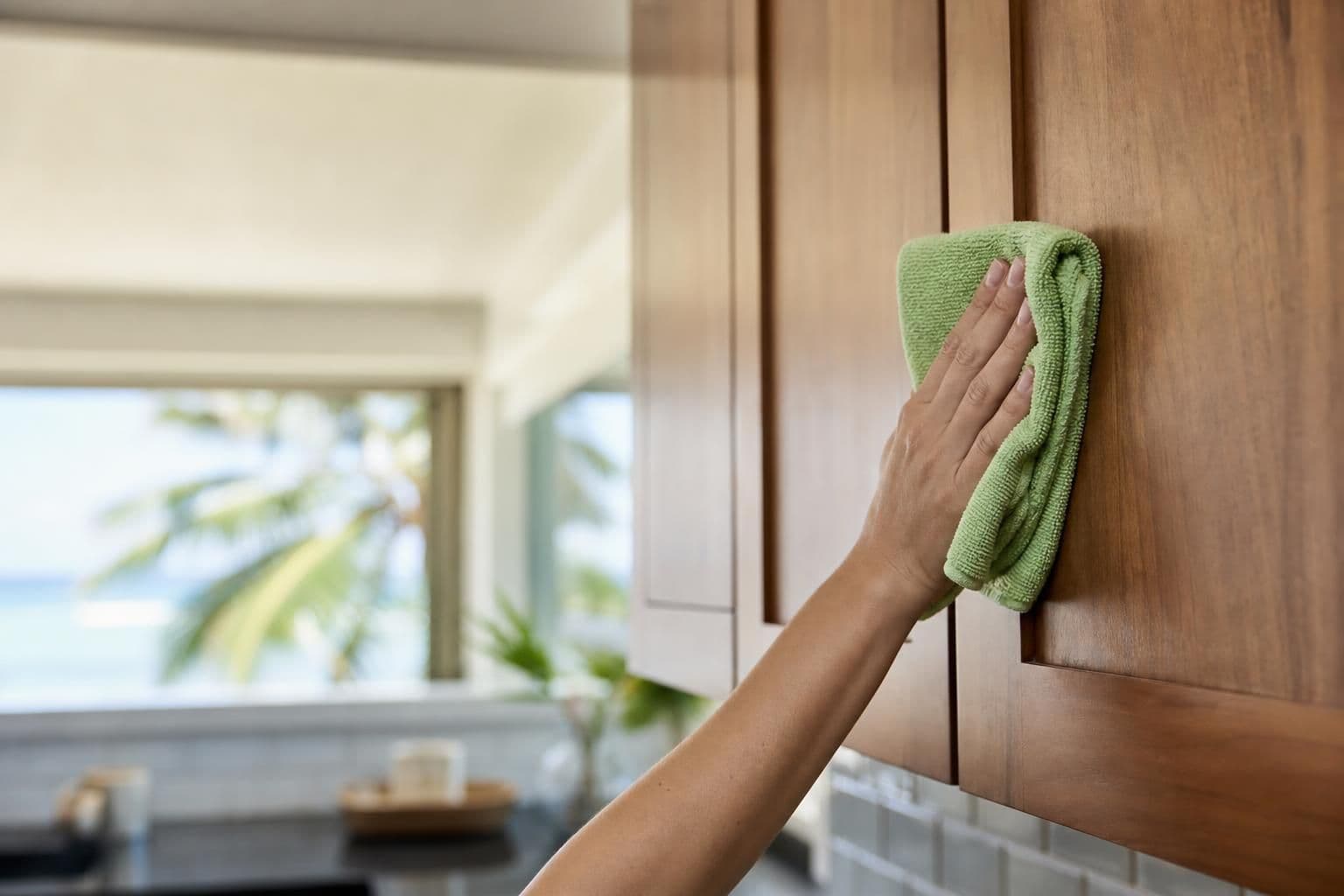
To clean kitchen cabinets, wipe surfaces weekly with a soft microfiber cloth and a pH-neutral cleaner or a mild dish soap solution, always drying the wood or laminate afterward to prevent moisture damage. For built-up grease, apply a degreasing spray or a diluted vinegar solution, let it sit for a few minutes, then wipe with the grain and buff dry. In Hawaii's humid, salt-air climate, drying cabinets after every cleaning is just as important as the cleaning itself, since trapped moisture is what causes swelling, peeling, and mildew.
Key takeaways
- Use a pH-neutral cleaner or mild dish soap, never ammonia-based or abrasive products, on painted and wood cabinets.
- Always dry cabinet surfaces immediately after cleaning — in Oahu's humidity, leftover moisture is the main cause of warping and mildew.
- If grease, swelling, or peeling laminate keep coming back no matter how often you clean, it's usually a sign the cabinets need refinishing or replacement, not more scrubbing.
Why Hawaii's Climate Changes the Cleaning Rules
Indoor relative humidity in Honolulu kitchens regularly sits in the 60–70% range, especially during rainy season, which is higher than most mainland cities ever see. That moisture load means water spots, steam, and condensation linger longer on cabinet surfaces, giving mold and mildew more time to take hold. Salt air carried in through open windows and lanai doors also settles as a fine residue on cabinet hardware and finishes, which can dull sheen and corrode metal hinges over time if it isn't wiped away regularly.
A Simple Weekly Cleaning Routine
Most kitchen cabinets only need light, frequent cleaning rather than heavy scrubbing. A basic routine looks like this:
- Dust cabinet fronts and hardware with a dry microfiber cloth two to three times a week to remove airborne salt residue and dust before it builds up.
- Mix a few drops of mild dish soap into warm water for a general wipe-down; avoid soaking the cloth.
- Wipe in the direction of the wood grain on stained or wood-veneer doors to avoid streaking.
- Dry every surface with a second clean cloth immediately — this single step does more to protect cabinets in Hawaii than any cleaner you choose.
- Clean cabinet interiors every few months, since humidity can cause shelf paper or unsealed wood to develop a musty smell even without visible spills.
Tackling Grease and Cooking Residue
Grease splatter near the stove and range hood cabinets needs a stronger approach than weekly dusting. A degreasing spray formulated for kitchens, or a solution of one part white vinegar to ten parts warm water, will cut through baked-on residue when it's given a few minutes of dwell time before wiping. Work in small sections, rinse the cloth often, and finish with a barely damp cloth to remove any soap or vinegar film, since leftover residue attracts dust and grease faster than a clean surface. Avoid scouring pads or anything abrasive on painted shaker or slab-style cabinets, since they can burnish the finish and leave visible marks that show under kitchen lighting.
If your kitchen is mid-renovation or you're deciding between finishes that hold up better to daily grease and steam, it's worth looking at options during a full kitchen remodel timeline rather than fighting the same stains on cabinets that were never suited to heavy cooking in the first place.
Cleaning Different Cabinet Finishes
Not every cabinet material responds the same way to cleaning products:
- Painted or shaker-style cabinets – Use only pH-neutral or mild soap solutions; anything acidic or ammonia-based can strip or dull the paint sheen over time.
- Slab and high-gloss cabinets – Microfiber only, since paper towels and rough sponges can create fine scratches visible in direct light.
- Natural wood veneer or stain-grade cabinets – Keep water contact minimal; wipe quickly and dry thoroughly, since wood veneer is the most vulnerable finish in high-humidity kitchens.
- Laminate cabinets – Tolerate slightly more moisture than real wood but still shouldn't be left wet, since prolonged dampness at the seams can cause peeling.
Bathroom cabinetry near sinks and showers faces even more moisture exposure than kitchen cabinets, which is one reason material choice matters as much as cleaning habits — a point covered in more depth in this guide to custom bathroom vanity cabinets.
What to Avoid
A few common habits do more harm than good in a humid climate:
- Skip abrasive powders, steel wool, and bleach-based cleaners on painted or wood cabinets — they strip protective finishes and open the door to moisture damage.
- Don't spray cleaner directly onto cabinet doors; spray onto the cloth instead to avoid liquid pooling in seams and corners.
- Avoid over-wetting cabinet interiors, since trapped moisture behind stored dishes or pots is a common, hidden source of mildew odor.
- Don't ignore hardware — corroded hinges and handles near a humid kitchen window are often an early warning sign before you see damage on the cabinet face itself.
Mold, Mildew, and Musty Odors
If cabinets develop a persistent musty smell even after cleaning, it's often trapped humidity rather than a dirty surface. The Environmental Protection Agency notes that mold needs moisture and organic material to grow, and indoor humidity control is one of the most effective ways to prevent it — see the EPA's mold guidance for more on humidity thresholds and prevention. In a kitchen, that means running the range hood fan during cooking, wiping condensation from cabinet surfaces near the sink, and checking under-sink cabinets periodically for slow leaks that create a constant moisture source.
Cleaning Products That Won't Damage Finishes
Look for cleaners labeled as pH-neutral or specifically formulated for wood or painted cabinetry rather than generic all-purpose sprays, which can be too acidic or alkaline for finished surfaces. The EPA's Safer Choice program lists household cleaning products vetted for lower chemical hazard, which is a useful reference point when picking something safe for daily cabinet wipe-downs — you can browse the Safer Choice product list for options. For daily use, a soft cloth and diluted soap will outperform most specialty sprays anyway, since the real work is in frequency and thorough drying, not the strength of the product.
When Cleaning Isn't Enough
If grease film keeps returning within a day or two of cleaning, if the finish has visibly dulled or is peeling at the edges, or if cabinet doors no longer close flush because of swelling, these are signs the cabinets have absorbed more moisture damage than surface cleaning can fix. At that point, refinishing or replacing the cabinet fronts is usually more effective than continuing a heavier cleaning schedule. Homeowners planning a kitchen update sometimes use tools like a 3D kitchen design visualizer to compare cabinet finishes that hold up better to Oahu's humidity before committing to new cabinetry.
Frequently Asked Questions
Q: Can I use vinegar to clean kitchen cabinets?
Yes, a diluted solution of about one part white vinegar to ten parts water works well on grease and grime, but it should be wiped off and the surface dried rather than left to sit, since undiluted vinegar can dull some finishes over time.
Q: How often should kitchen cabinets be deep cleaned?
A light wipe-down two to three times a week is enough for most kitchens, with a deeper grease-cutting clean around the stove and handles every one to two months, or more often in a household that cooks frequently.
Q: Why do my cabinets feel sticky even after cleaning?
Sticky residue is usually a thin layer of grease and airborne cooking oil that wasn't fully rinsed away; going over the area again with a slightly stronger degreaser and a final clean, damp wipe usually resolves it.
Q: Is it safe to use bleach on kitchen cabinets?
Bleach is generally too harsh for painted or wood cabinet finishes and can cause discoloration or stripping; a mild soap solution or a cleaner labeled safe for wood and painted surfaces is a better choice.
Q: Why do cabinets in Hawaii need more frequent drying than mainland homes?
Higher ambient humidity in Honolulu kitchens means water and cleaning solution evaporate more slowly, giving moisture more time to seep into seams and joints, which is why manually drying cabinets after cleaning matters more here than in drier climates.