How to Clean Granite Countertops the Right Way
Key takeaway
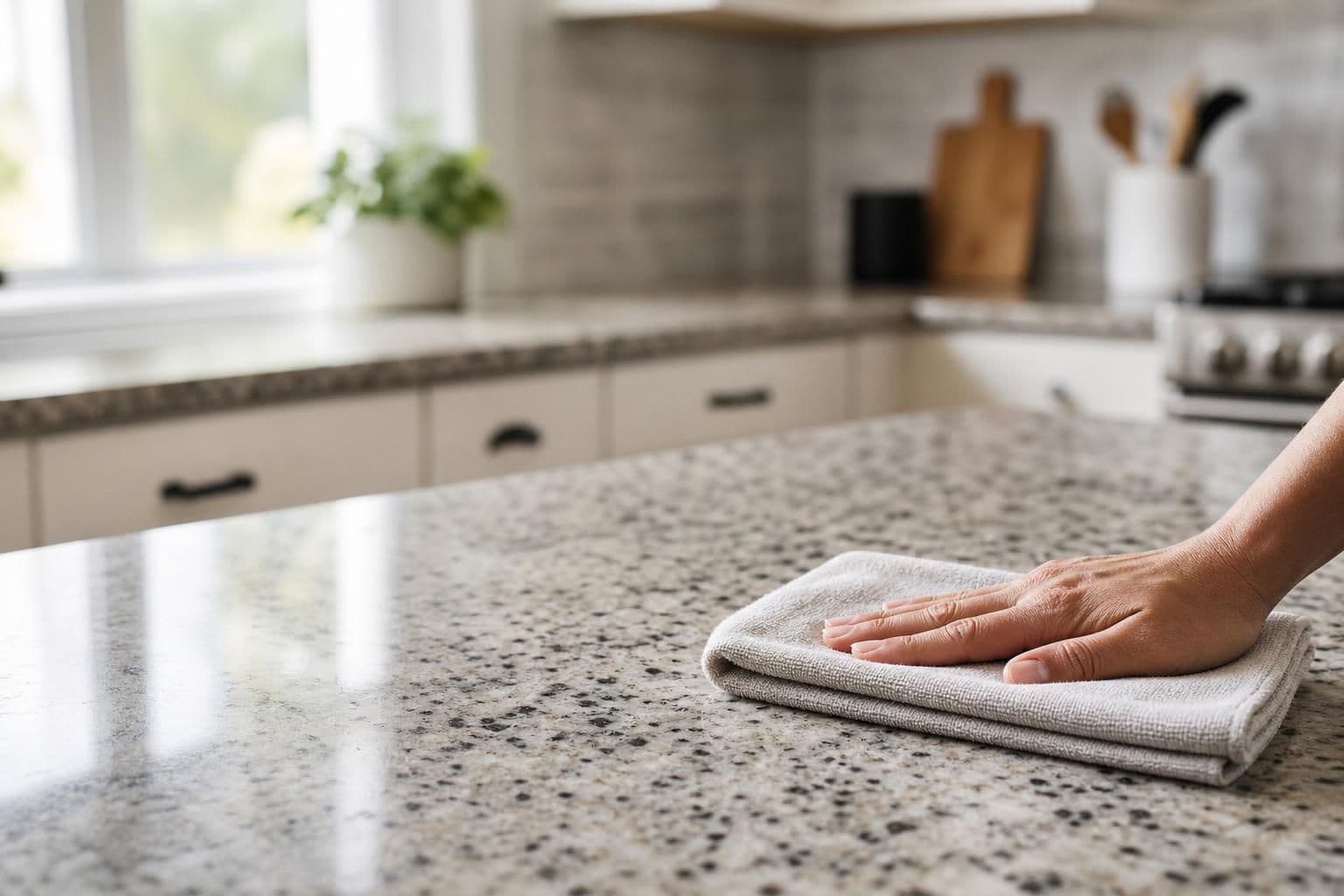
Clean granite countertops daily with warm water and a few drops of mild dish soap on a soft cloth, then dry the surface to prevent water spots. Avoid vinegar, lemon, ammonia, or abrasive scrub pads, since acidic and gritty products break down the sealer over time and leave the stone vulnerable to staining. Reseal the surface once or twice a year, or sooner in humid island homes, by checking whether water still beads on the counter.
Key takeaways
- Use only warm water and a pH-neutral soap for everyday cleaning; skip vinegar, citrus, and bleach.
- Test the seal every few months by dripping water on the counter — if it soaks in within a few minutes instead of beading, it's time to reseal.
- Wipe up oil, wine, and coffee spills immediately, since granite is porous enough to absorb liquids before a fresh seal fully cures.
Why Granite Needs Different Care Than Other Countertops
Granite is a natural igneous stone, and its surface is made up of interlocking mineral crystals with tiny pores between them. According to the USGS, granite typically ranks 6 to 7 on the Mohs hardness scale, which is why it resists scratching from knives and daily kitchen use far better than softer stones. That hardness doesn't make it stain-proof, though — the microscopic pores still absorb liquids unless a sealer is protecting the surface. This is the opposite problem quartz owners deal with, since engineered quartz is nonporous and never needs sealing; if your household has both surfaces, it helps to know the routine for cleaning quartz countertops in Hawaii's humid conditions is noticeably different from granite care.
A Simple Daily and Weekly Routine
Most granite counters only need a quick wipe-down after cooking or meal prep. The goal is to remove food acids, oils, and moisture before they sit long enough to penetrate the sealer.
- Daily: Wipe with a soft microfiber cloth and warm water mixed with a small amount of mild dish soap.
- After spills: Blot (don't rub) oil, wine, coffee, or citrus juice immediately, then wash the spot with soapy water.
- Weekly: Do a full counter wipe-down with a granite-safe stone cleaner or the same mild soap solution, then buff dry with a clean towel.
- Monthly: Check for dull spots or areas where water no longer beads, which signal it's time to reseal.
Always finish by drying the stone completely. Standing water left on granite overnight, especially in a humid kitchen, is one of the more common causes of dulling and mineral buildup around sinks and faucets — a related issue to the hard water stains that show up on countertops island-wide thanks to Oahu's mineral-heavy tap water.
What to Avoid on a Granite Surface
The wrong cleaner does more damage to granite over months than a single spill ever will. Acidic products slowly eat through the topical sealer, and once that barrier is compromised, the porous stone underneath starts absorbing everything from grease to grape juice.
Skip these on granite:
- Vinegar, lemon juice, or any citrus-based cleaner
- Ammonia or bleach-based products
- Abrasive powders, steel wool, or scouring pads
- Generic all-purpose sprays not labeled safe for natural stone
A soft cloth and a stone-specific or pH-neutral cleaner will outperform anything acidic, every time, without slowly stripping the seal.
Sealing Granite for Hawaii's Humidity and Salt Air
Sealing frequency depends on the stone's porosity and how much moisture it's exposed to, and Oahu kitchens see more of both than mainland homes. High ambient humidity, trade-wind salt air near coastal properties, and heavy year-round cooking all shorten how long a sealer holds up. The Natural Stone Institute recommends testing a stone's seal periodically rather than sealing on a fixed calendar, since porosity varies by slab.
A simple water-bead test tells you what you need to know:
- Pour a small amount of water on the counter, away from the edge.
- Watch how long it takes to soak in.
- If it beads and sits for 15–20 minutes without darkening the stone, the seal is holding.
- If it darkens the surface within a few minutes, it's time to reseal.
Condo and vacation-rental kitchens tend to need resealing more often simply because of turnover — more cooking, more cleaning products, and less consistency in who's wiping down the counters day to day.
Handling Stains, Etching, and Dull Spots
Even with good habits, granite occasionally picks up a stain or loses its shine in one spot. Oil-based stains (butter, cooking oil, hand lotion) darken the stone and usually need a poultice — a paste of baking soda and water left on the spot overnight under plastic wrap — to draw the oil back out. Mineral or water stains often respond to the same gentle cleaning routine used elsewhere in the kitchen, and if the counters sit in a full kitchen remodel, it's worth pairing stone care with a look at how to clean the cabinets surrounding those counters so the whole space gets the same humidity-aware treatment. Dull, cloudy patches usually mean the sealer has worn thin in a high-traffic spot near the sink or stove and just needs a fresh, localized application rather than a full counter reseal.
Persistent mold or mildew around a granite backsplash or seam is more of a humidity issue than a stone issue. The CDC notes that indoor mold growth is driven primarily by trapped moisture, which is why keeping counters dry and ventilating kitchens well matters as much as the cleaner you choose.
Frequently Asked Questions
Q: Can I use vinegar to clean granite countertops?
No. Vinegar and other acidic cleaners break down the sealer that protects granite from stains, and repeated use will eventually leave the stone porous and vulnerable. Stick with warm water and mild dish soap, or a cleaner labeled safe for natural stone.
Q: How often should granite countertops be resealed in Hawaii?
There's no fixed schedule — it depends on the slab's porosity and how much moisture and cooking the kitchen sees. A simple water-bead test every few months tells you whether the current seal is still doing its job.
Q: Is granite more high-maintenance than quartz in a humid climate?
Granite requires periodic sealing and a bit more caution with acidic spills, while quartz is nonporous and never needs sealing but has its own heat and cleaning considerations. Neither is difficult to maintain day-to-day; they just require slightly different habits.
Q: What causes dull spots on granite countertops?
Dull or cloudy patches usually appear where the sealer has worn thin from repeated scrubbing, hot pans, or standing water, most often near sinks and stoves. Reapplying sealer to that specific area typically restores the shine without resealing the entire counter.
Q: Can granite countertops stain permanently?
Most stains sit in the porous surface layer rather than penetrating deep into the stone, so they can usually be lifted with a poultice or professional treatment. Left untreated for a long time, though, oil-based stains can darken permanently in that spot.