How to Clean Luxury Vinyl Plank Flooring in Hawaii Homes
Key takeaway
Clean luxury vinyl plank (LVP) flooring by sweeping or vacuuming daily to remove sand and grit, then damp-mopping weekly with a pH-neutral cleaner diluted in water — never a steam mop or oil-based soap. Wipe up spills immediately and use furniture pads to prevent scratches from grit acting like sandpaper underfoot. This routine, done consistently, is usually all that's needed to keep waterproof SPC vinyl plank looking new for years, even in a beach-heavy Oahu household.
Key takeaways
- Sweep or dry-vacuum daily; sand and coral grit scratch LVP faster than almost anything else in a Hawaii home.
- Damp-mop weekly with a manufacturer-approved, pH-neutral cleaner — skip vinegar, ammonia, wax, and steam mops.
- Wipe spills and puddles right away, especially near lanai doors, to keep water from pooling at seams.
Why Daily Sweeping Matters More in Hawaii
Sand tracked in from the beach, red dirt, and coral dust are abrasive enough to dull the wear layer on vinyl plank over time, even though the surface is scratch-resistant. A soft-bristle broom or a vacuum with a hard-floor setting (no beater bar) picks up this grit before it gets ground in underfoot. Homes near the shoreline or with kids and dogs coming in from the yard often need this daily, not weekly — it takes two minutes and prevents the dull, hazy look that shows up on floors that only get mopped.
The Right Way to Mop
Luxury vinyl plank is waterproof at the surface, but standing water can still work into seams over years, so the goal is a damp mop, not a wet one.
- Vacuum or sweep first so you're not dragging grit around.
- Mix a small amount of pH-neutral vinyl floor cleaner with water, or use a manufacturer-recommended pre-mixed solution.
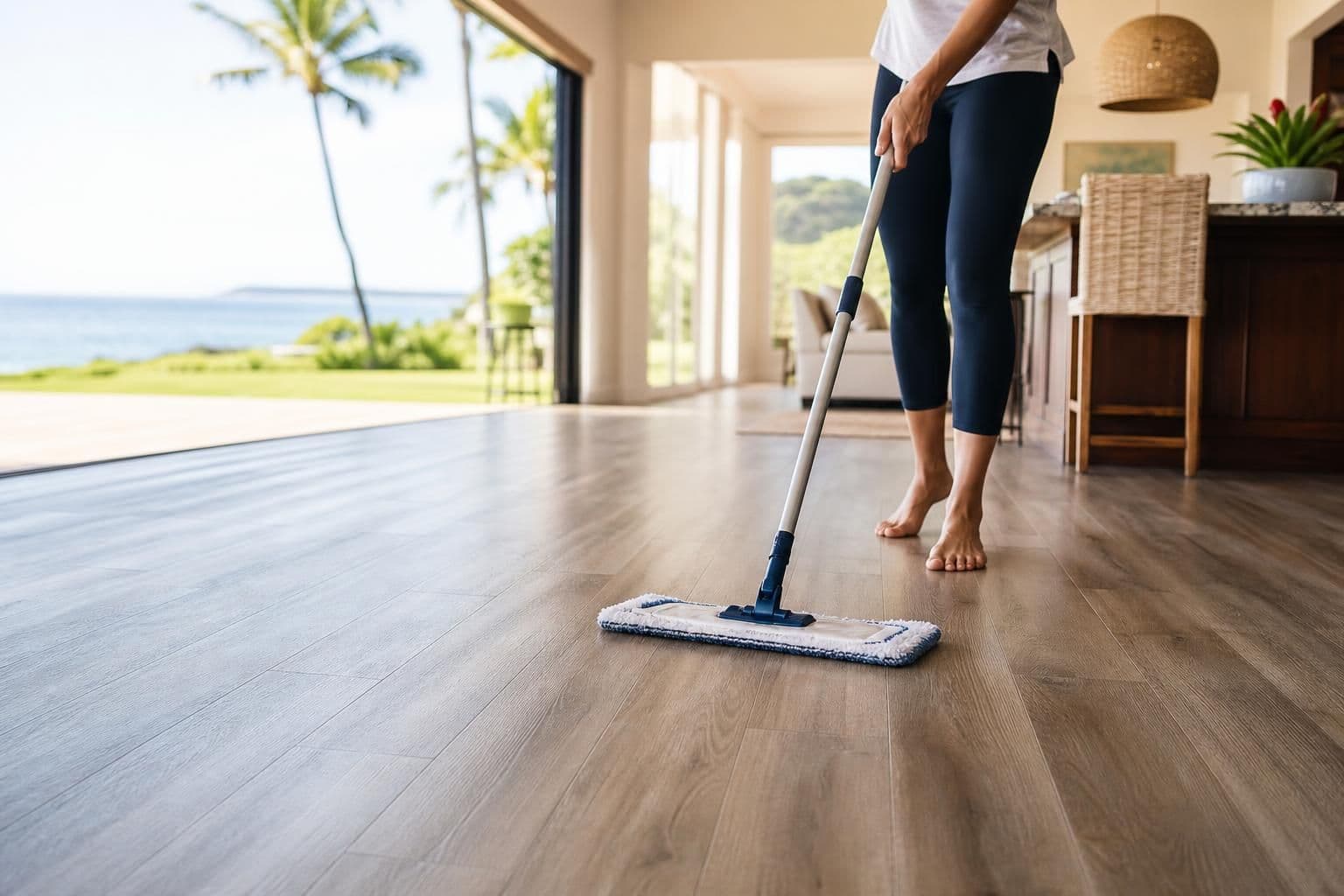
- Mop in the direction of the planks with a well-wrung microfiber mop.
- Go over damp areas with a dry towel or microfiber pad if the floor feels wet to the touch afterward.
Avoid soap-based or oil-based cleaners — they leave a dull film that actually attracts more dirt over time, which is the opposite of what most people are trying to fix when they reach for a stronger cleaner.
What to Avoid
Certain habits and products shorten the life of vinyl plank flooring faster than normal foot traffic ever will:
- Steam mops — heat and moisture can soften adhesives and warp planks at the seams.
- Vinegar or ammonia-based cleaners — these can break down the finish and leave a cloudy residue.
- Wax or polish — LVP doesn't need it, and it builds up into a sticky film.
- Abrasive scrub pads — they scratch the wear layer, which is what protects the printed design underneath.
- Rubber-backed mats — some rubber-backed rugs can discolor vinyl over time; look for mats labeled safe for vinyl floors.
The Resilient Floor Covering Institute and most major LVP manufacturers publish similar guidance: keep cleaning simple, avoid heat and harsh chemicals, and let the wear layer do its job.
Handling Hawaii-Specific Messes
Between rainy season mud, sunscreen drips, and sandy beach bags, Oahu homes deal with a specific set of stains that mainland cleaning guides don't cover.
- Sunscreen and body oils: wipe with a damp microfiber cloth and a drop of dish soap in water, then rinse with plain water to avoid residue.
- Red dirt tracked in from yard work: let it dry fully first, then vacuum before mopping — wiping wet red dirt just smears it.
- Salt air film on floors near open lanai doors: a slightly more frequent damp-mop schedule (twice weekly instead of once) keeps the fine salt residue from building up.
For households that leave doors and windows open most of the year, this ties directly into flooring choices — the same tropical design flooring trends that favor open, indoor-outdoor layouts also mean floors take on more airborne salt and humidity than a typical mainland home.
Protecting Seams and Edges During Rainy Season
Vinyl plank is one of the more forgiving floors during Hawaii's wetter months, but pooled water at door thresholds and lanai entries is still worth managing. A absorbent mat just inside sliding doors catches rain runoff before it reaches the floor, and drying up puddles the same day prevents any moisture from working into seams. Homes that deal with heavier seasonal rain sometimes benefit from comparing LVP against other water-tolerant options, which is covered in more detail in this guide to flooring built for Hawaii's rainy season.
Long-Term Maintenance for Condos and Vacation Rentals
Vacation rentals and condo units see heavier foot traffic in a shorter amount of time than an owner-occupied home, which changes the maintenance math. A property with weekly guest turnover benefits from a simple written cleaning checklist for cleaning crews — sweep, damp-mop with the correct cleaner, spot-check baseboards — so that well-meaning staff don't reach for a harsh, all-purpose cleaner out of convenience. Because SPC luxury vinyl plank is fully waterproof at the core, it holds up well to this kind of frequent cleaning compared to hardwood or laminate, which is part of why it's become common in rental units across the island; you can see how it stacks up against other durable materials in this comparison of vinyl tile and natural stone.
When to Call In Help
Most day-to-day LVP maintenance is a DIY job, but a few situations call for a closer look from a flooring professional: visible gaps or lifting at seams, a persistent musty smell suggesting moisture underneath the planks, or scratches deep enough to reveal the backing layer. In humid climates, the EPA's guidance on mold and moisture notes that trapped moisture under flooring can lead to mold growth if it isn't addressed, so a floor that stays damp or smells off after cleaning is worth having inspected rather than just re-mopped.
Frequently Asked Questions
Q: Can you use a Swiffer or similar dry mop on luxury vinyl plank?
Yes, a dry microfiber mop or Swiffer-style pad is fine for daily dust and light dirt pickup between full damp-mopping sessions. Just avoid wet-mop pads with harsh pre-treated cleaning solutions unless the label confirms they're safe for vinyl floors.
Q: Is steam cleaning ever okay for vinyl plank flooring?
No, steam mops are generally not recommended for LVP because the heat and moisture can soften the adhesive and cause planks to warp or lift at the seams over time. Most manufacturer warranties specifically exclude damage caused by steam cleaning.
Q: How often should luxury vinyl plank be deep cleaned in a Hawaii home?
A weekly damp mop is usually enough for most households, but homes near the beach or with open lanai doors often need a lighter mop twice a week to manage sand and salt residue. High-traffic condos and vacation rentals may need daily sweeping between guest stays.
Q: What causes a dull or hazy look on vinyl plank floors?
A hazy film usually comes from using the wrong cleaner — oil-based soaps, wax, or too much cleaning solution left to dry on the surface. Switching to a diluted, pH-neutral vinyl-safe cleaner and rinsing with a barely damp mop typically restores the finish.
Q: Does luxury vinyl plank hold up to sand and grit better than hardwood?
Yes, quality LVP has a wear layer specifically designed to resist scratching from everyday grit, which is one reason it's popular in Hawaii homes near the beach. That said, sand left to grind underfoot will dull any hard-surface floor over time, so regular sweeping still matters.