How to Clean Quartz Countertops in Hawaii's Humidity
Key takeaway
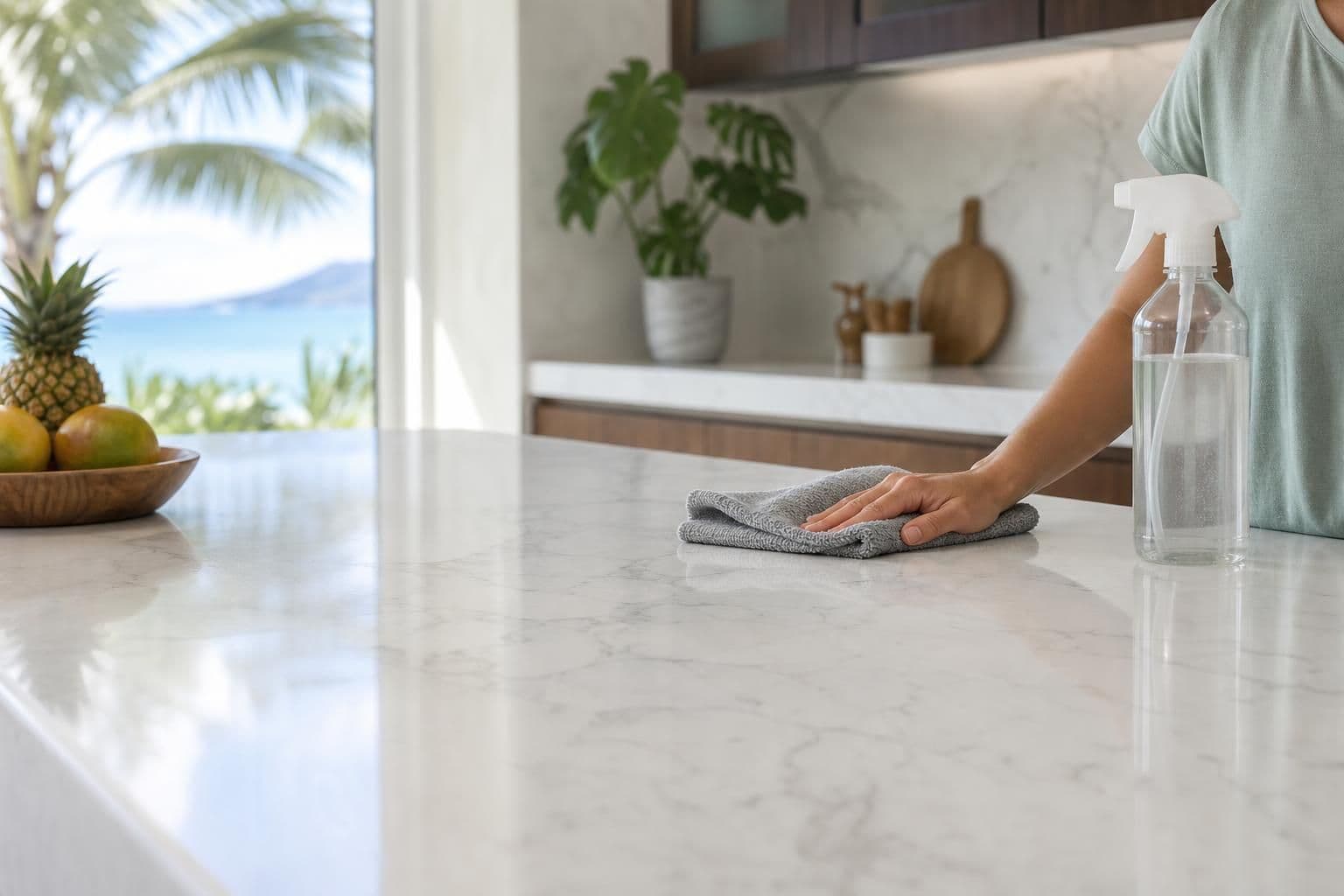
Clean quartz countertops with warm water, a few drops of mild dish soap, and a soft microfiber cloth, wiping in the direction of the pattern and drying the surface afterward. Avoid bleach, ammonia, vinegar, and abrasive scrub pads, since these can dull the resin binder that holds engineered quartz together over time. For daily upkeep in Hawaii's humid, salty air, drying the surface after cleaning matters just as much as the cleaning product itself.
Key takeaways
- Use only warm water, mild soap, and a soft cloth for routine quartz cleaning — no bleach, vinegar, or abrasive pads.
- Wipe up oils, wine, and acidic spills within minutes to prevent surface staining or dulling.
- Dry the countertop after cleaning; Oahu's humidity slows evaporation and can leave streaks or mineral spots from tap water.
Why Quartz Cleans Differently Than Granite or Marble
Quartz countertops are engineered from roughly 90-95% crushed natural quartz mixed with polymer resins and pigments, according to material standards published by the Natural Stone Institute. That resin binder is what makes quartz non-porous, unlike granite or marble, which need periodic sealing to keep liquids from soaking in. Because quartz doesn't have open pores, it doesn't require sealant — but the same resin can be damaged by harsh chemicals that natural stone might tolerate. If you're comparing durability between the two materials for a Hawaii kitchen, it's worth reading how granite countertops are sealed in humid climates to understand the difference in long-term care.
Daily Cleaning Routine
A simple daily habit keeps quartz looking new without any special products:
- Wipe the surface with warm water and a few drops of dish soap on a soft cloth or non-abrasive sponge.
- Rinse with a clean, damp cloth to remove soap residue.
- Dry immediately with a microfiber towel, especially around the sink and stovetop where condensation collects.
- For dried spills or food residue, use a plastic scraper or an old credit card rather than a metal scraper or steel wool.
Skipping the drying step is a common mistake in island homes. Hawaii's average relative humidity runs well above mainland U.S. cities for much of the year, based on climate data from the National Weather Service, which means water spots and soap film sit on countertop surfaces longer before air-drying on their own.
Handling Stains, Spills, and Salt Residue
Quartz resists staining better than most natural stone, but it isn't stain-proof. Coffee, wine, turmeric, and citrus juice can leave a mark if left to sit for hours. Blot — don't wipe — liquid spills first to avoid spreading them, then clean the area with warm soapy water.
For salt residue, which is common in oceanfront condos and homes with lanai doors open to trade winds, a plain water rinse followed by a full dry-down prevents the gritty film that salt air leaves on kitchen surfaces. Dried salt crystals can act like light abrasive if you wipe them with a dry cloth, so dampen the area first.
What to Avoid
Certain products and habits shorten the life of a quartz surface:
- Bleach and ammonia-based cleaners can discolor the pigments in quartz over repeated use.
- Vinegar and other acidic cleaners slowly etch the resin, dulling the shine.
- Abrasive powders, steel wool, or scouring pads scratch the surface, creating tiny grooves where grime collects.
- Hot pans placed directly on the counter can cause thermal shock; quartz handles heat better than laminate but is not fully heatproof, so a trivet is still recommended.
- Nail polish remover or paint thinner left in contact with quartz can soften the resin binder.
If a store-bought "stone cleaner" spray is labeled safe for granite and marble, check the label specifically for engineered quartz compatibility — some stone-specific sealants and cleaners are formulated for porous surfaces and aren't necessary or ideal for quartz.
Weekly and Monthly Maintenance for Island Homes
Beyond daily wiping, a light weekly clean with a quartz-safe spray cleaner (or the same soap-and-water method) keeps buildup from forming around faucets and backsplashes. In vacation rentals and condos with frequent guest turnover, countertops see heavier daily use — more oil splatters, more citrus from cocktails, more sunscreen residue from beachgoers — so a quick nightly wipe-down between guests goes a long way. Owners managing short-term rentals often look for countertop materials that hold up to this kind of turnover; the guide on durable countertops for high-turnover vacation rentals covers what to look for beyond quartz alone.
Every few months, check the seams and edges near the sink for any lifting or gaps in the caulk line. Humidity and daily water exposure can eventually affect the sealant between the countertop and backsplash, even though the quartz slab itself doesn't absorb moisture.
Choosing Quartz for Long-Term, Low-Maintenance Care
If you're still in the selection phase of a kitchen or bathroom remodel, some quartz colors and finishes are genuinely easier to maintain than others — busier patterns and matte finishes tend to hide water spots and fingerprints better than solid white or high-gloss surfaces. The article on low-maintenance quartz countertops for Hawaii homes breaks down which finishes perform best in island kitchens and bathrooms. Because materials for Hawaii projects are typically shipped in from the mainland or overseas, and installation labor rates run higher here than in many mainland markets, it's worth getting a local quote before comparing quartz against granite or other stone options for your specific project.
Frequently Asked Questions
Q: Can I use Windex or glass cleaner on quartz countertops?
Occasional use of a small amount of ammonia-free glass cleaner is generally fine for light streaks, but it shouldn't replace regular soap-and-water cleaning. Avoid ammonia-based formulas used frequently, since repeated exposure can dull the surface over time.
Q: Does quartz need to be sealed like granite or marble?
No. Quartz is engineered to be non-porous because of its resin content, so it doesn't absorb liquids the way natural stone can and doesn't require sealing. Natural stone countertops, by contrast, typically need periodic resealing to maintain stain resistance.
Q: Will Hawaii's humidity damage quartz countertops?
Quartz itself isn't damaged by humidity since it doesn't absorb moisture, but high humidity slows drying time on the surface, which can lead to water spots or streaks if countertops aren't wiped dry after cleaning. The bigger humidity concern is usually around the surrounding cabinetry and caulk lines rather than the quartz slab itself.
Q: What's the best way to remove hard water spots from quartz?
A cloth dampened with warm water and a small amount of dish soap usually lifts hard water spots; for stubborn mineral buildup, a soft cloth with a bit of baking soda paste can help, followed by a thorough rinse and dry. Avoid vinegar or descaling products marketed for tile and grout, since their acidity isn't quartz-safe.
Q: How often should quartz countertops be deep cleaned?
Daily wiping handles most maintenance, but a more thorough clean around faucets, edges, and seams once a week helps prevent buildup, especially in kitchens with heavy daily use like vacation rentals. There's no need for special deep-cleaning treatments beyond consistent soap-and-water care.