How to Choose the Right Flooring Store in Honolulu
Key takeaway
The right flooring store in Honolulu is one that stocks materials engineered for humidity and salt air, shows you real samples in a showroom rather than only online photos, and employs its own installers instead of subcontracting to whoever is available that week. Because flooring shipped to Oahu has to survive a container voyage and then perform in a tropical climate, the material selection matters as much as the price tag. A local store that understands island conditions will steer you away from products that warp, mold, or delaminate within a few rainy seasons.
Key takeaways
- Prioritize stores that carry moisture-resistant flooring built for Hawaii's humidity, not just mainland-standard products.
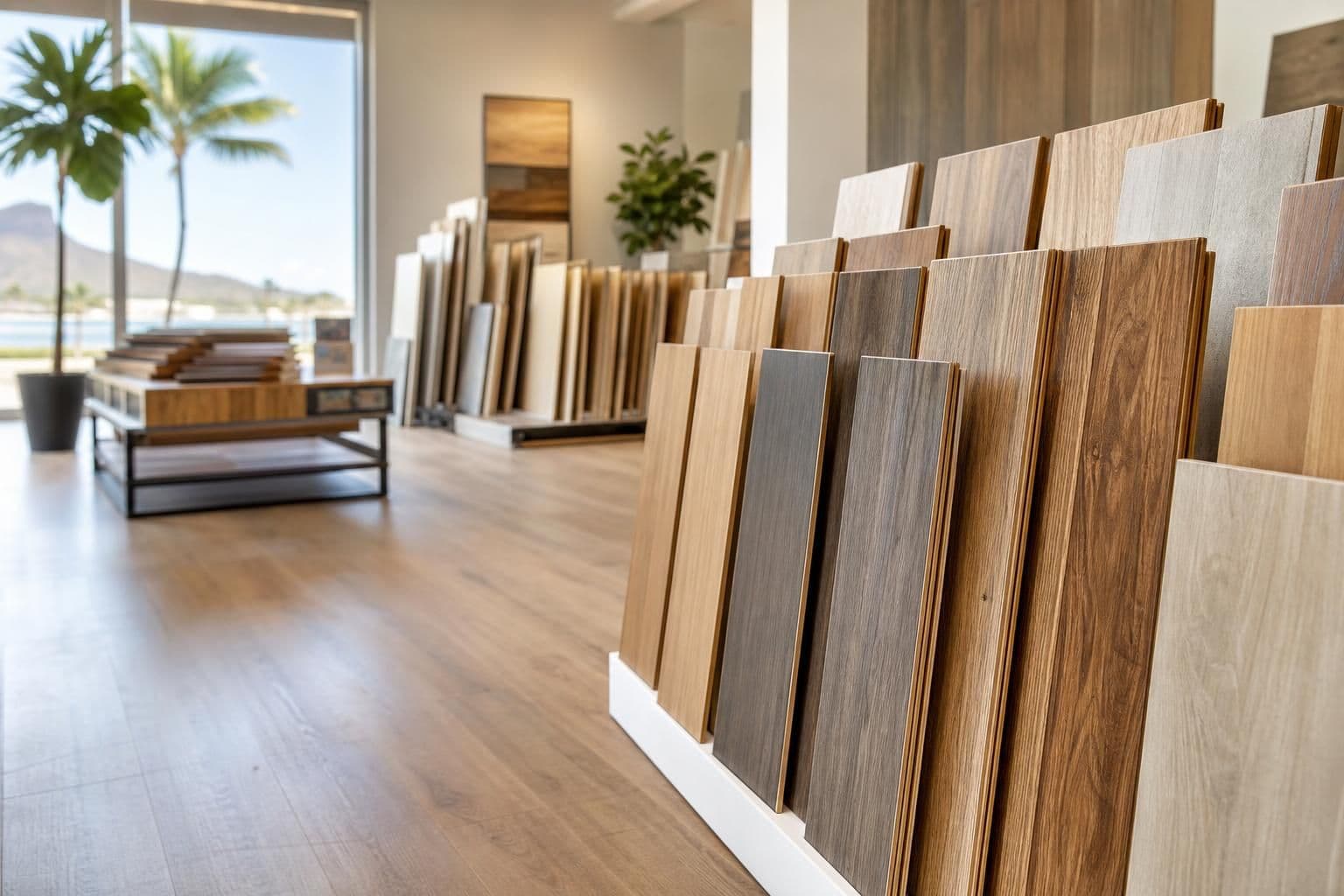
- Ask to see and touch physical samples in a showroom before committing, since lighting and humidity affect how flooring looks and performs.
- Confirm whether installation is done by in-house crews or outsourced subcontractors, since that affects scheduling, accountability, and warranty coverage.
Why Climate Should Drive Your Material Choice
Oahu's combination of high humidity, salt air near the coast, and a distinct rainy season creates conditions that most mainland flooring wasn't designed for. Solid hardwood, for example, expands and contracts with moisture swings and is far more prone to cupping in island climates than it would be in a drier mainland region. The National Oceanic and Atmospheric Administration tracks Hawaii's consistently high relative humidity levels, which is part of why waterproof SPC luxury vinyl plank has become a popular substitute for solid wood in local homes — it holds dimensional stability in ways traditional hardwood cannot. A flooring store that's genuinely built for Honolulu will lead with these climate-appropriate options rather than pushing whatever moves fastest on the mainland. For homes closer to the ocean, this consideration becomes even more important; see how commercial flooring near the ocean is chosen for similar reasons.
What to Look For in a Showroom Visit
A showroom visit tells you things a website can't. Samples let you check how a plank or tile reads under actual daylight, since Hawaii's bright, direct sun can make colors look noticeably different indoors versus in a photo. Walking a showroom also lets you test texture underfoot — slip resistance matters in bathrooms, lanais, and condo entryways where sandy feet and rain tracked in from outside are a daily reality.
When you visit, ask to:
- See at least two or three finish options in the exact material you're considering (matte vs. textured SPC, honed vs. polished quartz)
- Take a sample home to view it in your own lighting for a day or two
- Ask about the underlayment or moisture barrier recommended for your specific unit or floor level
Stores offering a 3D design visualizer or free in-home consultation are worth prioritizing, since they let you preview flooring, cabinets, and countertops together before any material is ordered.
Installation Quality Matters More Than the Material
Even the best waterproof flooring will fail early if it's installed poorly. Subfloor prep, expansion gaps, and moisture testing before installation are the details that separate a floor that lasts a decade from one that needs redoing in two years. In condo buildings especially, there are often building-specific rules about underlayment sound ratings (like IIC ratings) that a generalist installer might not know to check — a mistake that can lead to fines or forced removal. For condo-specific installation nuances, this guide to Honolulu condo renovation rules for tile flooring covers what many buildings require before work can even begin.
Ask any prospective flooring store how long a typical installation takes for your square footage and unit type — a store with real field experience can usually give you a specific range based on similar past jobs, not a vague guess. If you want a general sense of installation timelines on Oahu before committing to a project, see how long flooring installation typically takes.
Termites, Rot, and Why Material Choice Affects Long-Term Durability
Hawaii has a well-documented termite pressure problem, and the University of Hawaii's College of Tropical Agriculture and Human Resources has published research on subterranean and drywood termite activity across the islands. This is a major reason SPC vinyl and stone-based flooring have gained ground over solid wood products locally — they don't offer termites a food source the way organic wood materials do. A flooring store worth choosing should be able to explain, plainly, why they recommend certain products for termite-prone neighborhoods versus others, rather than treating every material as interchangeable.
Sourcing, Lead Times, and Why That Affects Your Timeline
Almost everything sold in a Honolulu flooring store arrived by ship, which means lead times can shift with port schedules, container availability, and manufacturing delays on the mainland or overseas. A store that's upfront about current lead times — rather than promising unrealistic delivery windows — is one you can plan a renovation around with fewer surprises. This is especially relevant if you're coordinating a full kitchen or bathroom remodel where cabinets, countertops, and flooring all need to land close together. For more on how this works, see how shipping delays affect flooring lead times in Hawaii.
Questions Worth Asking Before You Buy
- Is this material rated for high-moisture or high-humidity environments?
- Do you install with your own crew, or subcontract the work out?
- What's the realistic lead time right now for this specific product?
- Can I take a sample home, or view it under different lighting in your showroom?
- Are there condo association or building-specific rules I should know about before ordering?
A store that answers these clearly and specifically — with real numbers and explanations rather than generalities — is a strong sign you're dealing with people who actually work in Hawaii conditions daily, not just a national chain with a local storefront.
Frequently Asked Questions
Q: What flooring holds up best in Honolulu's humidity?
Waterproof SPC luxury vinyl plank and stone or tile-based flooring generally perform better than solid hardwood in Honolulu's humidity, since they resist the expansion, cupping, and warping that moisture swings cause in organic wood products.
Q: Should I buy flooring online or visit a showroom in Honolulu?
Visiting a showroom is strongly recommended, since Hawaii's bright natural light changes how colors and finishes appear compared to online photos, and you can test texture and slip resistance in person before buying.
Q: How do termites affect flooring choices in Hawaii?
Hawaii has significant termite pressure documented by university agricultural research, which is why many homeowners choose SPC vinyl, tile, or stone flooring over solid wood products that termites can damage over time.
Q: Does a flooring store's installation crew matter?
Yes — stores using their own trained installers tend to offer more consistent quality control and clearer accountability than those who subcontract, and in-house crews are typically more familiar with local subfloor and moisture conditions.
Q: Why do flooring lead times vary so much in Hawaii?
Nearly all flooring materials are shipped in by container, so lead times depend on port schedules, manufacturing delays, and container availability, which can shift more unpredictably than mainland delivery timelines.