How to Choose a Countertop Fabricator in Oahu
Key takeaway
A countertop fabricator in Oahu is the shop that templates your kitchen or bathroom, cuts the slab (quartz, granite, or other stone) to that exact shape, finishes the edges, and installs the finished piece on site. The right fabricator owns the equipment to cut precise seams and sink cutouts, carries material rated for island conditions, and stands behind the installation — not just the slab sale. Choosing one well mostly comes down to checking their process, their material sourcing, and how they handle the parts of a job that go wrong on a remote island supply chain.
Key takeaways
- A real fabricator templates on site (often digitally) before cutting — if a shop skips templating, walk away.
- Ask specifically how they source slabs for Hawaii; shipping delays and limited local stock are the main cause of project slowdowns here.
- Get the edge profile, seam placement, and sink cutout confirmed in writing before fabrication starts, since changes after cutting usually mean a new slab.
What a countertop fabricator actually does
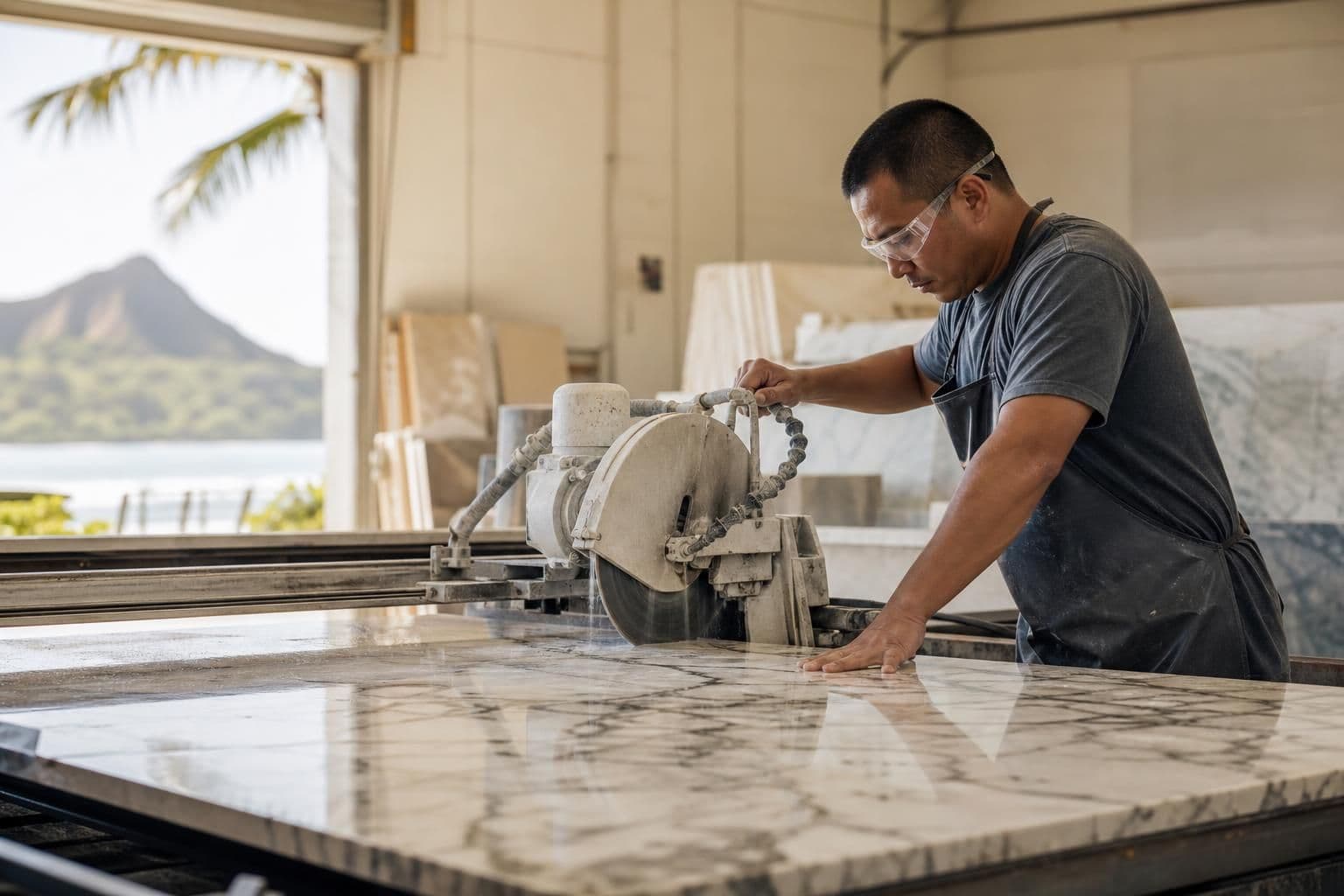
Fabrication is a distinct trade from countertop sales or general contracting. A fabricator receives raw or pre-cut slabs, creates a template of your cabinets (either with digital laser templating or a physical template), then cuts, polishes, and edges the stone in a shop before delivering and setting it in place. Many fabricators also handle sink and cooktop cutouts, seam placement, and edge profiling — shaped edges like bullnose, ogee, or waterfall corners — as part of the same job.
On Oahu, fabrication shops typically work from slab yards that import material from the mainland or overseas, since there's no local quarrying of granite or quartz. That single fact shapes almost everything about timeline and selection: available slab inventory on island is narrower than what you'd find in a mainland warehouse, and reordering a specific slab can take weeks rather than days.
What to check before hiring a fabricator
Not every shop that sells stone also fabricates it — some outsource cutting to a third party, which adds a handoff point where things can go wrong. Ask directly whether templating, cutting, and installation happen under one roof or get passed between vendors.
A short vetting checklist:
- Templating method — digital laser templates are more accurate than paper or wood templates and reduce the chance of a seam or cutout being off by a fraction of an inch.
- Slab inspection policy — can you see and approve the actual slab (not just a sample chip) before it's cut? Natural stone varies piece to piece, and quartz batches can vary slightly in pattern between lots.
- Edge and seam plan — get this confirmed in writing, including where seams will fall, since a seam across a focal point (like in front of a sink) is a common complaint.
- Install day logistics — ask how they protect floors and cabinets during a heavy slab carry-in, and who handles plumbing reconnection for sinks and faucets.
- Timeline buffer — ask what happens if your chosen slab is delayed in shipping, since import timing is the most common cause of schedule slips on Oahu projects.
If you're still deciding between materials before you even get to fabrication, it helps to compare durability and maintenance first — guides like quartzite versus granite for Oahu kitchens or a broader look at types of kitchen countertops can narrow the choice before you start requesting fabricator quotes.
Material sourcing and island logistics
Because granite, quartzite, marble, and engineered quartz all arrive by container ship, a fabricator's relationship with slab suppliers matters more here than in most mainland markets. Shops with strong supplier relationships tend to have better access to popular quartz colors and can often secure a replacement slab faster if one is damaged in transit or doesn't match on inspection. If you already have a specific color or brand in mind, it's worth checking current availability early — resources like a quartz color guide for island kitchens or a quartz brand comparison can help you narrow options before you commit to a fabricator's in-stock inventory.
Humidity and salt air don't affect finished quartz or granite countertops the way they affect wood or metal, since sealed stone and resin-based quartz are largely inert to moisture. The bigger local concern is UV exposure near open lanais and windows, which can affect resin-based quartz over long periods, so ask your fabricator whether the specific quartz line you're considering carries any UV guidance for indoor-outdoor transition areas.
Pricing and cost expectations
Hawaii fabrication costs run above mainland averages, mainly because slab material has to be shipped in and skilled fabrication labor costs more on island than in many mainland markets. Rather than rely on national price lists, which rarely reflect Oahu's shipping and labor realities, it's more useful to get a quote based on your actual square footage, material choice, and edge detail. A free in-home consultation is usually the fastest way to get a number that reflects your specific kitchen or bathroom layout.
Installation day: what to expect
A typical countertop install happens after cabinets are fully set and leveled, since the fabricator needs a stable, accurate surface to template against. On install day, crews usually arrive with the finished slab sections, set them on the cabinet boxes, check level and seam alignment, apply seam adhesive where needed, and caulk the perimeter. Sink and faucet reconnection often happens the same day or the next, depending on whether plumbing work is bundled into the job. According to the National Kitchen & Bath Association, proper cabinet leveling before countertop installation is one of the most common points where kitchen remodel timelines slip, which is why confirming cabinet readiness with your fabricator ahead of time matters.
Why fabrication quality matters for condos and rentals
Vacation rental and condo owners on Oahu face a particular risk: a poorly seamed or improperly sealed countertop shows wear faster under heavy turnover use, and repairs mean lost rental days. Asking a fabricator specifically about their seam and sealing process — and whether they've worked in condo buildings with freight elevator or loading dock restrictions — can save a scheduling headache later. Buildings often have narrow delivery windows, and a fabricator unfamiliar with condo logistics may need extra lead time to coordinate access.
Frequently Asked Questions
Q: What's the difference between a countertop fabricator and a countertop installer?
A fabricator cuts, polishes, and finishes the slab to your exact template, typically in a shop with saws and polishing equipment; an installer sets the finished piece in place. Many companies do both, but it's worth confirming since some installers subcontract the actual cutting work.
Q: How long does countertop fabrication take on Oahu?
Timelines vary with slab availability, but the templating, cutting, and installation steps themselves typically take one to two weeks once the slab is on hand. The larger variable is how long it takes to get your chosen slab shipped to the island if it isn't already in local stock.
Q: Can a fabricator work from an existing cabinet layout, or do cabinets need to be new?
Fabricators can template and cut for existing cabinets as long as the cabinet boxes are level and structurally sound. If you're also replacing cabinets, it's worth reviewing cabinet refacing options first, since refacing can change dimensions slightly and affect the countertop template.
Q: Does humidity affect quartz or granite countertops in Hawaii?
Sealed granite and engineered quartz are largely resistant to moisture and humidity, which is part of why they hold up well in island kitchens. The main material-specific concern is prolonged direct UV exposure on some quartz products near large windows or open lanai transitions.
Q: What should I bring to a fabricator consultation?
Bring your cabinet layout or dimensions, any sink or cooktop model you've already chosen, and photos or samples of colors you're considering. A clear sense of your edge profile preference also speeds up the quoting process, since edge detail affects both material usage and labor time.