Types of Kitchen Countertops: Which Material Fits Your Home
Key takeaway
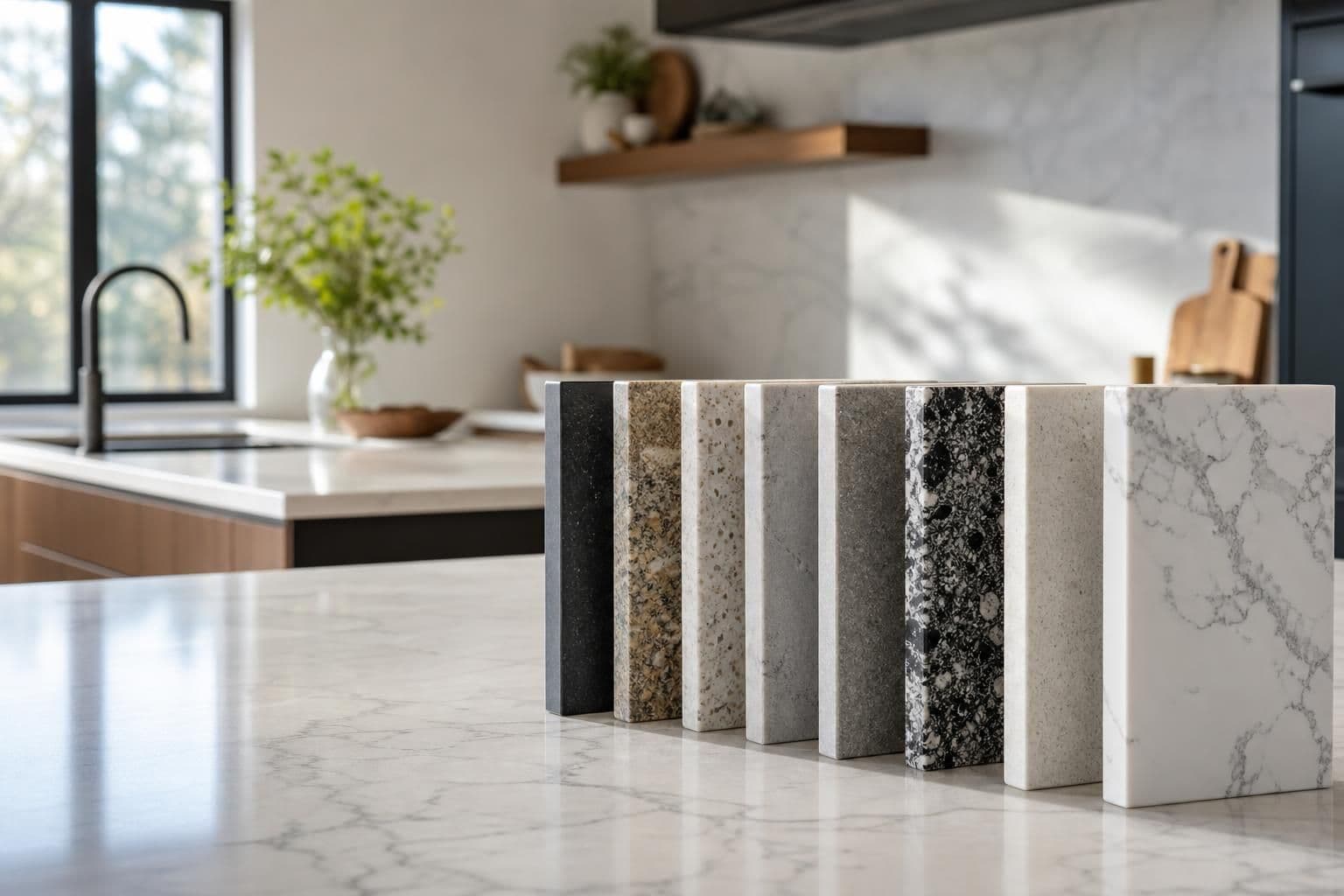
The main types of kitchen countertops are quartz, granite, marble, laminate, butcher block, stainless steel, and solid surface, each differing in durability, maintenance, and how well it holds up to heat, moisture, and daily wear. Quartz and granite are the most common choices for busy kitchens because they resist scratching and staining with minimal upkeep, while laminate and butcher block offer lower-cost or warmer-looking alternatives with more maintenance trade-offs.
Key takeaways
- Quartz needs almost no sealing or maintenance and resists stains better than natural stone, making it a strong pick for humid climates.
- Granite and marble are porous and require periodic sealing to prevent moisture and bacteria from working into the surface.
- Budget materials like laminate work fine for rentals or secondary kitchens but scratch and chip more easily than stone or quartz.
Quartz Countertops
Quartz countertops are engineered from crushed natural quartz mixed with resins and pigments, which makes them nonporous straight out of the fabrication shop — no sealing required. That nonporous surface is why quartz resists everyday stains from coffee, wine, and cooking oil far better than most natural stone. It's also why quartz has become the default recommendation for kitchens in humid, salt-air environments, since there's no porous surface for moisture to seep into over time. The one trade-off is heat sensitivity: the resin binders can discolor or crack under a hot pan set directly on the surface, which is why protecting quartz countertops from heat is worth a quick read before you start cooking on a new install.
Granite Countertops
Granite is quarried natural stone, which means every slab has unique veining and mineral patterns that no two kitchens share exactly. It's extremely hard and heat-resistant, but it is porous, so unsealed granite can absorb liquids, oils, and bacteria over time. Most fabricators apply a sealant at installation, and that seal typically needs reapplying every year or two depending on how the stone is used — a maintenance step that's easy to skip but matters more in a humid climate where moisture lingers on surfaces longer. The Natural Stone Institute publishes care guidance confirming that sealing frequency depends on the specific granite's porosity, not a one-size-fits-all schedule.
Marble and Other Natural Stone
Marble brings a soft, veined look that many homeowners want for islands or bathroom vanities, but it's softer and more porous than granite, making it prone to etching from acidic foods like lemon juice or vinegar. Soapstone and quartzite are the other natural stones that show up in kitchens; quartzite in particular has become popular because it looks similar to marble but is significantly harder and more stain-resistant. Any natural stone surface benefits from the same rule: wipe up spills quickly, use cutting boards, and avoid letting acidic liquids sit on the surface.
Laminate Countertops
Laminate is a layered synthetic surface — paper and resin fused under heat and pressure onto a particleboard or plywood base — that has been a kitchen staple since the mid-20th century because it's lightweight and inexpensive to produce. It comes in an enormous range of colors and patterns, including convincing stone or wood-grain finishes. The downside is durability: laminate can scratch, chip at seams, and doesn't tolerate direct heat well, so it tends to suit secondary kitchens, rental units, or budget-conscious remodels more than a primary family kitchen that sees heavy daily use.
Butcher Block and Wood Countertops
Solid wood countertops, often called butcher block, add warmth that pairs well with tropical and island-style kitchen designs. Wood needs regular oiling to stay sealed against moisture, and in a high-humidity environment that maintenance schedule tends to be more frequent than manufacturers' mainland guidance suggests, since wood expands and contracts with ambient moisture. Most homeowners who choose wood limit it to an island top or accent section rather than the full kitchen perimeter, both for maintenance reasons and to reduce exposure near sinks.
Stainless Steel and Solid Surface
Stainless steel countertops are common in commercial kitchens because they're nonporous, heat-resistant, and easy to sanitize, which is why the NSF International food-equipment standards reference stainless steel as an approved food-contact surface. In residential kitchens it shows up less often due to visible scratching and a cooler, more industrial look. Solid surface materials (like acrylic-blended countertops) are nonporous and seamless, with the advantage that scratches can often be sanded out, though they're more heat-sensitive than quartz or stone.
How Oahu's Climate Affects the Choice
Salt air, higher ambient humidity, and a longer rainy season all put extra stress on porous materials faster than they'd wear on the mainland. That's part of why nonporous options like quartz see heavier demand in island kitchens — there's simply less upkeep required to keep the surface performing well year-round. Materials also ship in rather than being sourced locally, which is one reason installed countertop costs in Hawaii tend to run higher than mainland averages; a local design consultation is the most reliable way to get real pricing for your specific layout rather than relying on national estimates that don't reflect shipping and labor here.
Matching the Material to Your Kitchen
Before comparing materials side by side, it helps to have accurate measurements and a sense of layout, since slab size and seam placement affect which stones are even feasible for an island or peninsula. Reviewing how to measure for countertops before you shop keeps quotes accurate and avoids surprises once fabrication starts. It's also worth deciding early whether cabinets will change at the same time, since countertop edge profiles and overhangs are easier to plan when cabinet style and depth are already settled — the guide to kitchen cabinet types is a useful starting point if both are on the table for a remodel.
Frequently Asked Questions
Q: What is the most durable type of kitchen countertop?
Quartz is generally considered the most durable everyday option because it's nonporous, resists stains and scratches well, and doesn't require sealing. Granite and quartzite come close in hardness but need periodic sealing to maintain that stain resistance.
Q: Is granite or quartz better for a humid climate?
Quartz typically performs better in humid, salt-air environments because its nonporous engineered surface doesn't absorb moisture the way natural granite can if the seal wears down. Granite can still work well, but it needs more consistent resealing to stay protected in that kind of climate.
Q: Can I put a hot pan directly on quartz countertops?
No — quartz contains resin binders that can discolor, crack, or scorch from sudden high heat, so trivets or hot pads are recommended even though the surface feels heat-resistant overall.
Q: Do laminate countertops last as long as stone?
Laminate typically has a shorter functional lifespan than quartz or granite because it's more prone to scratching, chipping at seams, and heat damage, though it remains a practical lower-maintenance option for secondary kitchens or rental properties.
Q: How often does natural stone need to be resealed?
Most granite and marble countertops need resealing roughly every one to two years, though the exact interval depends on the stone's porosity and how heavily the kitchen is used, according to guidance from the Natural Stone Institute.