Types of Kitchen Cabinets: A Homeowner's Guide
Key takeaway
Kitchen cabinets are categorized three ways: by construction (framed vs. frameless), by door style (shaker, slab, raised-panel, contemporary), and by how they're purchased (stock, semi-custom, or custom). The right combination depends on your layout, budget, and — for Hawaii homes — how well the materials resist humidity, salt air, and termites.
Key takeaways
- Frameless (full-access) cabinet boxes give roughly 10-15% more usable interior storage than traditional framed boxes because there's no face-frame lip blocking the opening.
- Solid wood doors move more with humidity swings than MDF-core or thermofoil doors, which matters more in Oahu's climate than on the mainland.
- Custom cabinets let you specify moisture-resistant box materials and hardware upgrades that stock lines usually don't offer.
Framed vs. Frameless Construction
The biggest structural distinction in cabinetry is whether the box has a face frame.
Framed cabinets have a solid wood frame attached to the front of the box, and the door sits on or inside that frame. This is the traditional American style — it's sturdy, forgiving of minor wall irregularities, and has been the industry default for decades.
Frameless cabinets (sometimes called "European-style" or "full-access") skip the face frame entirely. Doors attach directly to the box sides, which opens up the entire cabinet interior. Drawers can be built wider, and pull-out shelving fits more cleanly. Frameless construction is common in modern and slab-door kitchens because it pairs with the cleaner, gap-free look those designs go for.
Neither type is inherently more durable — the difference is mostly about storage access and aesthetic fit.
Cabinet Door Styles
Door style is what most people picture when they think "types of kitchen cabinets," and it's largely a design decision layered on top of the construction type.
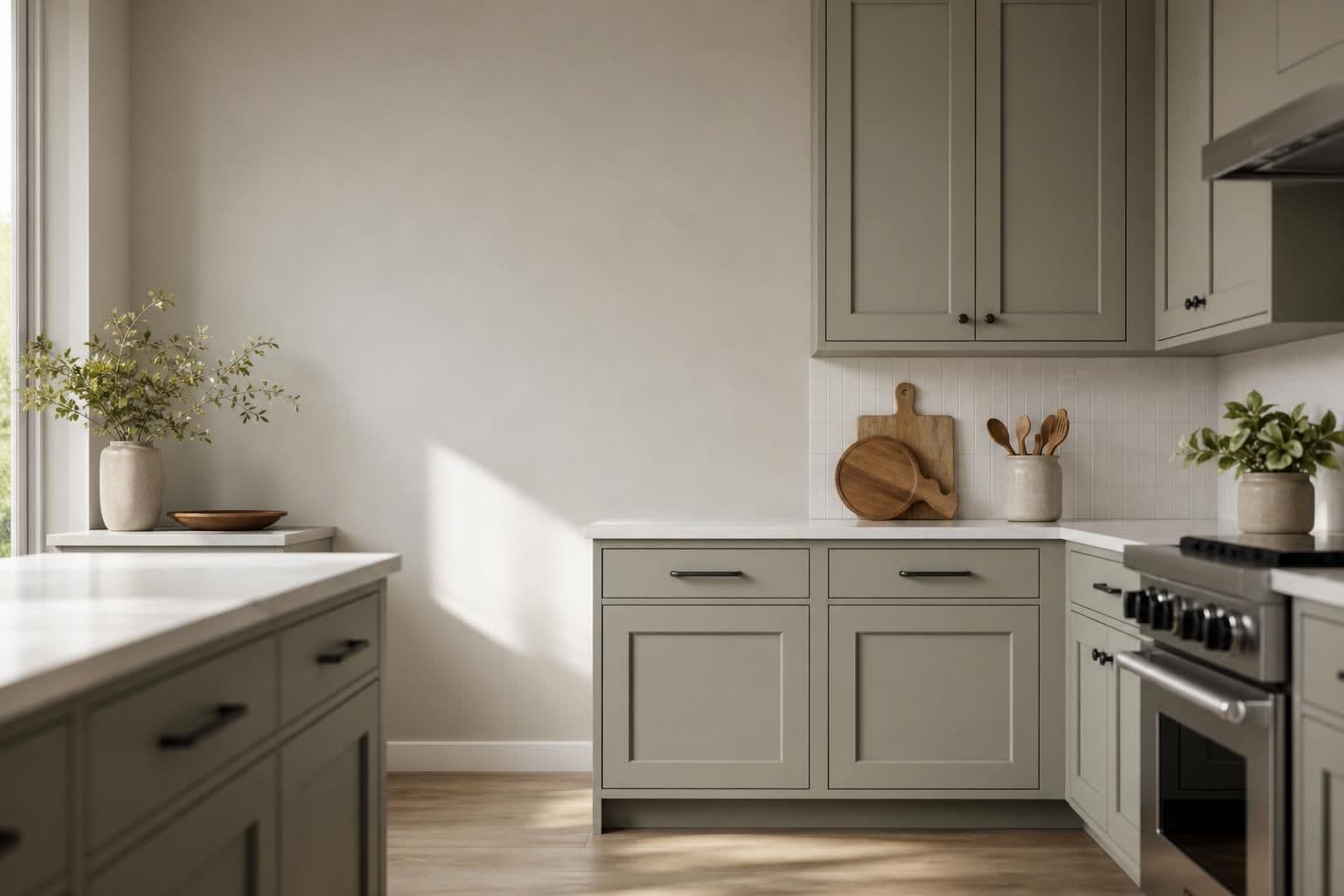
- Shaker — a recessed center panel framed by flat rails and stiles. It's the most requested style nationally because it works with both traditional and modern kitchens.
- Slab (flat-panel) — a single flat door front with no panel detail. Common in contemporary and minimalist kitchens; shows fingerprints and water spots more readily on high-gloss finishes.
- Raised-panel — a center panel that sits higher than the surrounding frame, often with decorative edge profiles. More traditional and less common in new island builds.
- Contemporary/European flat-front — similar to slab but often paired with handleless or push-to-open hardware for an ultra-clean look.
If you're deciding between styles for a renovation, it helps to look at real kitchens first — a full kitchen remodel timeline for Oahu homes walks through how design selection fits into the overall project schedule.
Materials: What Matters More in Hawaii Than Elsewhere
Cabinet material choice affects both looks and longevity, but in a coastal, humid climate the material decision carries more weight than it would in a dry mainland climate.
- Solid wood doors and frames look premium but expand and contract with humidity more than engineered materials, which can eventually cause hairline cracks at joints or panel seams in homes without consistent air conditioning.
- MDF (medium-density fiberboard) doors, often painted or thermofoil-wrapped, resist warping better than solid wood because the fiber composition doesn't have a grain direction that swells unevenly.
- Plywood boxes hold up better than particleboard boxes in humid conditions and near open lanai doors, since plywood's layered grain structure resists moisture absorption and delamination better than particleboard's compressed wood chips.
- Thermofoil and laminate finishes seal the substrate in a vinyl or foil layer, which adds a moisture barrier — useful in kitchens near windows that stay open for trade winds.
Manufactured wood products (particleboard, MDF, and some plywoods) are also regulated for formaldehyde emissions under the EPA's TSCA Title VI composite wood standards, so it's worth asking any cabinet supplier whether their boxes are compliant, especially for a home you'll be living in full-time.
Termites are a separate consideration entirely. Hawaii has an active population of subterranean and drywood termites, including the Formosan subterranean termite, which the University of Hawaii's College of Tropical Agriculture and Human Resources has documented as one of the more destructive wood pests in the islands. Engineered wood boxes with sealed finishes are less appealing to wood-boring insects than untreated solid wood, which is one more reason plywood and MDF construction tend to be recommended for island kitchens over raw solid-wood boxes.
Stock, Semi-Custom, and Custom Cabinets
These three purchasing tiers determine how much flexibility you have over size, material, and finish:
- Stock cabinets come in fixed sizes (usually 3-inch increments) and a limited set of finishes. They're the fastest to get but offer no flexibility for odd-shaped kitchens, which are common in older Oahu homes and condos.
- Semi-custom cabinets use standard box sizes but allow modifications — different door styles, finishes, or add-on features like built-in spice racks.
- Custom cabinets are built to the exact dimensions of your kitchen, which matters in condos with load-bearing columns, bulkheads, or non-standard ceiling heights. Custom orders also let you specify moisture-resistant box materials and hardware upgrades up front rather than retrofitting later.
For a kitchen with an awkward layout — a narrow galley, an island tucked around a support post, or lanai-adjacent cabinetry exposed to more humidity — custom construction usually pays off in fit and long-term durability even though lead times run longer.
Cabinets for Condos and Vacation Rentals
Condo and vacation-rental kitchens have their own set of practical constraints. Renovations in condo buildings typically require association sign-off before demolition or cabinet replacement begins, and the approval process can affect your material choices if the association has rules about noise, water use, or renovation hours. If you're planning a remodel in a Honolulu condo, it's worth reviewing what condo association approval for kitchen renovations involves before finalizing a cabinet order, since some boards restrict certain construction days or require contractor documentation.
For vacation rentals specifically, durability against heavy turnover — more hands on cabinet doors, more spills, more cleaning chemicals — makes moisture-sealed finishes and hardware rated for frequent use a practical priority over pure aesthetics.
Maintaining Whatever You Choose
Cabinet type also affects how you clean and maintain them long-term. Painted MDF, stained wood, and thermofoil each respond differently to Hawaii's humidity and to common cleaning products, and using the wrong method can dull a finish faster than normal wear would. A step-by-step guide to cleaning kitchen cabinets in Hawaii's climate covers which products are safe for each material.
Frequently Asked Questions
Q: What is the most durable type of kitchen cabinet for humid climates?
Plywood-box cabinets with MDF or thermofoil door fronts generally hold up best in humidity because plywood resists moisture absorption better than particleboard, and MDF/thermofoil finishes don't expand and contract the way solid wood does.
Q: What's the difference between framed and frameless cabinets?
Framed cabinets have a face frame across the front of the box that the door attaches to, while frameless cabinets attach doors directly to the box sides, giving slightly more interior storage access and a cleaner, gap-free look.
Q: Are custom cabinets worth it over stock cabinets?
Custom cabinets are worth it when your kitchen has an unusual layout, load-bearing obstacles, or when you want to specify moisture-resistant materials up front; for a standard rectangular kitchen, semi-custom or stock options are often sufficient.
Q: Do wood cabinets warp in Hawaii's climate?
Solid wood cabinet doors and frames can develop hairline cracks or slight warping over time in homes without consistent air conditioning, because wood expands and contracts with humidity more than engineered materials like MDF.
Q: Is thermofoil a good choice for kitchen cabinets?
Thermofoil seals an MDF substrate in a vinyl layer, which adds moisture resistance and a smooth, easy-to-wipe surface, making it a practical option for humid kitchens, though it can peel at edges if exposed to high heat over time.