What Is the Most Durable Flooring for Hawaii Homes?
Key takeaway
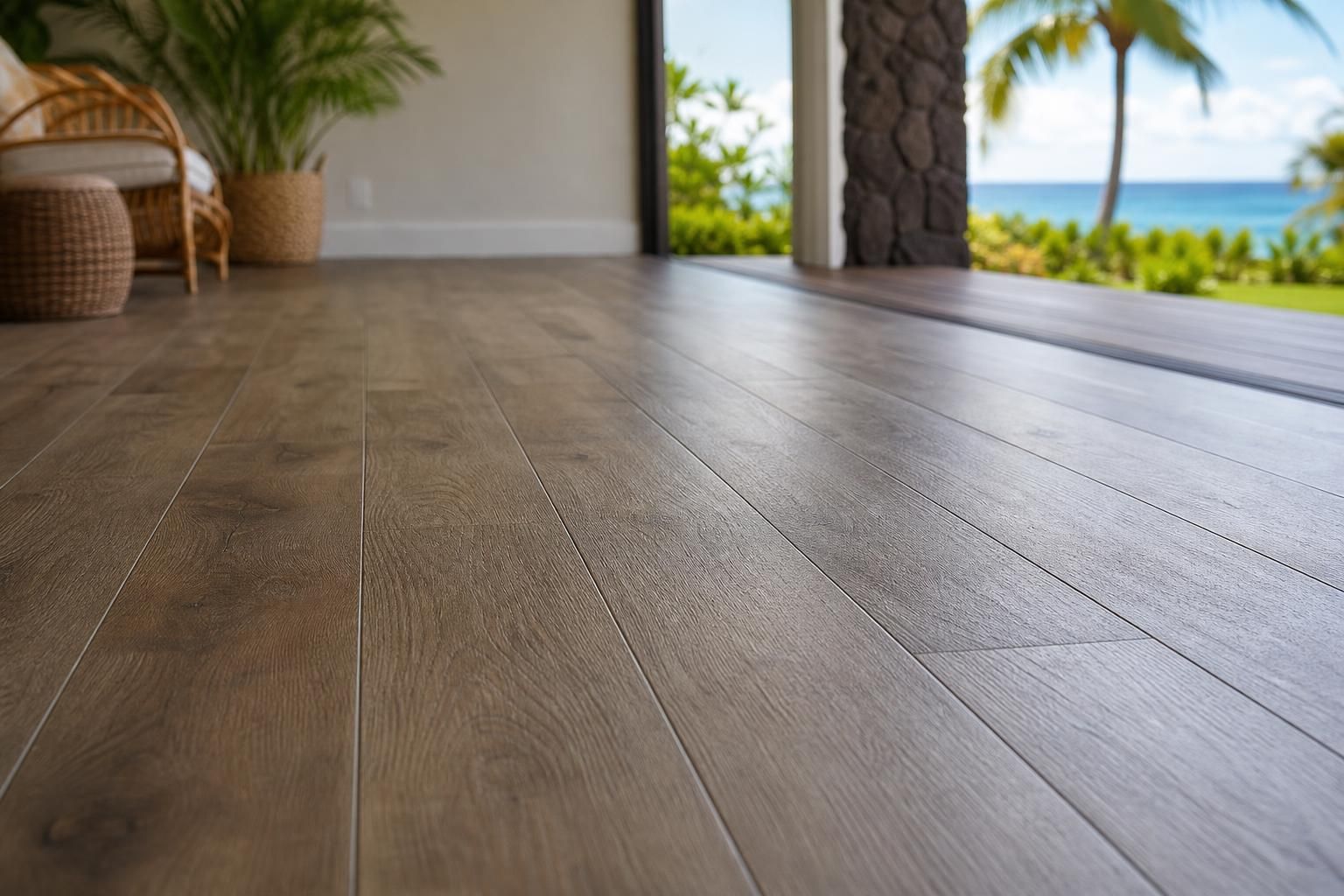
For most Oahu homes, waterproof SPC (stone-plastic composite) luxury vinyl plank is the most durable everyday flooring choice, because it resists moisture, won't feed termites, and holds up to sand, foot traffic, and humidity swings better than hardwood or laminate. Porcelain tile and natural stone can match or exceed it in raw scratch and heat resistance, but they cost more to install and feel colder underfoot. The "most durable" answer really depends on which threat matters most in your house — moisture, termites, UV fading, or daily wear.
Key takeaways
- Waterproof SPC vinyl plank resists island humidity, splashes, and sandy foot traffic better than hardwood or laminate, and it's not a food source for termites.
- Porcelain tile and natural stone are harder and more scratch-resistant than vinyl, but they're less forgiving on bare feet and joints, and cost more to install.
- The right "durable" floor depends on the room: wet areas and lanais need different performance than bedrooms or living rooms.
Durability Isn't One Property — It's Several
When people ask what is the most durable flooring, they're usually bundling several different stresses together: scratch resistance, moisture resistance, impact resistance, fade resistance, and pest resistance. A floor can be excellent at one and weak at another. Solid hardwood, for example, is tough against dents but swells and cups when it absorbs moisture — a real problem in a climate where indoor relative humidity regularly sits above what mainland manufacturers design for.
For Oahu specifically, the stresses that matter most are:
- Moisture and humidity — from trade-wind rain, open lanai doors, and AC cycling
- Termites — subterranean and drywood termites are established across the islands and will attack untreated wood flooring and cabinetry
- UV exposure — strong, near-equatorial sun fades and degrades materials faster than in temperate climates
- Sand and grit — common in homes near the beach, which accelerates surface wear
Why SPC Vinyl Plank Holds Up Well on Oahu
SPC vinyl plank is built around a rigid core of limestone powder and PVC, topped with a printed design layer and a clear wear layer. That core is fully waterproof — not just water-resistant — so it won't swell, warp, or delaminate if it gets wet, which matters during rainy season or in a condo where a washing machine or water heater could leak. Because the material is entirely synthetic, termites have no reason to tunnel through it, unlike solid wood or even some engineered wood products.
The wear layer on top is what actually determines how long a floor resists scratches and scuffs from furniture, pets, and sandy feet. Thicker wear layers generally hold up longer in high-traffic entryways and living rooms, which is worth asking about directly when you're comparing specific products rather than assuming all vinyl plank performs the same. If you're installing near sliding doors or an outdoor-facing room, it also helps to review how to choose flooring for a lanai, since transition areas take the most abuse from sand, UV, and moisture at once.
Where Tile and Natural Stone Outperform Vinyl
Porcelain tile and natural stone are harder, in the literal sense — they resist scratching from grit and sand better than any vinyl product, and they don't fade from UV exposure the way some plastics can over many years. They also tolerate direct heat, which makes them a strong choice near a lanai grill station or an indoor-outdoor kitchen pass-through. The tradeoff is that tile and stone floors are less forgiving: they're harder on joints when standing for long periods, colder underfoot, and grout lines need periodic sealing and cleaning to stay stain-resistant.
Stone flooring also tends to cost more to install correctly than vinyl plank, largely because materials are shipped to the islands and skilled setting labor runs higher locally than on the mainland — worth factoring in during planning, and a local showroom consultation is the most reliable way to get real numbers for your space rather than relying on a mainland estimate.
What Actually Shortens a Floor's Lifespan in Hawaii
A few conditions do more damage here than in most mainland climates:
- Standing moisture from lanai doors left open during rain, AC condensation lines, or slow leaks — a major driver of warping, cupping, and mold growth in porous flooring. The EPA notes that controlling indoor moisture is one of the most effective ways to prevent mold growth in the home.
- High ambient humidity, which Hawaii's trade-wind climate maintains at higher average levels than much of the continental U.S., according to NOAA climate data for the islands.
- Termite pressure, which is well documented in Hawaii's warm, humid environment by the University of Hawaii College of Tropical Agriculture and Human Resources, which tracks both subterranean and drywood termite activity statewide.
- Direct UV exposure through sliding glass doors and lanai-adjacent rooms, which fades and dries out materials faster than interior rooms ever experience.
If sun exposure is a concern in a specific room, how to keep vinyl plank flooring from fading in sunlight walks through practical ways to slow that process.
Matching Flooring Durability to the Room
Durability needs aren't uniform throughout a house. A reasonable approach:
- Kitchens and bathrooms — prioritize full waterproofing above scratch resistance; spills, splashes, and plumbing are the bigger daily risk.
- Lanai-adjacent living rooms — prioritize UV and moisture resistance together, since both hit the same transition zone.
- Entryways and high-traffic hallways — prioritize a thick wear layer or a hard surface like tile, since grit does the most damage here.
- Bedrooms — durability demands are lower; comfort underfoot and quieter underlayment often matter more than raw toughness.
Vacation rentals and condos tend to need the most durable option throughout, simply because turnover and guest traffic are higher than in an owner-occupied home. Before installing any plank product, it's worth reviewing how to acclimate vinyl plank flooring before installation, since skipping that step is one of the most common causes of early floor failure regardless of how durable the material itself is.
Frequently Asked Questions
Q: What is the most durable flooring for a kitchen in Hawaii?
Waterproof SPC luxury vinyl plank is generally the most practical choice for Hawaii kitchens because it fully resists moisture from spills and leaks while standing up to daily foot traffic. Porcelain tile is a strong alternative where scratch resistance from dropped cookware matters more than comfort underfoot.
Q: Does vinyl plank flooring really resist termites?
Yes — SPC and WPC vinyl plank cores are made of synthetic materials like limestone composite and PVC, which termites cannot eat or tunnel through, unlike solid or engineered wood flooring.
Q: Is tile more durable than vinyl plank flooring?
Tile and natural stone resist scratching and heat better than vinyl, but vinyl plank is more forgiving underfoot and equally waterproof when it's a true SPC product. Which one is "more durable" depends on whether scratch resistance or moisture and comfort matter more in that specific room.
Q: How does Hawaii's climate affect flooring durability?
Higher average humidity, frequent rain through open lanai doors, strong UV exposure, and established termite populations all accelerate wear on flooring faster than in most mainland climates. Materials that are fully waterproof and non-organic tend to hold up longest under these conditions.
Q: Can humidity alone damage flooring even without visible leaks?
Yes — sustained high indoor humidity can cause solid hardwood to cup or gap and can contribute to mold growth in porous materials, even without a direct water leak. Waterproof materials like SPC vinyl or sealed stone are less affected by ambient moisture alone.