How to Choose Flooring for a Lanai
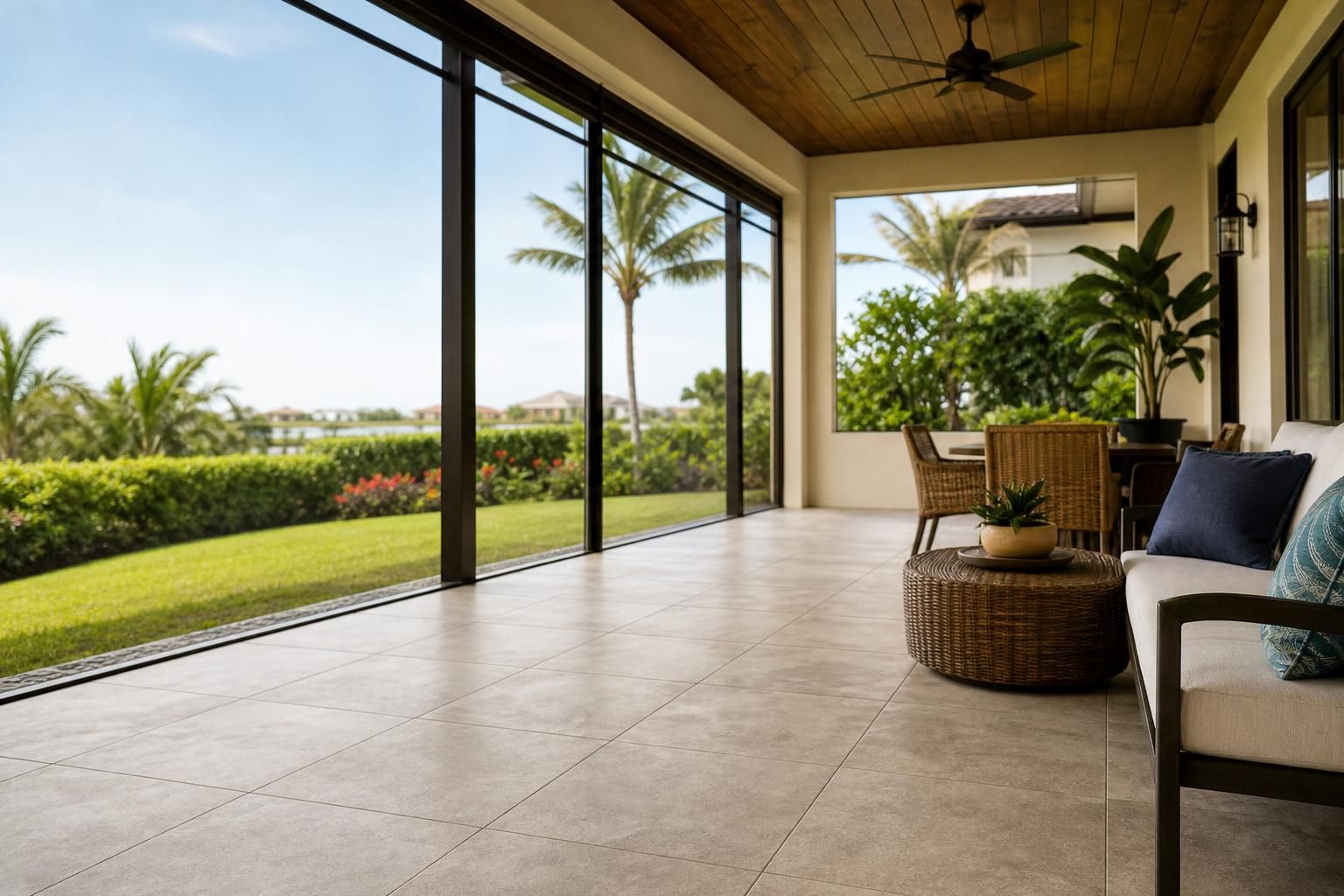
Key takeaway
Choose lanai flooring based on three factors first: how exposed it is to rain and sun, how slip-resistant it is when wet, and how well it handles constant humidity without warping, staining, or hosting mold. Porcelain tile, natural stone, and textured concrete are the most common choices for Oahu lanais because they shed water and resist UV fading, while most wood-look products need a covered, well-drained space to last. The right pick depends less on style and more on whether your lanai is open to weather or fully screened.
Key takeaways
- Match the material to exposure: fully open lanais need water-shedding, UV-stable surfaces like tile or stone; screened lanais have more flexibility.
- Prioritize a slip-resistance rating (look for a dynamic coefficient of friction suited to wet areas) over appearance alone.
- Confirm drainage slope and a vapor-tolerant installation method before locking in a material, especially on concrete slabs exposed to rain.
Start With How Exposed the Lanai Actually Is
A lanai that catches wind-driven rain, direct afternoon sun, and salt air behaves like outdoor space, even if it's attached to your living room. A screened or deeply covered lanai behaves more like a sheltered patio. This distinction decides almost everything else about material selection.
Honolulu's rainy season runs roughly November through March, with trade-wind showers possible year-round, according to the National Weather Service Honolulu office. If your lanai gets direct rain on most days with wind, treat it as a wet-exposure zone and rule out materials that aren't rated for continuous water contact, including most laminate and many engineered wood products.
Porcelain and Ceramic Tile: The Standard Choice
Porcelain tile is the most common lanai flooring on Oahu because it's dimensionally stable in heat, doesn't fade from UV exposure, and comes in textured or matte finishes made for wet feet. For slip safety, look for tile rated for wet-area or outdoor use rather than a polished interior tile repurposed for the lanai — polished finishes get dangerously slick when rained on.
A few practical notes:
- Grout lines need a sealed, stain-resistant grout or an epoxy-based grout, since standard cement grout absorbs moisture and can stain or support mold growth in humid air.
- Large-format tile (18x18 inches or bigger) shows fewer grout lines and is easier to keep clean, but it needs a flatter substrate to avoid lippage.
- Tile set over a concrete lanai slab should slope slightly away from the house, typically about 1/4 inch per foot, so standing water drains instead of pooling against the threshold.
Natural Stone: Good Looks, More Upkeep
Natural stone — travertine, slate, or bluestone — gives a lanai a high-end, resort-style look and handles heat well underfoot compared to darker tile. The tradeoff is porosity: most natural stone needs periodic sealing to resist staining from leaf tannins, suntan oil, and the mineral residue in Oahu's hard water. Unsealed stone in a wet, uncovered lanai can also become more slippery over time as its surface wears.
If you're drawn to stone for a lanai that connects to an indoor kitchen or bath remodel, it's worth planning the stone selection alongside your countertop overhang and material choices so the indoor-outdoor look reads as one continuous design rather than two separate projects.
Waterproof Vinyl Plank: Only in Covered, Dry Conditions
Rigid SPC (stone plastic composite) luxury vinyl plank is a favorite for Oahu interiors because its waterproof core resists swelling, but it's engineered for indoor humidity and splashes, not standing water or direct sun. UV exposure breaks down the wear layer and can cause visible fading or a chalky surface over a few years, and manufacturers' warranties generally exclude uncovered outdoor use for this reason. If your lanai is fully screened, shaded, and never gets rain, some SPC products can work, but it's worth reviewing how vinyl plank resists sun fading and how it handles water exposure before specifying it for anything other than a fully enclosed lanai.
Concrete: Durable, Affordable to Maintain, and Flexible
A broom-finished or stamped concrete lanai is already common on Oahu homes and remains one of the lowest-maintenance options because it's inherently water-resistant and can be re-coated with a slip-resistant sealer every few years rather than replaced. Acid-stained or integrally colored concrete adds visual interest without introducing seams where water or sand can collect. The main design limitation is that concrete reads more casual than tile or stone, so it suits lanais used for daily indoor-outdoor living more than those meant to feel like a formal extension of the house.
Check Drainage and Moisture Handling Before You Commit
Whatever material you choose, the substrate underneath matters as much as the surface finish. Concrete slabs exposed to rain and ground moisture need a installation method that tolerates vapor transmission, since trapped moisture under an impermeable floor is a common cause of tile cracking, efflorescence (white mineral deposits), and adhesive failure in Hawaii's climate. The EPA notes that controlling moisture is the single most effective way to prevent mold growth in any building assembly, which applies directly to lanai floors built over slab-on-grade foundations (EPA mold guidance). If you're renovating a lanai attached to an interior room, it's also worth checking how local moisture-barrier rules apply, since Hawaii's building code addresses vapor control differently than mainland codes — see this overview of Hawaii's flooring moisture barrier requirements for the baseline.
Weigh Slip Resistance the Way You'd Weigh Durability
A beautiful lanai floor that turns slick when wet is a liability, not a feature. The American National Standards Institute and tile industry groups reference a dynamic coefficient of friction (DCOF) of 0.42 or higher as the general benchmark for level, wet interior and exterior walking surfaces, a figure tile manufacturers list on most product spec sheets (Tile Council of North America). When comparing samples, ask for the DCOF rating in writing rather than judging slip resistance by texture alone — some heavily textured tiles still test poorly wet, while some matte finishes test well.
Frequently Asked Questions
Q: Can I use the same flooring indoors and on my lanai for a seamless look?
You can visually match materials — the same tile color or a coordinating stone — but the lanai version typically needs a different, more slip-resistant and water-rated finish than the interior product, even if they look nearly identical.
Q: Is outdoor-rated vinyl plank flooring a real option for a lanai?
Only on lanais that are fully screened, shaded from direct sun, and never exposed to blowing rain; most SPC vinyl products are warrantied for indoor or covered-patio use only, not open-air exposure.
Q: How often does natural stone on a lanai need to be resealed?
It depends on the stone type and how much direct weather it gets, but porous stones like travertine in an exposed, rainy lanai need sealing checked more often than the same stone used in a sheltered, indoor space.
Q: What slope should a lanai floor have for proper drainage?
A common target is about 1/4 inch of fall per foot, directing water away from the house toward a drain or open edge, which should be confirmed with whoever pours or re-grades the slab.
Q: Does termite risk affect lanai flooring choices in Hawaii?
Yes for substrates — any wood framing or wood-look decking under or around a lanai should be treated or termite-resistant, since Hawaii's climate supports year-round termite activity, but tile, stone, and concrete surfaces themselves aren't a termite food source.