How to Prevent Water Damage in Vinyl Plank Flooring
Key takeaway
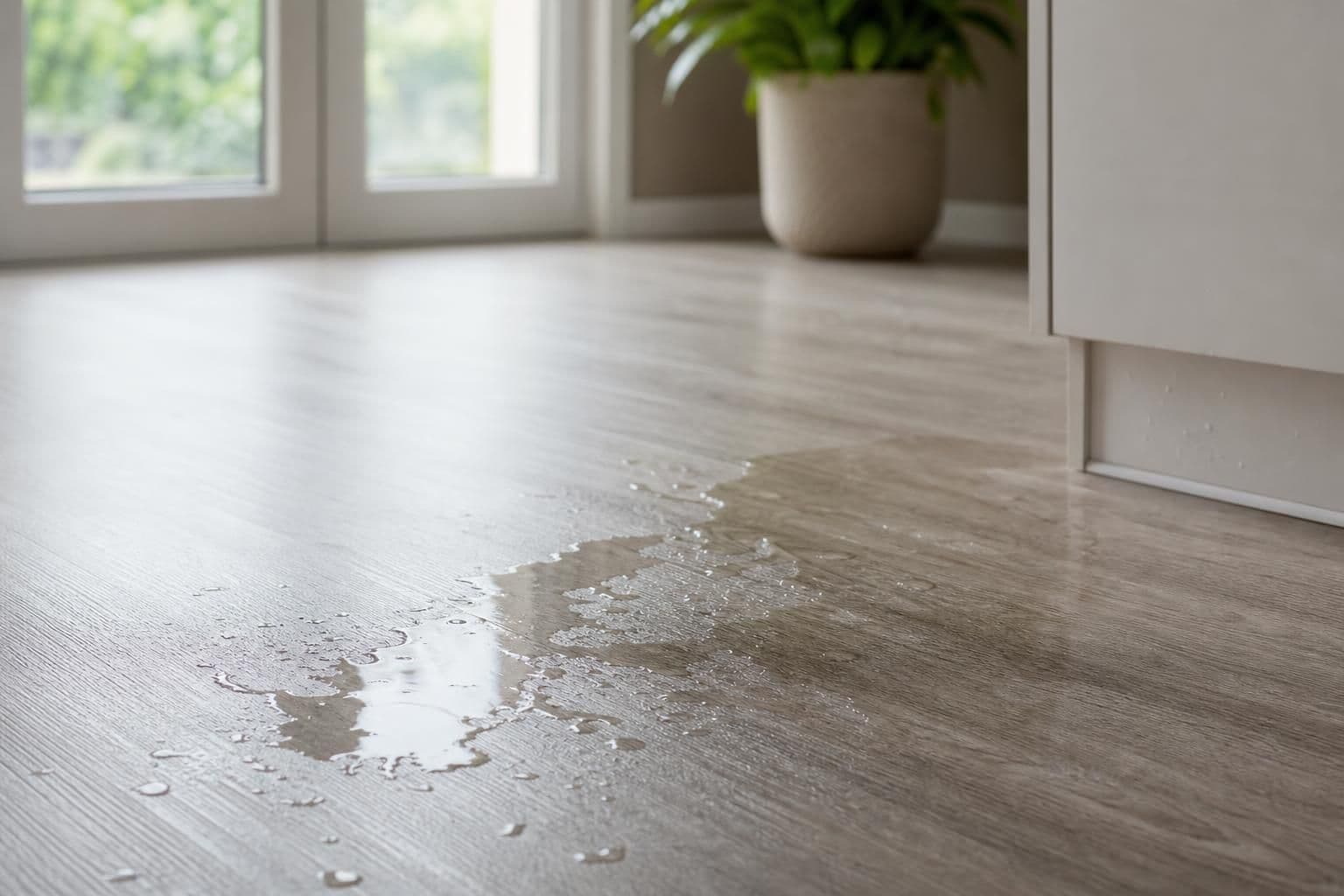
Preventing water damage in vinyl plank flooring comes down to three things: sealing seams and edges properly during installation, wiping up standing water within a few hours instead of letting it sit, and controlling humidity and subfloor moisture so water never has a chance to work its way underneath the planks. Even waterproof SPC vinyl can fail at the edges, around transitions, or at the subfloor if these steps are skipped. The planks themselves resist water, but the joints, seams, and foundation underneath them are where damage actually starts.
Key takeaways
- Standing water left on seams or at wall edges for more than a day is the most common cause of vinyl plank failure, even on "waterproof" SPC products.
- A clean, flat, dry subfloor matters more than the plank itself — moisture trapped underneath will eventually push up through seams.
- In Hawaii's humidity, running AC or a dehumidifier to keep indoor relative humidity in a moderate range reduces the risk of trapped moisture and mold growth under flooring.
Why "Waterproof" Flooring Still Gets Water Damage
SPC (stone plastic composite) vinyl plank is built with a rigid waterproof core, which means the plank material itself won't swell or warp when it gets wet. The vulnerability is almost always at the seams between planks, at the perimeter where flooring meets walls or cabinets, and underneath the floor where moisture from the subfloor or a slab can get trapped with nowhere to evaporate. Manufacturers typically rate SPC products as water-resistant for the wear layer and core, but click-lock joints are mechanical connections, not a continuous waterproof membrane — water sitting on top long enough can still seep between planks and reach the subfloor below.
Install With Moisture Control Built In
Most water damage problems trace back to subfloor prep, not the flooring itself. A proper installation should include:
- A moisture-tolerant underlayment appropriate for concrete slabs, which are common in Oahu condos and ground-floor homes
- Expansion gaps around the perimeter (typically covered by baseboard or trim) so the floor can move without buckling
- Flat subfloor prep, since gaps or dips under SPC planks create voids where water can collect and sit against the plank's underside
- Sealed transitions at doorways, lanais, and bathroom thresholds, where water is most likely to travel from one room into another
Hawaii's building code addresses moisture barrier requirements specifically because of how common slab-on-grade construction and high ambient humidity are across the islands; reviewing moisture barrier requirements for flooring before a remodel helps avoid problems that only show up months after installation.
Wipe Up Spills and Standing Water Promptly
A spill that's wiped up within an hour is a non-event. The same spill left overnight near a seam, baseboard, or stair nosing gives water time to wick sideways and find a gap. This matters most in:
- Bathrooms and laundry areas, where splashing and leaks are routine
- Kitchens, around dishwashers, sinks, and refrigerator water lines
- Entryways and lanai-adjacent rooms, where rain and tracked-in water are a daily reality during Oahu's wetter months
Keep a mop or absorbent towel within reach in these high-risk zones rather than relying on air-drying, which can take hours in humid indoor air.
Manage Humidity, Not Just Spills
Oahu's year-round humidity means indoor moisture can be a slow, invisible threat even without an obvious leak. The National Oceanic and Atmospheric Administration tracks Honolulu's relative humidity averaging well above mainland norms for most of the year, which is part of why condensation under flooring and inside cabinets is a more common complaint in island homes than in drier climates. Running air conditioning or a dehumidifier to keep indoor relative humidity in a moderate range — most HVAC guidance points to roughly 30–50% — reduces the chance that moisture condenses on a cool slab and gets trapped beneath the vinyl. The Environmental Protection Agency notes that controlling indoor moisture is one of the most effective ways to prevent mold growth, and trapped subfloor moisture under flooring is a textbook setup for it.
Protect Vulnerable Areas and High-Traffic Zones
Certain spots in a home see more water exposure than others, and small preventive habits go a long way:
- Use absorbent mats at exterior doors and lanai entries to catch rain and pool water before it reaches the floor
- Install felt or rubber pads under furniture legs to prevent scuffing that can compromise the wear layer and expose seams to moisture
- Check under major appliances periodically for slow leaks, since a dishwasher or fridge line leak can go unnoticed for weeks under cabinetry
- Reseal or inspect caulking around bathtubs, showers, and toilets annually, since failed caulk is a common hidden source of water reaching the floor
If a bathroom renovation is on the horizon, working with bathroom remodel contractors familiar with Oahu conditions ensures waterproofing details like shower pans and threshold transitions are handled correctly from the start, rather than patched after the fact.
Choose the Right Product for Wet-Prone Rooms
Not all vinyl plank products handle sustained water exposure the same way. Rigid SPC core products generally hold up better in consistently damp rooms than thinner WPC or standard LVP options, and tighter, well-engineered click-lock systems resist seam infiltration better than cheaper budget lines. For condos and vacation rentals where guest turnover means spills and wet feet are a daily occurrence, reviewing the differences in a buyer's guide to waterproof vinyl flooring before purchasing can prevent a costly mismatch between product and room. Pairing flooring choice with cabinetry that tolerates the same humidity swings — something covered when matching cabinet colors to SPC vinyl flooring — keeps the whole room consistent in both looks and durability.
Watch for Early Warning Signs
Catching a problem early is far cheaper than replacing an entire room. Watch for:
- Planks that feel slightly soft, hollow, or spongy underfoot
- Visible gapping or lifting at seams, especially near exterior walls or bathrooms
- A musty smell near baseboards, which often signals trapped moisture before any visible damage appears
- Discoloration or a slight unevenness along a seam line
Any of these signs warrant pulling up a plank or two to check the subfloor condition before the damage spreads further.
Frequently Asked Questions
Q: Can vinyl plank flooring be completely waterproof?
The plank material itself (the SPC core and wear layer) can be fully waterproof, but the overall floor system is only as water-resistant as its installation. Seams, transitions, and the subfloor underneath are the points where water damage typically starts, even with a waterproof-rated product.
Q: How long can water sit on vinyl plank flooring before it causes damage?
There's no universal cutoff, but water left standing for more than a few hours increases the risk of it working into seams and reaching the subfloor. Spills wiped up promptly, within an hour or so, rarely cause lasting problems.
Q: Does humidity affect vinyl plank flooring even without a visible leak?
Yes. High ambient humidity can lead to condensation forming on a cool concrete slab underneath the flooring, creating trapped moisture that promotes mold or mildew even when no spill ever occurred.
Q: Is vinyl plank flooring a good choice for bathrooms in humid climates?
Rigid SPC vinyl plank is generally well-suited to bathrooms when installed with proper expansion gaps, sealed transitions, and attention to subfloor moisture, making it a common choice in humid island climates where traditional hardwood isn't practical.
Q: What's the first thing to check if vinyl plank flooring feels soft or spongy?
Soft or hollow spots usually indicate moisture or a void beneath the plank. Pulling up a section to inspect the subfloor for trapped moisture or uneven prep is the first step before deciding whether repair or replacement is needed.