Waterproof Vinyl Flooring Oahu: A Buyer's Guide
Key takeaway
Waterproof vinyl flooring on Oahu almost always means SPC (stone plastic composite) luxury vinyl plank — a rigid-core floor with a fully sealed, non-porous surface that won't swell, warp, or absorb moisture from humidity, spills, or a leaking lanai door. It performs well in trade-wind humidity, resists the moisture that comes with Hawaii's rainy season, and holds up in kitchens, bathrooms, and condo units where standing water is a real risk. For most island homes it's the most practical alternative to hardwood or laminate, both of which react poorly to moisture over time.
Key takeaways
- SPC vinyl has a rigid limestone-composite core, making it genuinely waterproof (not just water-resistant), unlike laminate or engineered wood.
- Look for a wear layer of at least 20 mil for rental or high-traffic units, and an attached underlayment for sound and comfort in condos.
- Get samples acclimated and installed by someone familiar with Oahu's humidity swings and older concrete slab subfloors, common in island homes.
Why Waterproof Matters More on Oahu Than on the Mainland
Oahu's climate runs humid year-round, with a distinct wet season roughly from November through March when trade winds shift and rainfall increases. The National Weather Service Honolulu office tracks this seasonal pattern, and it's a major reason flooring that tolerates moisture matters more here than in drier mainland climates. Homes near the coast also deal with salt-laden air that can accelerate the breakdown of adhesives and finishes not designed for tropical exposure.
Concrete slab foundations are common in Honolulu construction, and slabs can wick moisture upward even when a home looks dry on the surface. Traditional hardwood or laminate flooring can cup, buckle, or delaminate when moisture moves through a slab over months or years. A sealed vinyl core sidesteps that problem because there's no wood fiber to swell.
What Makes SPC Different From Other Vinyl Flooring
Not all vinyl is created equal, and the category includes several distinct products:
- WPC (wood plastic composite): a softer, foam-based core that's water-resistant but generally less dent-resistant than SPC.
- SPC (stone plastic composite): a dense, rigid core that resists denting, temperature swings, and moisture completely at the plank level.
- Sheet vinyl: fully waterproof at the surface but seamed installations can allow water to reach the subfloor at seams over time.
- Vinyl composition tile (VCT): durable and used in commercial settings, but individual tiles have seams that require sealing to stay watertight.
For island homes, SPC has become the default recommendation because it combines a waterproof core with rigidity that hides minor subfloor imperfections — a common issue in older Oahu homes where slabs have settled slightly over decades.
Choosing the Right Wear Layer and Thickness
The wear layer is the clear protective top coating, and its thickness in mils determines how much foot traffic, pet activity, and cleaning the floor can take before it shows wear. A 12–14 mil wear layer suits light residential use, while 20 mil or higher is the better call for rental turnover, pets, or heavy household traffic — a distinction worth thinking through if you're weighing options for a home with pets. Overall plank thickness (often 4–8mm) affects underfoot comfort and how much it muffles sound between condo floors, which matters in multi-unit buildings where noise transfer is a common complaint from neighbors below.
Installing Over Oahu's Common Subfloor Types
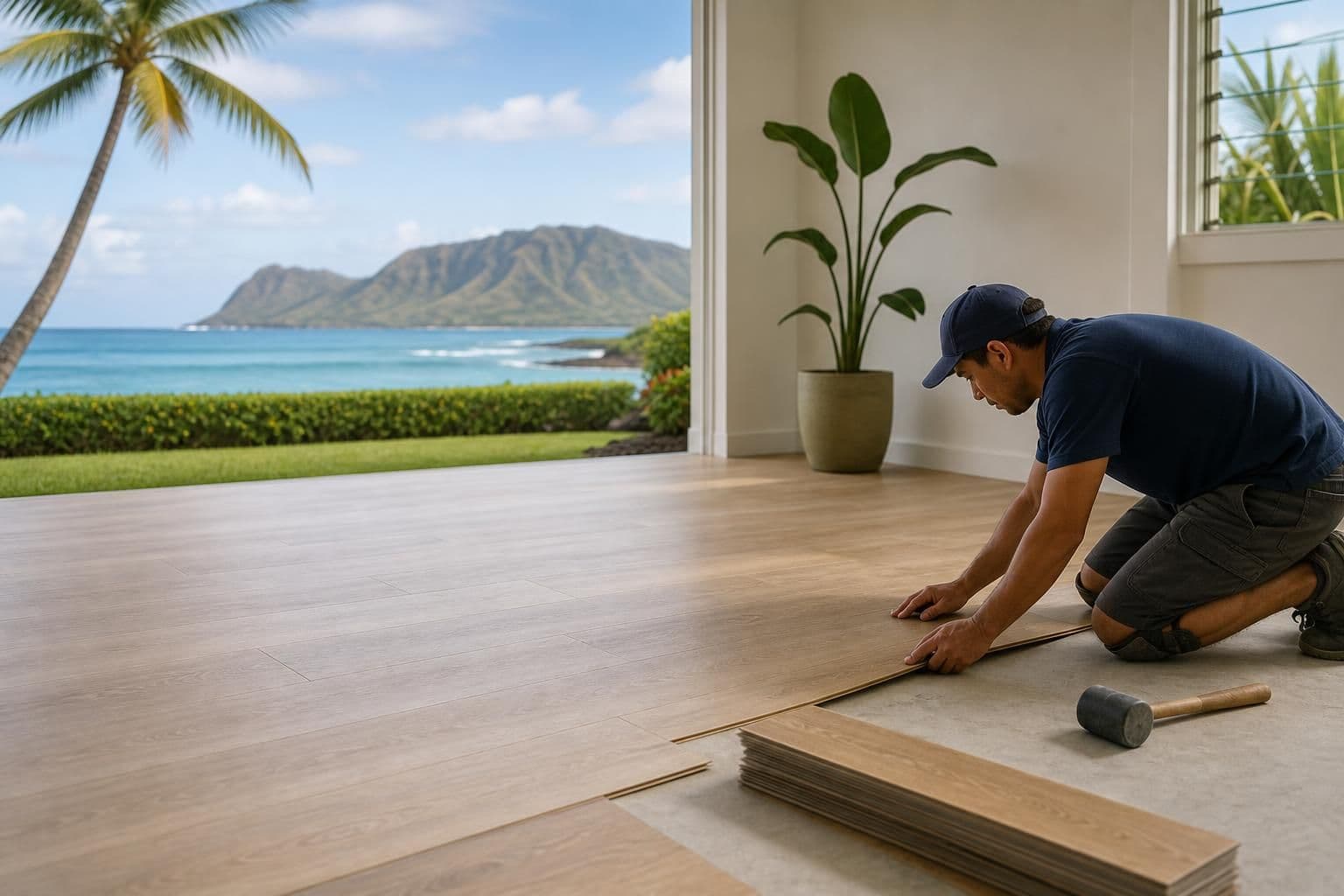
Most SPC vinyl floors are engineered to float, meaning they click together and rest over the subfloor rather than being glued down plank by plank. That approach works over concrete slabs, plywood, and even over existing vinyl or tile in many cases, provided the surface is flat and clean. Installers typically require the flatness to fall within a small tolerance — often no more than about 3/16 inch of variation over a 10-foot span — because gaps or humps under a rigid floor can telegraph through the surface or stress the locking joints over time.
Acclimation matters too. Vinyl planks should sit in the room where they'll be installed for a period before installation so they adjust to the space's temperature and humidity, reducing the risk of gaps or buckling once installed. This step is especially relevant in Hawaii, where indoor humidity in an un-air-conditioned unit can run noticeably higher than in a mainland home.
Vacation Rentals and Condo Units: Special Considerations
Vacation-rental owners and condo boards on Oahu have specific priorities beyond waterproofing:
- Turnover durability: guests roll suitcases, drag furniture, and don't treat a floor as carefully as an owner-occupant would, so a thicker wear layer pays off.
- Sound transfer rules: many condo associations specify a minimum Impact Insulation Class (IIC) rating for flooring, and attached-underlayment SPC products are often chosen specifically to meet those house rules.
- Fast reinstallation: floating floors can often be repaired plank-by-plank rather than requiring a full tear-out, which matters when a unit needs to be back on the rental calendar quickly.
If a plank does get gouged or scratched between bookings, it's worth knowing how to fix scratches on vinyl plank flooring before assuming a full replacement is necessary.
Maintenance in a Salt-Air, Sandy-Floor Environment
Waterproof doesn't mean maintenance-free. Sand and grit from beach days act like sandpaper under bare feet and furniture legs, so regular sweeping or a soft-bristle vacuum attachment matters more on Oahu than in a landlocked home. Manufacturers typically recommend avoiding steam mops on vinyl flooring, since sustained heat and moisture can affect the seams between planks and the adhesive bonding the wear layer, even though the core itself is waterproof. For a fuller routine, a guide on cleaning luxury vinyl plank flooring in Hawaii homes covers the specifics of managing sand, salt residue, and UV fading near ocean-facing windows.
How Waterproof Vinyl Compares to Other Humidity-Tolerant Options
Porcelain tile and certain engineered stone products also resist moisture well, but each comes with tradeoffs: tile is harder underfoot and colder, and both tile and stone cost more to install and are harder to modify later. For a broader comparison of materials suited to the islands' climate, see this rundown of flooring options built for humid Hawaii homes. Vinyl's advantage is a warmer, quieter feel underfoot at a lower installed cost than tile or hardwood, though exact project costs vary by unit size, subfloor prep needed, and material grade — a local in-home consultation is the most reliable way to get real numbers, since Hawaii pricing runs above mainland averages due to shipping and labor costs.
Questions to Ask Before You Buy
Before committing to a specific vinyl product, it helps to ask a supplier:
- What is the wear layer thickness, in mils?
- Is the underlayment attached, and what IIC/STC sound rating does it carry?
- What subfloor prep is included in the installation quote?
- What's the manufacturer's warranty against moisture damage specifically (not just general wear)?
- Can you see a sample acclimated to a humid room before ordering full quantities?
Reputable installers, including the team at VC Flooring & Stone, can walk through these specs plank by plank during an in-home visit, which is often more useful than comparing spec sheets alone.
Frequently Asked Questions
Q: Is vinyl plank flooring actually 100% waterproof?
SPC vinyl plank is waterproof at the plank level because its core contains no wood fiber that can absorb water. Water can still reach the subfloor through seams or edges if a large amount pools and sits for an extended time, so prompt cleanup still matters.
Q: Can waterproof vinyl flooring be installed directly over tile?
In many cases yes, provided the existing tile is flat, stable, and free of large grout-line depressions, since a floating SPC floor needs a reasonably even surface to lock together properly. A contractor should inspect the tile in person to confirm it meets flatness tolerances before skipping removal.
Q: How long does SPC vinyl flooring typically last in a humid climate?
Because the core is inert to moisture, SPC vinyl's lifespan in a humid climate is generally limited by wear-layer abrasion and UV fading rather than water damage, assuming it's installed correctly. Higher-traffic units with a 20 mil or thicker wear layer tend to hold their finish longer than lighter residential-grade products.
Q: Does waterproof vinyl flooring help with mold or moisture problems in a home?
Waterproof vinyl reduces the risk of the flooring itself absorbing moisture and hosting mold growth, but it doesn't fix an underlying moisture source like a slab leak or poor ventilation. The EPA's mold guidance recommends addressing the moisture source directly rather than relying on flooring choice alone.
Q: Is vinyl plank flooring a good choice for a beachfront condo?
Yes — its sealed core tolerates the higher ambient humidity and occasional saltwater tracked in from the beach better than hardwood or laminate. Attached-underlayment versions also help meet condo association sound-transfer requirements common in oceanfront buildings.