How to Prevent Mold in Bathrooms in Hawaii's Humidity
Key takeaway
Preventing mold in a bathroom comes down to controlling moisture at three points: reducing humidity with ventilation, choosing materials that don't hold water, and drying surfaces quickly after use. In Oahu's climate, where outdoor humidity often sits above 70%, a bathroom fan alone usually isn't enough — you need materials and habits that work together year-round. Get those three pieces right and mold has nowhere to establish itself.
Key takeaways
- Run your exhaust fan during every shower and for at least 20 minutes after — mold can begin colonizing damp surfaces within 24–48 hours.
- Swap porous grout, particleboard cabinets, or laminate flooring for moisture-resistant alternatives before mold becomes a recurring problem.
- Wipe down tile, glass, and countertops after use and check under sinks and behind toilets monthly for hidden leaks.
Why Hawaii Bathrooms Are Especially Prone to Mold
Mainland mold-prevention advice often assumes a dry season that resets the moisture balance in a home. Oahu doesn't get one. Trade-wind humidity, frequent rain, and salt air keep ambient moisture high indoors even when windows are closed, and older condo buildings with limited exterior ventilation make it worse. The CDC notes that mold needs only moisture, a food source (drywall, wood, dust, soap film), and time — all three are in steady supply in a tropical bathroom that isn't actively managed.
Ventilation: The First Line of Defense
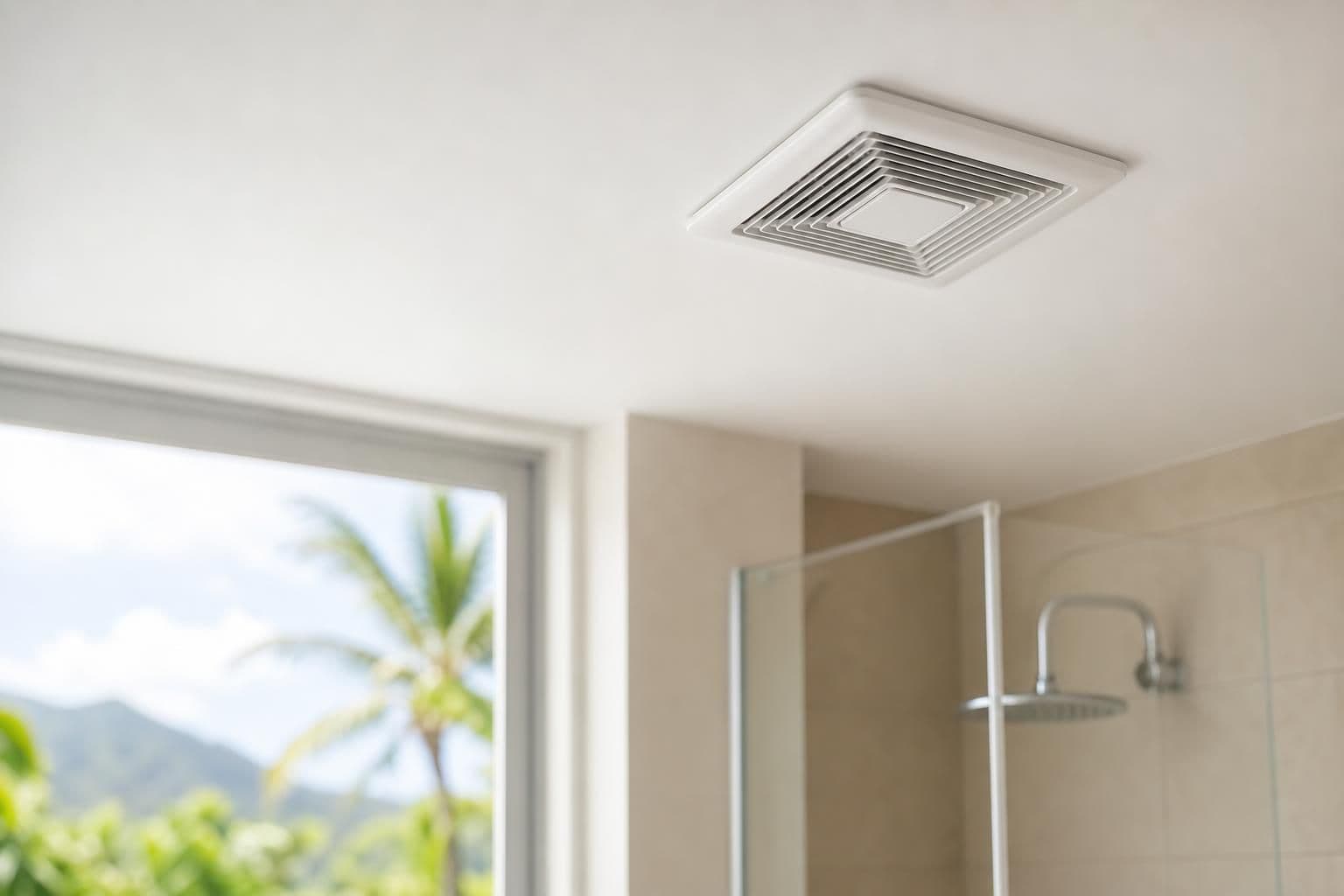
A bathroom exhaust fan that vents to the outside — not just into the attic — is the single most effective mold-prevention tool available. The EPA recommends keeping indoor humidity below 60%, ideally between 30–50%, to slow mold growth. Practical steps:
- Run the fan during showers and for 20–30 minutes afterward.
- Crack a window or leave the bathroom door open when possible to let air exchange happen.
- If your fan is original to an older condo, have it inspected — undersized or clogged fans are common in Honolulu high-rises and often can't clear steam fast enough.
- Consider a humidity-sensing fan that switches on automatically when moisture rises, useful for vacation rentals where guests may not remember to run it.
Choosing Materials That Resist Mold From the Start
Ventilation manages moisture in the air, but the surfaces themselves determine whether mold takes hold when water inevitably lands on them. This is where material choice matters more in Hawaii than almost anywhere else.
Flooring: Traditional grout lines and wood-look laminate are common failure points. Waterproof SPC luxury vinyl plank with tight, sealed seams resists water intrusion far better than natural wood or standard laminate, which is why it's become the standard recommendation for mold-resistant flooring in Hawaii bathrooms and kitchens.
Grout: If you keep tile, the grout is usually where mold appears first, since it's porous and traps moisture in the small crevices between tiles. Choosing the right formulation — and sealing it correctly — makes a measurable difference; see this guide on selecting grout for humid climates for specifics on epoxy versus cementitious options.
Cabinets: Particleboard vanities swell and delaminate when they absorb ambient moisture, and swollen wood is an easy food source for mold spores. Solid-wood or moisture-resistant panel construction with a sealed finish holds up far longer under daily condensation; a rundown of cabinet finishes built to resist Hawaii's moisture covers which options actually perform.
Countertops: Quartz is non-porous and doesn't require sealing, which makes it inherently more mold-resistant around sinks than natural stone left unsealed. If you do have granite, proper sealing keeps water from soaking into the surface where mildew can take hold underneath.
Daily and Weekly Habits That Matter
Materials and ventilation reduce risk, but daily habits close the gap:
- Squeegee shower glass and walls after each use — a 15-second habit that removes most standing moisture.
- Wash and fully dry bath mats and shower curtains weekly; damp fabric against a wall is a common mold starting point.
- Keep a small dehumidifier running in windowless bathrooms, especially in condos with minimal cross-ventilation.
- Check silicone caulk around tubs and sinks every few months — cracked caulk lets water seep behind surfaces where it's invisible until damage is advanced.
- Fix drips immediately. A slow leak under a sink can sustain mold growth even in a room with good ventilation elsewhere.
What to Do If Mold Has Already Appeared
Surface mold on tile or caulk can often be cleaned with a diluted bleach solution or a commercial mold-specific cleaner, following label ventilation instructions. But if mold keeps returning in the same spot, that's a signal of an underlying moisture source — a failing fan, a slow leak, or a material that's absorbing water it can't release. In that case, cleaning the surface repeatedly won't solve the problem; the material or the ventilation system needs to be addressed directly. For larger or recurring mold problems, especially in rental units where indoor air quality matters for tenants, the EPA's mold guidance recommends addressing the moisture source before or alongside any remediation.
Renovating With Mold Prevention in Mind
If a bathroom has a chronic mold issue, a renovation is often the more permanent fix compared to ongoing maintenance. Swapping porous materials for waterproof flooring, sealed stone or quartz counters, and properly finished cabinets — combined with correcting ventilation — addresses the root causes rather than the symptoms. This is especially worth planning for in condo units and vacation rentals, where consistent upkeep between guests or owners can be inconsistent; see these small bathroom remodel ideas for Honolulu condos for layout and material approaches suited to compact, high-humidity spaces.
Frequently Asked Questions
Q: How quickly can mold grow in a bathroom in Hawaii?
Mold can begin colonizing a damp surface within 24 to 48 hours when humidity and warmth are present, which is faster than in many drier mainland climates. This is why quick drying and consistent ventilation matter more in Hawaii bathrooms than almost anywhere else.
Q: What indoor humidity level should a bathroom stay under to prevent mold?
The EPA recommends keeping indoor humidity between 30% and 50%, and no higher than 60%, to slow mold growth. A humidity-sensing exhaust fan or a small dehumidifier can help maintain that range in bathrooms without strong natural airflow.
Q: Is vinyl plank flooring better than tile for preventing bathroom mold?
Waterproof SPC vinyl plank with sealed seams generally resists moisture intrusion better than tile, mainly because tile grout lines are porous and trap water. Vinyl still requires proper installation and drainage at edges to perform well long-term.
Q: Do I need to seal grout in a Hawaii bathroom even if it's new?
Yes — unsealed cementitious grout is porous from day one and will absorb moisture and soap residue quickly in a humid environment. Sealing it shortly after installation, and resealing periodically, significantly reduces the chance of mold forming in the joints.
Q: Can a bathroom exhaust fan alone prevent mold without other changes?
A good exhaust fan reduces the moisture available for mold but won't fully solve the problem if materials like porous grout or particleboard cabinets are already absorbing water. Ventilation, moisture-resistant materials, and quick drying habits work best as a combined approach.