Floating Bathroom Vanity: Is It Right for an Oahu Bath?
Key takeaway
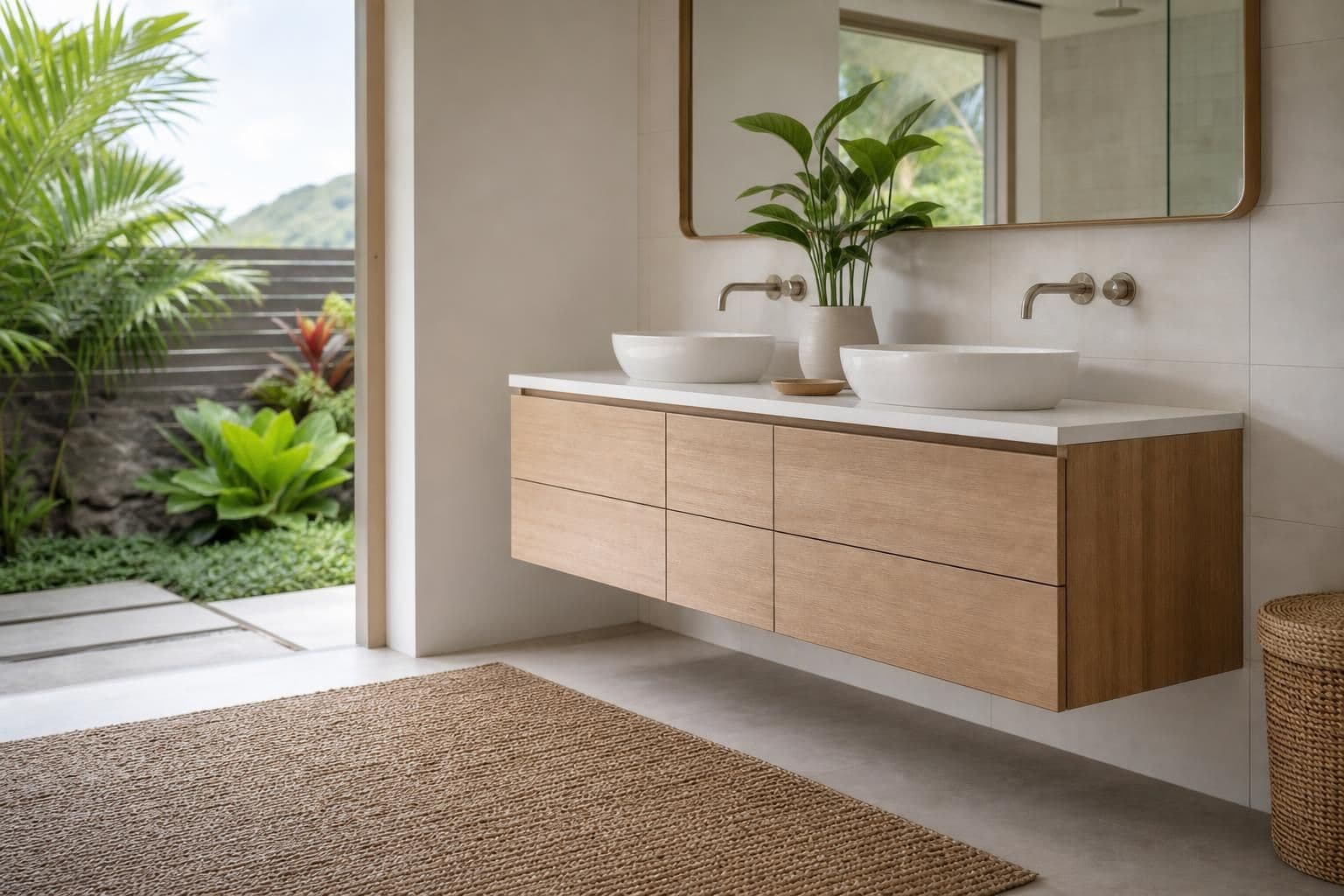
A floating bathroom vanity is a wall-mounted cabinet with no legs or base touching the floor, held up by concealed brackets anchored into wall studs or blocking. It works well in most Oahu bathrooms because it keeps cabinet material off the floor, where splash and mopping water cause the most damage, and it makes a small condo bathroom feel more open. The main tradeoff is installation: it needs solid backing in the wall and a plumber who can rough in supply and drain lines to match, which costs more labor than a standard floor-set vanity.
Key takeaways
- Floating vanities need wall blocking rated for the cabinet and countertop weight, not just drywall anchors — confirm this before you order one.
- Raising the cabinet off the floor reduces moisture wicking into the cabinet base, a real advantage in Hawaii's humidity and rainy season.
- Plan for slightly higher install cost than a floor-standing vanity because plumbing often has to be relocated behind the wall.
How a Floating Vanity Is Actually Mounted
A floating vanity hangs on a French cleat, a steel mounting bar, or heavy-duty brackets that are lag-bolted into wall studs or horizontal blocking installed between studs. Builders typically add 2x6 or 2x8 blocking inside the wall cavity during framing or a remodel tear-out specifically to carry vanity, grab bar, or towel bar loads — the International Code Council publishes the model residential building code that inspectors use to check this kind of backing and anchoring. In a retrofit on an existing wall, a contractor opens the drywall, sets blocking between studs, then patches and finishes before hanging the cabinet. Skipping this step and mounting into drywall alone is the most common reason floating vanities fail.
Why Floating Works for Humid, Rainy Climates
Cabinet boxes that sit directly on tile or vinyl floors absorb more ambient moisture at the base, since that's where water pools during showers, mopping, and routine splashing. A floating vanity keeps the cabinet box a few inches above the floor, so the plywood or moisture-resistant panel never sits in standing water the way a floor-mounted toe-kick can. The EPA's guidance on indoor moisture and mold notes that keeping surfaces dry and ventilated is the primary way to prevent mold growth indoors, and a floating cabinet simply gives floor moisture fewer places to collect against wood. This is one reason the approach pairs naturally with the same humidity logic covered in how to prevent cabinet doors from swelling in Hawaii kitchens and baths — airflow and gaps matter as much as the material itself.
Where It Makes the Most Sense on Oahu
- Small condo bathrooms. A floating vanity visually opens up a tight footprint, which matters in Honolulu high-rise units where bathroom square footage is often fixed and can't be expanded.
- Vacation rentals. Guests notice a clean, modern look in listing photos, and a floating vanity reads as updated without changing the room's layout.
- Bathrooms prone to standing water. Units near the shower or tub splash zone benefit most from keeping the cabinet base off the floor.
- Resale-focused remodels. It's a visible upgrade that photographs well for listings and short-term rental platforms.
Pair the vanity with a durable countertop, since the top takes the same splash exposure as the cabinet below it. Our guide to bathroom countertop ideas for Oahu homes covers which quartz and stone options hold up best in that environment.
What It Costs More Than a Standard Vanity, and Why
Floating vanities generally run higher on the labor side than floor-mounted units because the plumbing rough-in has to be adjusted. Supply lines and the drain typically need to come straight out of the wall rather than up through the floor, which means opening the wall, moving pipe, and re-finishing drywall before the cabinet goes up. Material costs in Hawaii also run above mainland averages across the board, since cabinetry and hardware are shipped in rather than sourced locally. Rather than estimate a number here, get a local quote or a free design consultation so the plumbing and framing condition of your specific bathroom gets priced accurately.
Weight Limits and What Can Sit on Top
Floating vanity brackets are rated for a combined load of cabinet, countertop, sink, and whatever gets stored inside, so the stone or quartz top matters more than people expect. A single-sink floating vanity with a quartz top and a vessel or undermount sink is a common, well-supported combination, but a double-sink vanity with a heavy natural stone slab needs brackets and blocking sized for that extra weight from the start. If you're deciding between sink styles for a floating cabinet, how to choose a kitchen sink for quartz countertops covers mounting considerations that carry over to bathroom vanities using the same countertop material.
Working With a Contractor on the Install
Because a floating vanity touches framing, plumbing, and cabinetry all at once, it's worth hiring someone who coordinates all three rather than three separate trades working in sequence. A single team that handles the wall opening, pipe relocation, blocking, and cabinet hang in one visit avoids mismatched measurements between the rough-in and the finished cabinet depth. VC Flooring & Stone works through exactly this kind of coordinated remodel for Oahu bathrooms, pairing cabinet installation with the countertop and stone work in the same project. If you're vetting contractors for a larger bathroom remodel, how to choose bathroom remodel contractors in Oahu walks through what to ask before signing a contract.
Cleaning and Maintaining the Floor Underneath
One underrated benefit: a floating vanity makes the floor beneath it fully visible and moppable, instead of trapping dust, hair, and moisture in a toe-kick gap that's hard to reach. This matters for vinyl plank and tile floors in humid climates, since trapped moisture under a cabinet toe-kick is harder to dry out than an open floor. Wipe the exposed floor strip weekly and keep the wall-to-cabinet seam caulked so water can't track behind the mounting bracket over time.
Frequently Asked Questions
Q: Can a floating vanity hold a double sink?
Yes, but the wall needs blocking and brackets rated for the combined weight of two sinks, a wider countertop, and stored contents. Confirm the load rating with your installer before choosing a double-sink layout.
Q: Does a floating vanity work with tile floors in a bathroom?
Yes, and it often makes tile easier to clean since there's no toe-kick trapping grout haze or standing water against the floor's edge. The wall mounting is independent of the floor material.
Q: Is a floating vanity harder to install than a standard vanity?
Yes, it typically requires opening the wall to add blocking and relocating plumbing supply and drain lines to exit through the wall instead of the floor. This adds labor time compared to a floor-mounted vanity that sits on existing plumbing.
Q: How high should a floating vanity be mounted?
Mounting height is typically set to match standard counter height, though it can be adjusted for the household's preference since there's no floor-based cabinet height constraining it. Confirm the rough-in height with your contractor before plumbing is finalized, since it's expensive to change afterward.
Q: Do floating vanities hold up in humid Hawaii bathrooms?
Yes, keeping the cabinet base off the floor reduces moisture exposure at the point where water collects most, which is an advantage in a humid, rainy climate. Proper bathroom ventilation still matters as much as the vanity style for preventing moisture buildup.