Bathroom Countertop Ideas for Oahu Homes
Key takeaway
The best bathroom countertop ideas for Hawaii homes combine a low-porosity material like quartz or granite with a vanity layout that tolerates daily humidity, salt air, and heavy moisture from showers. Light, warm tones pair well with island light and small bathroom footprints, while double-sink layouts and furniture-style vanities make the most of condo and single-wall bathrooms. Material choice matters more than style here — Oahu's climate is harder on bathroom surfaces than most mainland homes ever face.
Key takeaways
- Choose a non-porous, sealed, or engineered surface (quartz, granite, or solid surface) over porous natural stone for daily moisture exposure.
- Lighter colors and soft veining visually open up small island bathrooms and hide hard-water spotting better than solid dark colors.
- Edge profiles and backsplash height matter as much as color — rounded edges and full-height backsplashes reduce water intrusion at seams.
Why Material Choice Matters More in a Bathroom Than a Kitchen
Bathroom countertops sit in a near-constant cycle of steam, splashed water, and temperature swings every time someone showers. In Hawaii, that cycle runs on top of already-high ambient humidity, so a countertop with any porosity has more opportunity to absorb moisture, stain, or eventually host mold at the seams. The EPA notes that mold needs only moisture and an organic or absorbent surface to take hold indoors, which is why sealed, low-porosity counters and well-caulked seams matter more in a bathroom than almost any other room in the house.
Quartz is engineered with resin binders that make it essentially non-porous out of the box, so it doesn't require resealing. Granite and natural stone are porous and need periodic sealing to perform the same way — something worth factoring into long-term maintenance before falling in love with a slab. For a side-by-side look at how each material actually behaves under Oahu conditions, this comparison of quartzite and granite breaks down sealing needs and day-to-day care.
Popular Looks That Work for Island Bathrooms
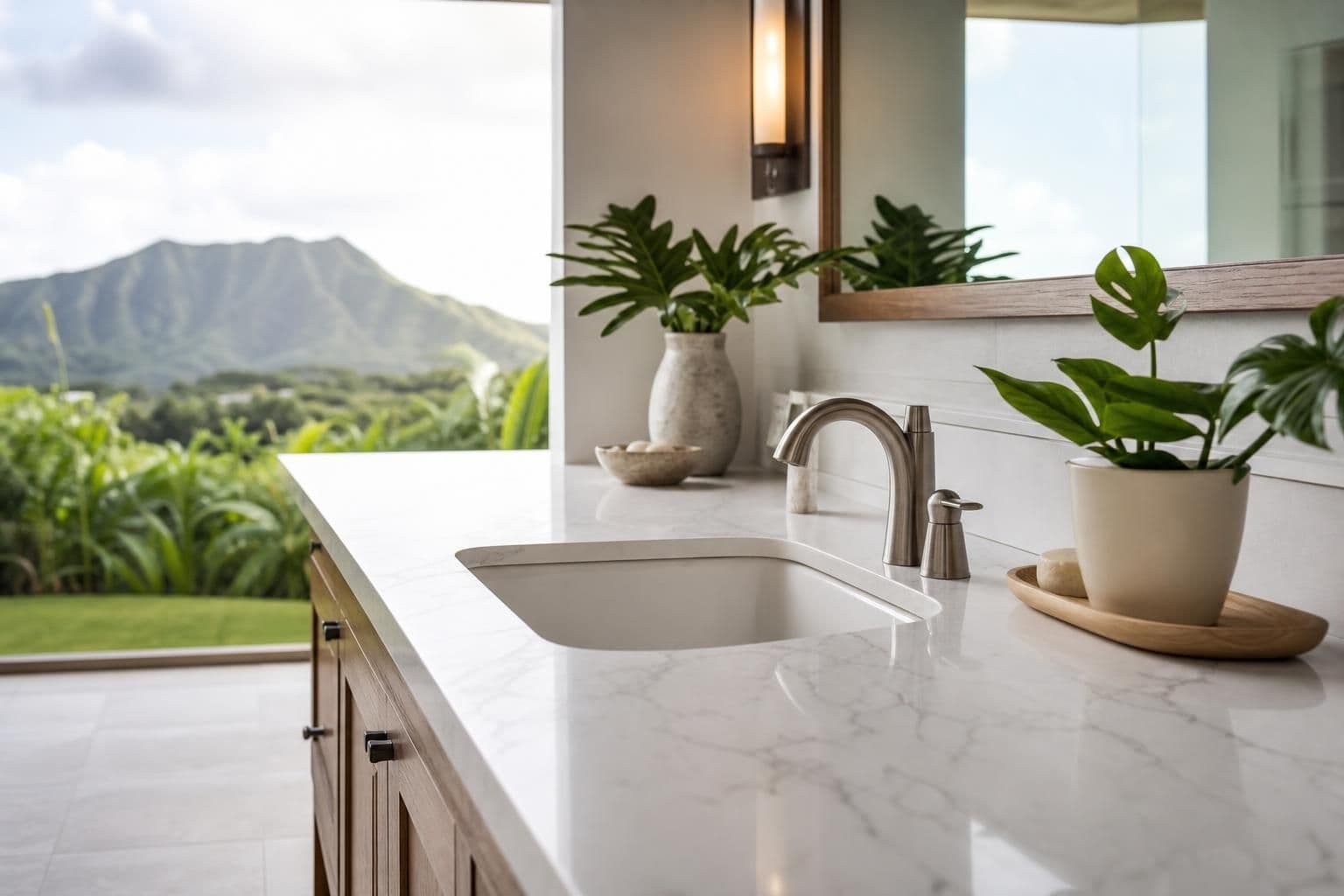
Light and mid-tone quartz colors remain the most requested look for Oahu bathrooms because they brighten small spaces and photograph well for vacation-rental listings. Warm whites with subtle gray veining, soft greige tones, and sandy beiges all read as calm and tropical without competing with tile or wood-look vinyl flooring already in the room.
- Soft white with gray veining — pairs with almost any cabinet finish and hides toothpaste splatter better than pure white.
- Warm greige or taupe — complements natural wood vanities and rattan or linen bathroom accents common in island design.
- Honed or matte finishes — reduce glare under bathroom lighting and feel less slippery to the touch than polished slabs.
- Deep charcoal or black accents — used sparingly on a floating vanity top or powder-room counter for contrast against light tile.
If a darker look appeals to you, it's worth reading up on how dark surfaces handle water spots and hard-water buildup before committing a whole vanity to the color — this guide to black countertops covers that trade-off in more detail, even though it's written primarily for kitchens.
Vanity Layouts That Make Small Bathrooms Work Harder
Most Oahu condos and plantation-era homes have compact bathroom footprints, so layout decisions matter as much as material. A furniture-style vanity with a single slab top and integrated backsplash minimizes seams, which means fewer places for water to sit. Double-sink vanities work well in primary bathrooms with at least 60 inches of counter run, while a single offset sink frees up counter space for everyday items in a smaller guest bath.
Floating vanities — mounted a few inches off the floor — have become popular in island remodels because they make a small room visually lighter and simplify mopping underneath, which matters in a climate where bathroom floors stay damp longer than mainland averages. Pairing a floating vanity with a thinner slab (around three-quarters of an inch) also keeps the overall look from feeling bulky in a tight footprint.
Edge Profiles and Backsplashes That Hold Up to Daily Water
The edge profile on a bathroom countertop isn't just a style choice — it affects how water behaves at the counter's perimeter. A gently eased or bullnose edge sheds water drips cleanly, while a sharp, squared edge can trap moisture along the underside over time. A full-height backsplash, rather than a short four-inch strip, closes off the gap behind the counter where splashed water would otherwise run down the wall and into the vanity cabinet.
For a closer look at which profiles perform best under daily use and how each one is fabricated, this breakdown of edge profile options applies directly to bathroom vanities as well, even though it's framed around kitchens.
Matching Countertops to Cabinets and Hardware
A bathroom countertop rarely stands alone — it's judged against the cabinet finish, hardware, and mirror frame around it. Warm wood-tone shaker vanities pair naturally with quartz in soft white or greige, while slab-front contemporary cabinets in a deep navy or matte black look sharper against a lighter stone top for contrast. Brushed brass or matte black fixtures have become the more requested hardware finishes in recent island remodels, partly because they resist the dulling effect salt air has on polished chrome over time.
Because countertop, cabinet, and plumbing decisions are usually made together, it helps to loop in a contractor early rather than choosing the slab first and working backward. Guidance on vetting bathroom remodel contractors in Oahu walks through what to ask before signing a scope of work, which can prevent mismatched timelines between cabinet delivery and countertop fabrication.
What to Expect From Fabrication and Installation
Bathroom vanity tops are typically templated after cabinets are set in place, since even small measurement errors are more visible on a compact countertop than on a long kitchen run. A fabricator will cut sink and faucet openings based on the exact model you've chosen, which is why it helps to finalize fixtures before the template appointment rather than after. Quartz and granite vanity tops are usually fabricated off-site and delivered for installation once the cabinet base and plumbing rough-in are confirmed level — a process outlined in more detail in this guide to choosing a countertop fabricator in Oahu.
Costs for bathroom countertops in Hawaii run higher than mainland benchmarks because slab material and fabrication equipment both have to be shipped in, and skilled labor rates reflect the islands' overall cost of living. Rather than relying on a generic estimate, a local in-home measurement will give a far more accurate number for your specific layout and material choice.
Frequently Asked Questions
Q: What is the most durable material for a bathroom countertop in Hawaii's climate?
Quartz is generally the most durable choice because it's non-porous by design and doesn't need periodic sealing the way natural stone does. Granite performs well too but requires regular sealing to maintain the same resistance to moisture and staining.
Q: Should bathroom and kitchen countertops match in the same home?
They don't need to match exactly, but using the same material family (for example, quartz throughout) keeps maintenance consistent across the house. Many homeowners choose a lighter or more neutral variation in the bathroom while keeping a bolder color in the kitchen.
Q: How thick should a bathroom vanity countertop be?
Three-centimeter (roughly 1¼-inch) slabs are standard for most vanities, though thinner two-centimeter tops are common on floating or furniture-style vanities where a lighter visual profile is desired. The right thickness also depends on the edge profile chosen, since some profiles require extra material to build up the look of a thicker edge.
Q: Do light-colored bathroom countertops show water spots more than dark ones?
Dark, polished surfaces actually tend to show hard-water spots and soap scum more visibly than light or honed surfaces, since contrast makes mineral residue easier to spot. A honed or matte finish in a lighter tone generally hides daily water spotting better between cleanings.
Q: How long does a bathroom countertop installation typically take?
Once templating is complete, fabrication usually takes one to two weeks before the final piece is ready for installation, with the physical install itself typically completed in a single day. Plumbing reconnection and sealant curing can add a short waiting period before the vanity is back in full use.