Kitchen Cabinet Ideas That Work for Island Homes
Key takeaway
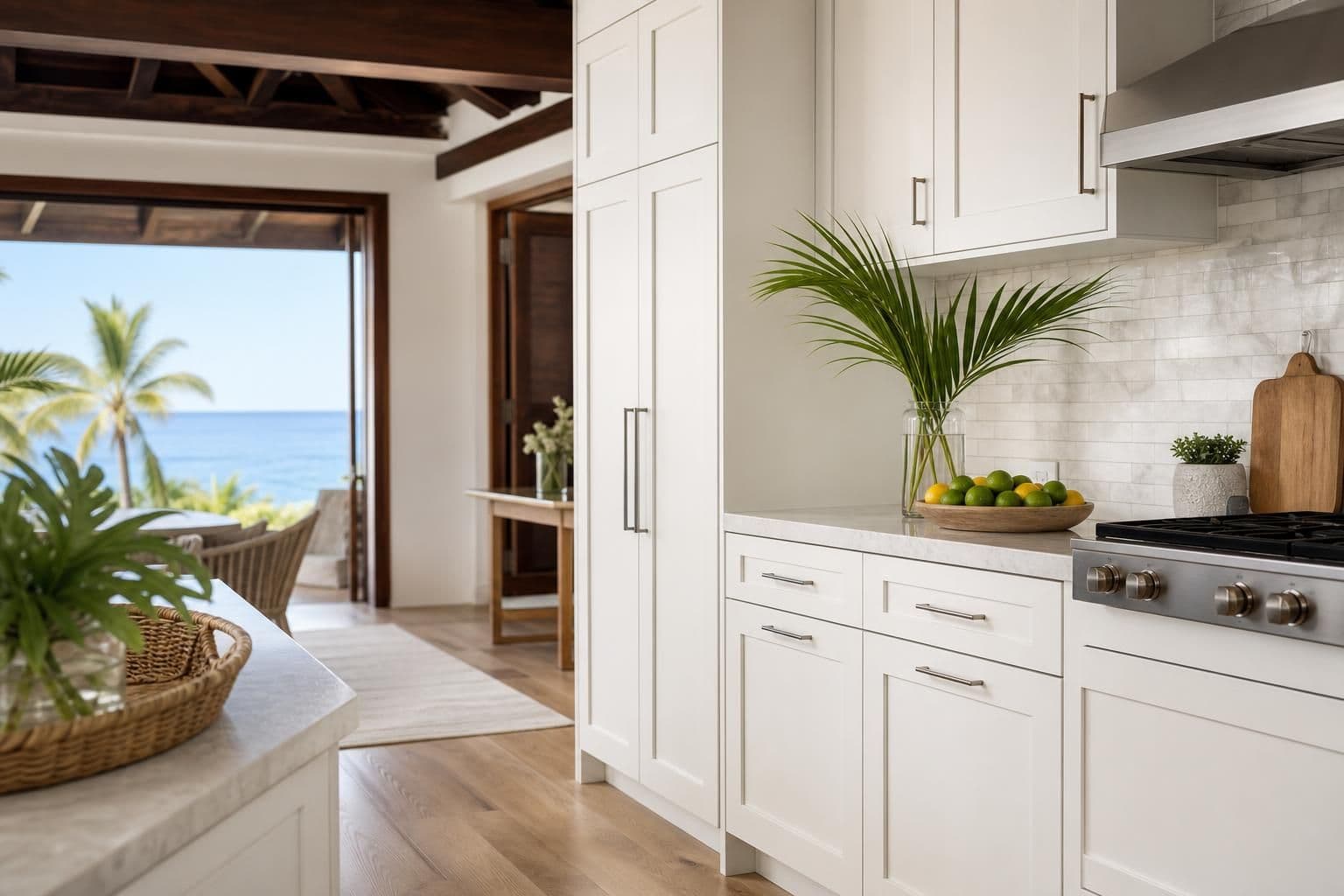
The best kitchen cabinet ideas for Hawaii homes combine a style you'll still love in ten years with materials that hold up to humidity, trade winds, and salt air. Shaker and slab-front cabinets in moisture-resistant boxes, paired with corrosion-rated hardware, give island kitchens the longest working life. Layout and storage choices matter just as much as style, especially in condos and vacation rentals where every cabinet inch has to earn its keep.
Key takeaways
- Choose cabinet box materials rated for humidity, not just the mainland standard, since Oahu's average relative humidity sits well above most of the continental U.S.
- Pick hardware finishes tested for coastal exposure if you live within a mile or two of the ocean — standard finishes can pit or discolor within a couple of years.
- Plan storage around how you actually cook and live, not around a showroom photo, especially in smaller condo kitchens where layout drives function.
Start With a Style That Suits Your Space
Shaker cabinets remain the most requested style locally because the recessed-panel door reads clean in both a modern condo and a plantation-style house. Slab (flat-panel) doors lean more contemporary and are easier to wipe down since there's no routed detail to trap grease or dust — a real consideration in open-plan kitchens near a lanai. Two-tone kitchens, where upper cabinets are a lighter color and lowers are darker, are a popular middle ground for homeowners who want contrast without committing to an all-dark kitchen that can feel heavy in a smaller footprint. If you're working with a compact galley or condo kitchen, the door style matters less than the color strategy — lighter cabinet tones generally make a small room read larger, a topic covered in more depth in this guide to choosing a cabinet color for a small kitchen.
Build for Hawaii's Climate, Not a Mainland Showroom
Standard particleboard cabinet boxes are built to specifications that assume mainland indoor humidity levels, which average lower than what's typical in island homes. Hawaii's climate runs consistently humid, and the National Oceanic and Atmospheric Administration tracks Pacific island humidity levels that stay elevated most of the year, which is part of why moisture-resistant cabinet construction matters more here than in drier regions. Plywood boxes and moisture-resistant panel cores hold their shape better over time than basic particleboard in homes without aggressive air conditioning, and they resist the swelling and delamination that shows up first at cabinet toe-kicks and under sinks. If you already have cabinets that are structurally sound but showing their age, refinishing or refacing existing cabinets can solve the cosmetic problem without a full rebuild.
Ventilation matters too. The Environmental Protection Agency notes that controlling indoor moisture is one of the most effective ways to prevent mold growth, and kitchens are one of the highest-moisture rooms in any house. A working range hood vented to the outside, rather than a recirculating fan, does more for cabinet longevity near the cooktop than any finish choice.
Hardware and Finishes That Resist Salt Air
Cabinet hardware is one of the first things to fail in homes close to the shoreline. Chrome and unsealed brass are prone to pitting and discoloration when exposed to salt-laden air, sometimes within a couple of years in exposed coastal spots. Finishes that tend to hold up better include:
- Matte black powder-coated pulls
- Brushed or satin nickel with a sealed finish
- Stainless steel rated for exterior or marine use
A full breakdown of which finishes perform best by distance from the ocean is covered in this guide to cabinet hardware finishes for salt air environments. Even if the rest of your kitchen plan is set, swapping hardware finish is a low-cost way to extend the life of an otherwise good cabinet investment.
Smart Layout Ideas for Condos and Smaller Kitchens
Oahu's condo stock and vacation-rental units often work with galley or one-wall kitchens where every cabinet decision is also a storage decision. A few layout moves that consistently free up usable space:
- Full-height pantry cabinets instead of a run of short uppers — a single 84-inch pantry cabinet can hold as much as two or three standard wall cabinets.
- Drawer base cabinets in place of cabinet-and-shelf lowers, since drawers put everything at reach instead of buried behind a door.
- Corner solutions like lazy Susans or diagonal corner units, which reclaim space that's otherwise nearly impossible to access.
- Toe-kick drawers for flat items like baking sheets, using inches of space that are normally wasted.
Getting the layout right before choosing door styles or finishes tends to produce a better result than working the other direction. For a step-by-step approach to planning the room itself, see this guide on designing a kitchen layout.
Pairing Cabinets With Countertops and Flooring
Cabinet color doesn't exist in isolation — it's read against the countertop and floor it sits on. Quartz countertops in a consistent, low-movement pattern tend to pair well with busier or two-tone cabinet schemes, while a more dramatic natural stone slab often looks best against simpler, single-color cabinetry. If your kitchen opens onto waterproof SPC plank flooring, warm wood-look planks generally pair better with white or light gray cabinets, while cooler gray-toned planks tend to complement navy or charcoal lowers — a relationship broken down further in this guide to matching cabinet colors to SPC vinyl plank flooring. A stone backsplash can also tie the two together visually; for ideas specific to island material palettes, see this roundup of natural stone backsplash ideas for Hawaii kitchens.
Budgeting the Project Realistically
Cabinet costs in Hawaii run higher than mainland averages because most cabinet materials and hardware are shipped in, and local labor rates reflect the overall cost of living on the island. Rather than anchoring expectations to a national price figure, it's more useful to get a local quote based on your actual kitchen dimensions, chosen materials, and whether you're doing a full replacement or a refacing project. A free design consultation is generally the fastest way to get an accurate, project-specific number.
Frequently Asked Questions
Q: What cabinet material holds up best in Hawaii's humidity?
Plywood cabinet boxes and moisture-resistant panel cores generally outperform basic particleboard in humid island conditions, especially in kitchens without strong, consistent air conditioning. Moisture resistance matters most at the toe-kick, under the sink, and anywhere steam or splashing is common.
Q: Are shaker or slab cabinets better for a small kitchen?
Both work in small kitchens; the bigger factor is color and finish, since lighter tones tend to make a compact room feel larger regardless of door style. Slab doors are slightly easier to keep clean since there's no recessed detail to collect dust or grease.
Q: How often should cabinet hardware be replaced in coastal homes?
There's no fixed schedule, but homes within a mile or two of the ocean often see hardware finishes start to pit or discolor within a couple of years if they aren't rated for coastal exposure. Switching to a sealed or marine-rated finish typically extends hardware life significantly.
Q: Can I update cabinets without a full replacement?
Yes — refacing the doors and drawer fronts, repainting existing boxes, or swapping hardware can refresh a kitchen's look while keeping structurally sound cabinet boxes in place. This approach is usually faster and less disruptive than a full tear-out.
Q: Do two-tone cabinets work in a small kitchen?
Two-tone layouts can work well in small kitchens when the lighter tone is used on upper cabinets and walls, keeping the room feeling open while the darker lower cabinets add visual grounding. The key is keeping the contrast intentional rather than scattered across random cabinet runs.