Contemporary Cabinet Styles for Oahu Home Renovations
Key takeaway
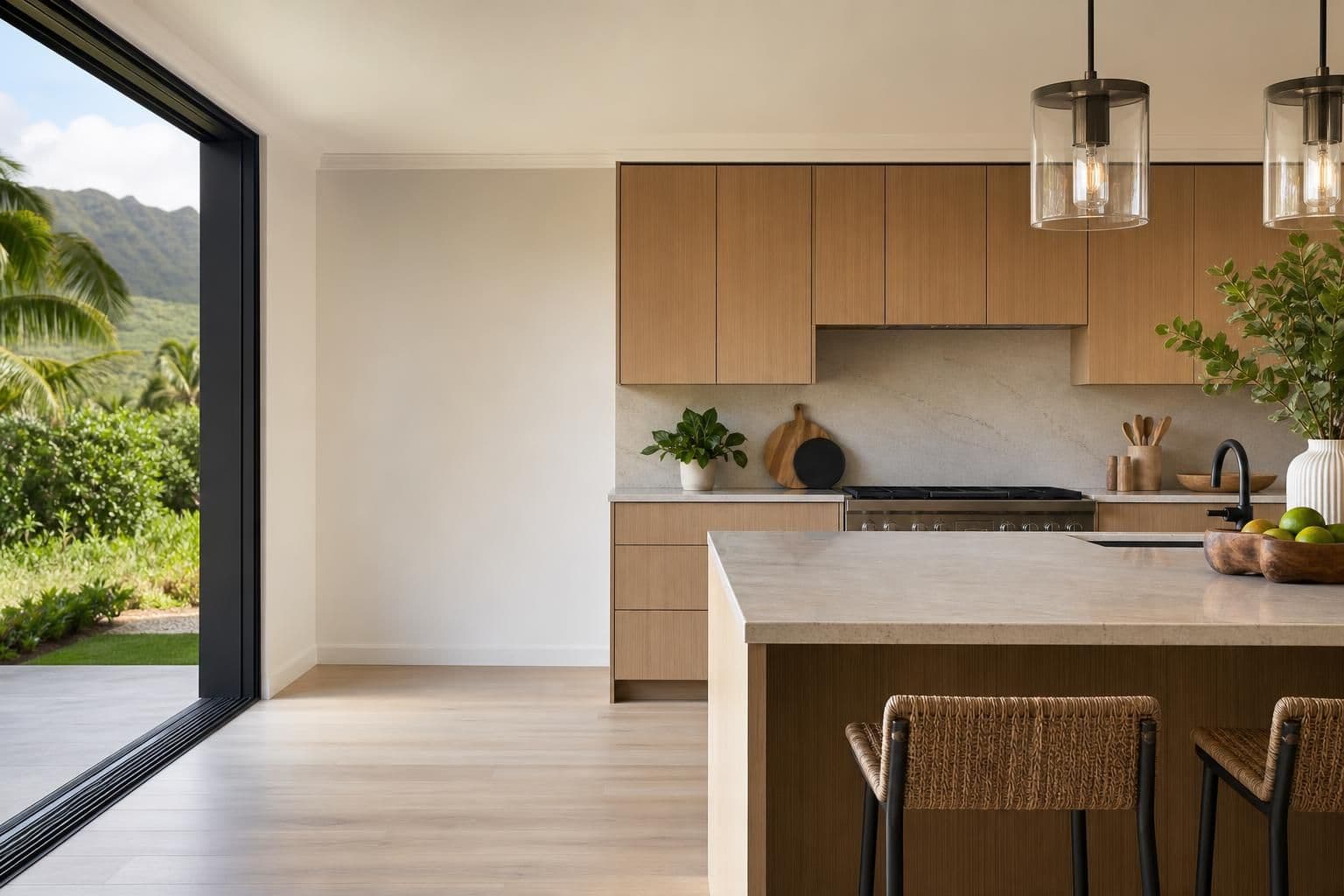
Contemporary cabinet styles for Oahu home renovations favor flat slab or minimal-shaker doors, matte or textured finishes, and moisture-resistant cores like marine-grade plywood or PVC-coated MDF that hold up to trade-wind humidity and salt air. The look leans toward clean lines, mixed materials, and two-tone color pairing rather than heavy ornamentation. Choosing the right combination of door style, finish, and core material matters more in Hawaii than on the mainland because humidity swings and coastal air accelerate wear on lower-quality cabinet boxes.
Key takeaways
- Slab-front and thin-shaker doors define the contemporary look and hide humidity-related swelling better than deeply routed panel doors.
- Moisture-resistant cores (marine plywood, PVC-wrapped MDF) matter more than door style for long-term durability in island kitchens and baths.
- Two-tone cabinetry — a darker lower run with lighter uppers — is one of the most requested combinations for Oahu condo and single-family kitchen remodels.
What Makes a Cabinet Style "Contemporary"
Contemporary cabinetry is defined by flat or gently textured door fronts, minimal or hidden hardware, and a restrained color palette rather than a specific era. It differs from "modern," which technically refers to mid-century design principles, though the two terms are used interchangeably in most kitchen showrooms today. The defining features are:
- Slab doors — a single flat panel with no frame or raised center
- Integrated or push-to-open hardware for a seamless front
- Horizontal grain-matched wood veneers or solid matte lacquer finishes
- Simple, low-profile crown or no crown molding at all
Contrast this with shaker cabinets, which use a recessed center panel and a visible frame — still popular on Oahu but read as more transitional than contemporary. Homeowners who want a style comparison before committing should look at how custom cabinets compare to stock options, since slab and integrated-hardware doors are far more available through custom shops than off-the-shelf lines.
Styles That Hold Up in Island Conditions
Not every contemporary door style performs the same way in a humid coastal kitchen. A few materials and finishes have become the practical standard for Oahu remodels:
- Thermofoil or PVC-wrapped MDF slab doors resist swelling better than raw MDF and clean easily, making them a common choice for rental-unit kitchens.
- Matte lacquer over moisture-sealed substrates gives the flat contemporary look while resisting the fingerprint marks that high-gloss finishes show constantly.
- Marine-grade plywood boxes hold screws and hinges more reliably than particleboard once humidity cycles loosen fasteners over time.
The Kitchen Cabinet Manufacturers Association publishes performance and construction standards that many cabinet lines are tested against, and asking a showroom whether a line meets those benchmarks is a reasonable way to compare durability claims. In a climate where indoor humidity can sit well above mainland averages for much of the year, cabinet core material often matters more to longevity than door style — a point worth raising during any design consultation.
Color and Finish Trends for Oahu Kitchens
Two-tone cabinetry — darker, richer tones on base cabinets paired with lighter uppers — remains one of the most requested combinations in contemporary Oahu kitchens, partly because it visually grounds a space while still keeping ceilings and upper walls feeling open in smaller island floor plans. Warm woodgrain veneers paired with matte black or deep green lowers are a frequent request, echoing natural material palettes without leaning fully tropical or rustic.
Handleless and push-latch hardware continues to dominate contemporary requests because it keeps sightlines clean in open kitchen-living layouts common in condo renovations. If undecided on a palette, reviewing guidance on choosing a cabinet color for a small kitchen can help narrow options before a showroom visit, since color choice affects perceived space more than door style does in compact units.
Pairing Contemporary Cabinets With Counters and Flooring
Contemporary cabinetry is typically paired with quartz countertops in solid or subtly veined patterns rather than heavily patterned granite, since the flatter cabinet fronts read best against simpler counter surfaces. Waterproof SPC luxury vinyl plank flooring is a common companion choice in these kitchens because it holds up to the same humidity and moisture exposure that drives cabinet material decisions, and it keeps sightlines consistent between kitchen and living areas in open floor plans. Anyone still finalizing a full room layout before selecting cabinet lines may find it useful to work through a kitchen layout planning guide first, since door swing and cabinet depth decisions are easier to make once the layout is set.
What a Professional Cabinet Consultation Looks Like
A typical process for a contemporary cabinet project starts with an in-home or showroom measurement, followed by a design session where door style, finish, and hardware are selected against the kitchen or bathroom layout. Many Oahu showrooms, including VC Flooring & Stone, also offer a 3D visualizer so homeowners can see finish and color combinations rendered against their actual room dimensions before ordering. This step matters more for contemporary styles than traditional ones, since flat slab doors show grain direction, seam lines, and finish sheen far more visibly than a routed panel door would.
Because cabinetry and countertop materials for Hawaii projects are largely shipped in and installed by licensed local labor, overall project costs typically run above mainland national averages — a local in-home consultation is the most reliable way to get an accurate estimate for a specific kitchen or bath. The U.S. Environmental Protection Agency also notes that controlling indoor humidity is a key factor in preventing moisture and mold issues in cabinetry and other building materials, which is worth keeping in mind when choosing cores and finishes for an island kitchen.
Frequently Asked Questions
Q: What's the difference between contemporary and modern cabinets?
"Modern" technically refers to mid-century design principles, while "contemporary" describes current trends, which today emphasize flat slab doors, minimal hardware, and matte finishes. In practice, most showrooms use the terms interchangeably to describe the same flat-front, clean-line aesthetic.
Q: Are slab cabinet doors a good fit for humid Oahu kitchens?
Slab doors perform well in humidity as long as they're built on a moisture-resistant core like marine plywood or PVC-wrapped MDF, since flat fronts have fewer seams and profiles where moisture can collect compared to deeply routed panel doors.
Q: Do contemporary cabinets cost more than shaker-style cabinets?
Pricing depends more on core material, finish quality, and hardware than on door style alone, so a contemporary slab door isn't inherently more expensive than a shaker door of similar construction. A local consultation is the most accurate way to compare options for a specific kitchen.
Q: What countertop pairs best with contemporary cabinets?
Quartz in a solid or subtly veined pattern is the most common pairing, since its consistent surface complements flat cabinet fronts better than heavily patterned stone does. Homeowners can review measuring guidance for countertops once a cabinet layout is finalized.
Q: How do I keep contemporary cabinet hardware looking clean over time?
Integrated or push-to-open hardware needs less regular maintenance since there are fewer exposed pulls to collect grime, but any exposed hardware should be wiped with a soft, non-abrasive cloth. Step-by-step guidance on installing cabinet hardware covers spacing and alignment for a clean, contemporary look.