Two-Tone Kitchen Cabinets: A Guide for Oahu Homes
Key takeaway
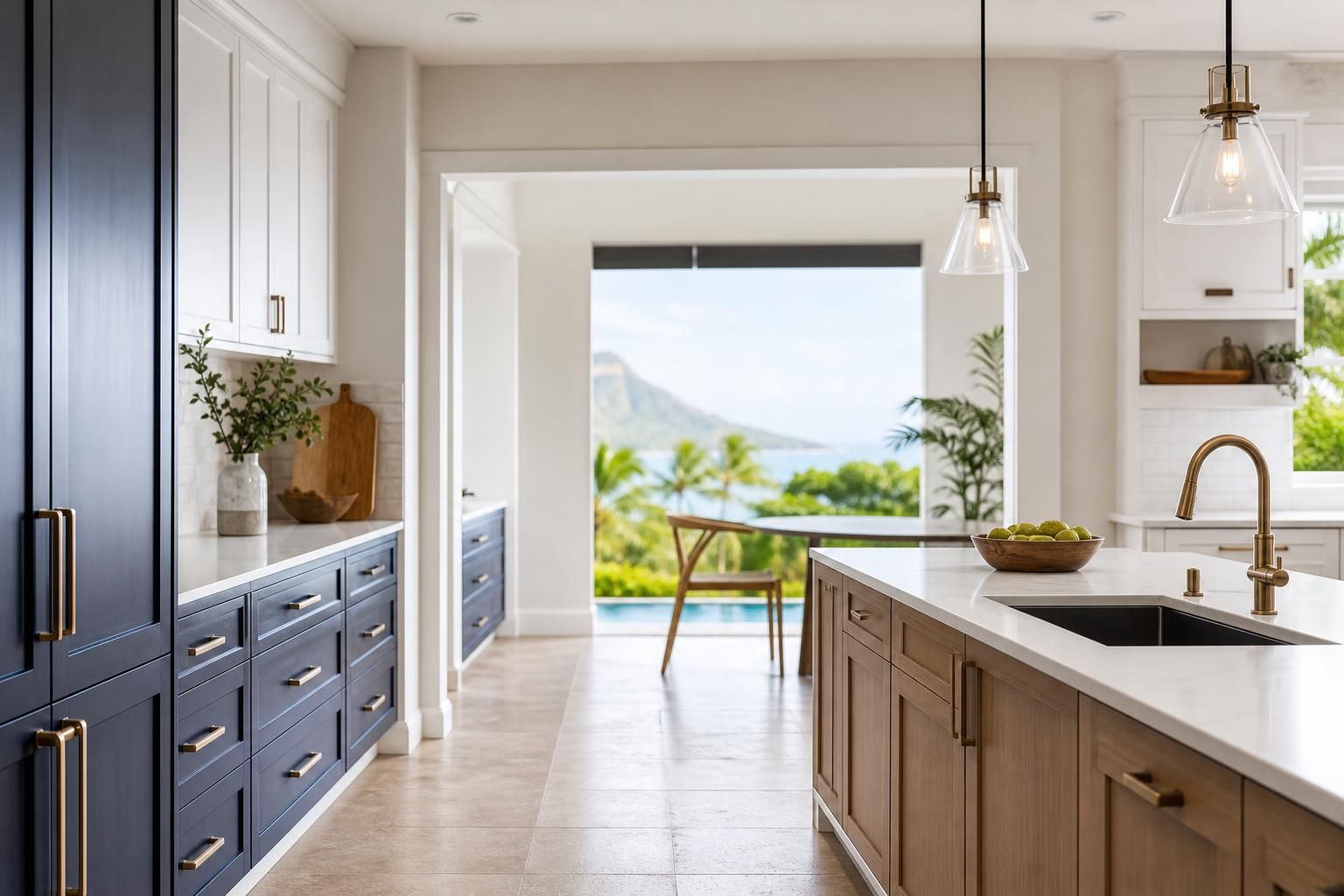
Two-tone kitchen cabinets pair two different colors or finishes in one kitchen — usually a darker tone on the lower cabinets or island and a lighter tone on the uppers, or one color on the perimeter with a contrasting island. For Oahu homes, the approach works best when the darker or bolder tone goes on pieces that get less direct humidity and salt-air exposure, while moisture-resistant finishes and solid construction go on everything. Done well, it adds visual depth to a kitchen without the full commitment (or full cost) of an all-custom palette.
Key takeaways
- Put the bolder color on the island or lower cabinets and a lighter, reflective tone on uppers to keep a small kitchen feeling open.
- Choose finishes rated for moisture and humidity exposure, not just color — matte lacquers and thermofoil handle island conditions differently than raw wood veneers.
- Pair your two-tone scheme with countertop and backsplash choices before finalizing cabinet colors, since stone and tile read differently under artificial versus natural island light.
What "Two-Tone" Actually Means in Cabinet Design
A two-tone kitchen uses two distinct cabinet colors or finishes, split by function or location rather than randomly alternated. Common splits include upper cabinets in white or cream with lower cabinets in navy, charcoal, or a wood tone; or a full-perimeter color with a contrasting island. The split should follow a logical line — top versus bottom, island versus perimeter — rather than mixing colors door by door, which tends to look unplanned rather than designed.
Color Pairings That Work for Island Light
Oahu's natural light is bright and warm most of the year, which changes how cabinet colors read compared to a mainland kitchen under grayer daylight. Pairings that tend to hold up well locally include:
- Warm white or cream uppers with a deep navy or forest-green island
- Driftwood or natural oak uppers with charcoal or black lowers
- Soft sage or sand-tone perimeter cabinets with a walnut-stained island
- All-white cabinetry with a single stained wood accent run, often above a range hood or on an open shelf section
If you're deciding between a fully white kitchen and a two-tone approach, it helps to compare the two directly — our guide to white kitchen cabinets for Oahu homes covers how all-white schemes handle local light and upkeep, which is a useful baseline before you add a second color.
Material and Finish Choices for Humidity and Salt Air
Hawaii's humidity and coastal salt air put real stress on cabinet materials, and that matters more with a two-tone kitchen because you're committing to two finishes instead of one. Relative humidity on Oahu regularly sits in the 60-80% range depending on season and proximity to the coast, per data tracked by the National Oceanic and Atmospheric Administration, and sustained moisture exposure is a known driver of wood swelling, finish breakdown, and mold growth, as outlined by the U.S. Environmental Protection Agency's guidance on indoor moisture control. In practice, that means:
- Cabinet boxes built from moisture-resistant plywood hold up better than particleboard, especially in kitchens near open lanais or close to the coast.
- Matte and satin lacquer finishes tend to show less moisture clouding over time than high-gloss finishes, which can reveal uneven sheen as humidity cycles.
- Hardware and hinges in stainless steel or coated finishes resist corrosion better than plain steel, a detail worth specifying on both color zones of a two-tone kitchen.
Termites are also a standing concern in island construction. The University of Hawaii's agriculture extension program has documented the Formosan subterranean termite as a persistent pest in local wood structures, which is part of why many Oahu cabinet shops build boxes from engineered or treated materials rather than solid untreated wood.
Layout Decisions That Make Two-Tone Work
Where you place the color break matters as much as the colors themselves. A few patterns that work consistently in Oahu kitchens:
- Island as the accent. Keep the perimeter light and put the bold color on the island — this works especially well in open-concept kitchens where the island is the visual anchor.
- Upper and lower split. Light uppers keep sightlines open in kitchens with lower ceilings common in older Oahu homes and condos; darker lowers ground the room.
- Single accent wall of cabinetry. Reserve the second tone for one run of cabinets, such as a bar wall or pantry wall, rather than splitting the whole kitchen.
If you're working with an island-centered layout already, our piece on kitchen island ideas for Oahu homes goes further into proportions and storage choices that pair naturally with a two-tone scheme.
Frameless vs. Framed Construction With Two Colors
The cabinet construction style you choose affects how clean a two-tone break looks. Frameless (full-overlay) cabinets show more continuous color across each run since there's no face frame interrupting the door line, which tends to make a bold color choice look more intentional. Framed cabinets show a visible wood frame between doors, which can soften a high-contrast pairing or add a more traditional look depending on the style. Our comparison of frameless versus framed kitchen cabinets breaks down how each performs in Hawaii's climate beyond just the visual difference.
Working With a Designer on the Color Split
Getting the proportions right — how much lighter color versus darker color, and where the line falls — is easier with someone who can show you the layout in context rather than guessing from paint chips. A design consultation that includes a 3D visualizer lets you test a color split against your actual cabinet layout and countertop choice before committing. For homeowners weighing multiple cabinet shops, our guide on choosing a custom kitchen cabinet designer in Oahu lays out questions worth asking before you sign off on a design. VC Flooring & Stone offers free design consultations that cover exactly this kind of color and layout planning.
Budgeting for a Two-Tone Kitchen
Two-tone cabinetry doesn't automatically cost more than a single-color kitchen — the price difference comes down to finish type, construction quality, and whether one of the colors requires a custom stain match. Hawaii cabinet pricing generally runs above mainland averages because materials and finished goods are shipped in and labor rates reflect the local cost of living. Rather than estimating from a mainland price guide, it's more useful to get a local quote that reflects your actual cabinet count, finish choices, and layout.
Frequently Asked Questions
Q: Are two-tone kitchen cabinets still a current design trend?
Yes. Industry trend tracking from the National Kitchen & Bath Association has consistently listed two-tone and mixed-finish cabinetry among ongoing kitchen design trends, and it remains a common request in both remodels and new builds.
Q: Should the island or the perimeter cabinets be the darker color?
Most designers put the darker, bolder tone on the island since it reads as a furniture-like focal point, while keeping perimeter cabinets lighter to maintain an open, airy feel — a pattern that suits Oahu's bright natural light particularly well.
Q: Do two-tone cabinets cost more than single-color cabinets?
Not inherently — cost depends more on finish type and construction quality than on using two colors. A custom stain match or a premium lacquer finish on one portion of the cabinets can add cost regardless of whether the kitchen is single-tone or two-tone.
Q: What cabinet materials hold up best in Oahu's humidity?
Moisture-resistant plywood boxes, matte or satin lacquer finishes, and corrosion-resistant hardware tend to perform better than particleboard, high-gloss finishes, or plain steel hardware in Hawaii's humid, salt-air conditions.
Q: Can I do a two-tone look in a small condo kitchen?
Yes, often with a single accent run — such as a pantry wall or a short peninsula — rather than splitting the whole kitchen, which keeps a small space from feeling visually busy while still adding contrast.