White Kitchen Cabinets: What Oahu Homeowners Should Know
Key takeaway
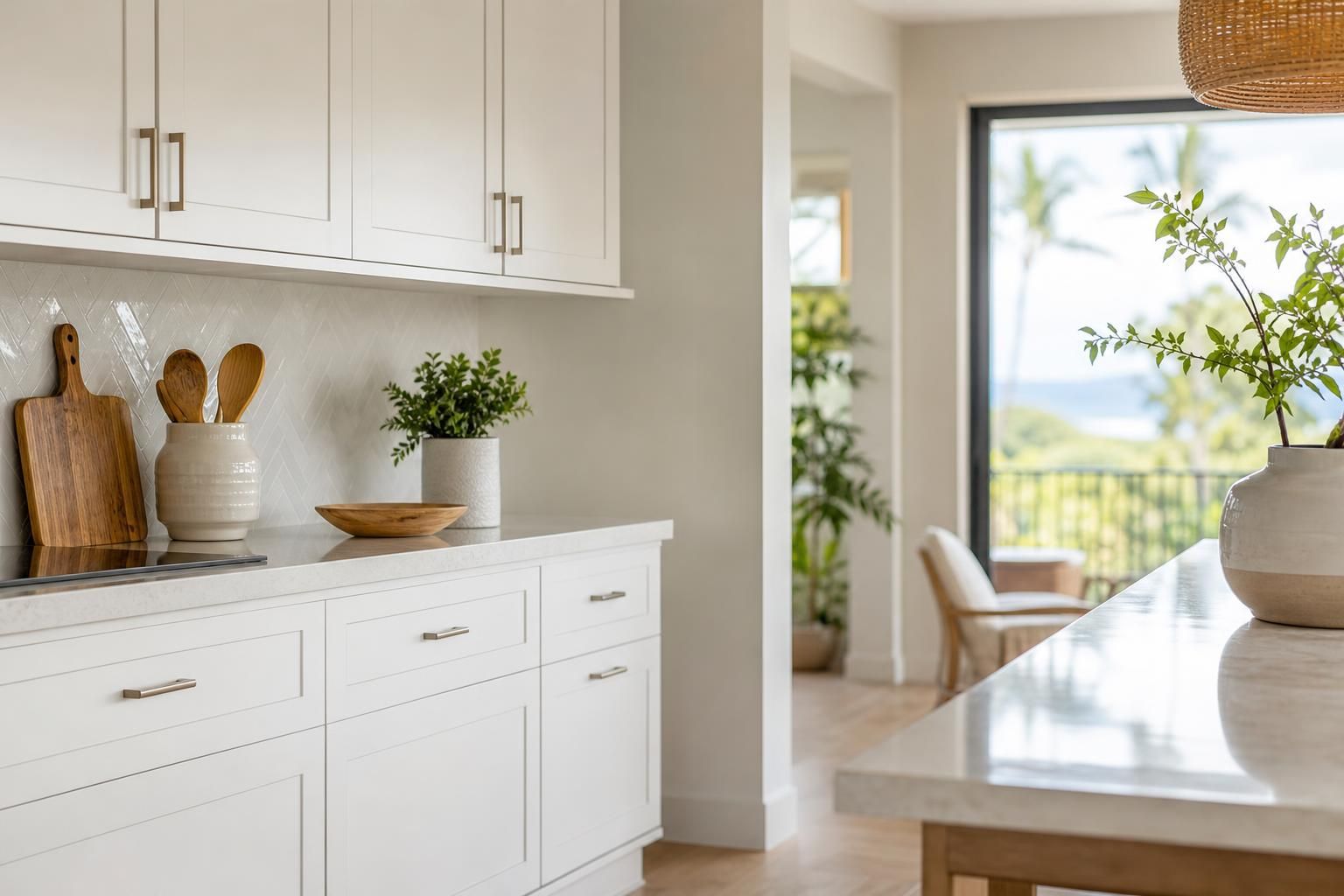
White kitchen cabinets work well in Hawaii homes because they reflect the strong natural light common in island kitchens and pair easily with wood tones, quartz, and tropical accent colors. The right choice for Oahu comes down to finish and construction quality rather than just color — a painted finish, moisture-resistant core, and tight door seams matter more here than on the mainland because of humidity and salt air exposure. Choosing well means balancing style with materials built for island conditions.
Key takeaways
- Choose a painted (not raw wood) finish with a catalyzed or conversion coating for better humidity resistance in Oahu kitchens.
- Shaker-style doors in white hide less dust and fingerprints than slab doors, making them more practical for everyday family or rental use.
- Pair white cabinets with a quartz countertop rather than natural stone where low maintenance matters, since quartz resists staining without sealing.
Why White Cabinets Suit Hawaii Kitchens
White cabinetry bounces available light around a room, which is useful in older Oahu homes and condos where kitchens often sit away from large windows or get shaded by lanais. A bright cabinet base also makes it easier to layer in color through backsplash tile, hardware, or an island finish without the kitchen feeling busy. For condo and vacation-rental kitchens that need broad buyer and renter appeal, neutral white cabinetry tends to photograph well and feels fresh to a wider range of tastes than a bold stained finish.
White also pairs naturally with the quartz and granite slabs commonly used on Oahu kitchen islands, since light cabinet bases let veined or speckled stone patterns stand out rather than compete for attention.
Finish and Material Choices That Matter in Humid Climates
Not all "white cabinets" are built the same way, and the difference shows up fastest in a humid, salt-exposed environment like Oahu's coastal neighborhoods. Three factors affect how well white cabinets hold up:
- Door material: MDF with a painted finish resists warping better than solid wood in fluctuating humidity, because engineered cores expand and contract less than solid lumber.
- Finish type: A catalyzed conversion varnish or factory-baked paint finish holds up to moisture and cleaning better than a site-sprayed finish, since the curing process creates a harder, less porous surface.
- Box construction: Plywood boxes resist moisture swelling better than particleboard, which matters most under sinks and near dishwashers where small leaks are common.
The National Kitchen & Bath Association notes that cabinet box material and finish durability are among the top factors buyers should evaluate before style, which holds true even more in a marine climate. For a deeper look at how cabinets are sized and fitted before installation, see how to measure for custom cabinets.
Shaker, Slab, or Flat-Panel: Which White Style Fits Best
White cabinets come in a few common door styles, and the choice affects both maintenance and resale appeal:
- Shaker style — a recessed center panel with a simple frame; the most requested style in Oahu kitchens because it reads as timeless and hides minor dust or water spots in the frame lines.
- Slab/flat-panel — a single flat door front; gives a clean, contemporary look but shows fingerprints and smudges more visibly on glossy white finishes.
- Beadboard or raised-panel — more traditional, with grooves or raised detail that can trap dust and require more frequent cleaning in a humid kitchen.
For condo kitchens where counter space and visual openness matter, some homeowners combine white lower cabinets with open shelving above rather than upper cabinets. If you're weighing that trade-off, open shelving vs upper cabinets for island kitchens walks through the practical differences.
Hardware, Countertops, and Color Pairings
White cabinets act as a neutral base, so hardware and countertop choices do most of the design work. Matte black or brushed brass pulls are common pairings that add contrast without overwhelming a small kitchen. On countertops, quartz is a popular match for white cabinetry in Oahu kitchens because it's non-porous and doesn't require periodic sealing the way granite or marble do — a meaningful advantage in a kitchen that sees daily use from cooking, fish prep, or rental turnover. If you're deciding between surface types, laminate vs quartz countertops breaks down how each performs here.
For color accents, muted greens, warm woods, and woven natural-fiber textures are common complements to white cabinetry in island-style kitchens, since they echo materials already common in Hawaii interiors without clashing with a bright white base.
Maintenance Tips for White Cabinets in a Humid Climate
White cabinets show dirt and grease more visibly than darker finishes, but they're not harder to maintain if a few habits are followed:
- Wipe cooking splatter and condensation promptly, since trapped moisture is the most common cause of finish breakdown near stoves and sinks.
- Use a mild, non-abrasive cleaner rather than bleach-based products, which can yellow some painted finishes over time.
- Check door seals and hinges periodically in coastal homes, since salt air can accelerate hardware corrosion faster than it affects the cabinet finish itself.
- Run a bathroom or kitchen exhaust fan during cooking and showers to reduce ambient humidity, which the U.S. Environmental Protection Agency notes helps limit moisture buildup that can affect cabinetry and other interior materials.
Routine care matters more in Hawaii's climate than cabinet color choice itself — a well-finished white cabinet maintained properly will outlast a poorly finished dark cabinet in the same kitchen.
Custom vs. Prefab White Cabinets for Oahu Homes
Prefabricated white cabinet lines are widely available and cost less upfront, but custom cabinetry allows for exact sizing around Oahu's many non-standard kitchen layouts, especially in older plantation-style homes and condos with irregular wall angles. Custom orders also allow homeowners to specify plywood boxes and upgraded finish coatings rather than accepting whatever construction a stock line uses. For a full comparison of trade-offs, prefab vs custom cabinets: which should you choose? covers cost, lead time, and fit considerations in more depth. Because shipping and labor costs in Hawaii run higher than mainland averages for both options, it's worth getting a local, itemized quote rather than estimating from mainland pricing guides.
Frequently Asked Questions
Q: Do white kitchen cabinets show dirt more than other colors?
White cabinets show grease splatter and fingerprints more visibly than mid-tone or dark finishes, but a matte or satin painted finish hides smudges better than a high-gloss white. Regular wiping with a mild cleaner keeps them looking fresh without extra effort.
Q: Are white cabinets a good choice for humid Hawaii kitchens?
Yes, as long as the doors use a moisture-resistant core like MDF with a catalyzed paint finish, and the boxes are plywood rather than particleboard. The color itself doesn't affect humidity resistance — the construction and finish quality do.
Q: What countertop color pairs best with white cabinets?
Quartz in warm white, gray, or veined patterns is a common pairing because it adds visual texture without fighting the cabinet color, and it doesn't need sealing. Darker quartz or granite can also work well for contrast in larger kitchens with more natural light.
Q: Will white cabinets yellow over time in Hawaii's climate?
Some lower-quality painted finishes can yellow from UV exposure near windows or lanai doors, which is why a factory-cured conversion varnish is generally more stable than a site-applied paint. Choosing a finish rated for UV and moisture exposure reduces this risk significantly.
Q: Should I choose shaker or slab-style white cabinet doors?
Shaker-style doors are the more practical choice for most Oahu kitchens because the recessed panel hides minor dust and water spotting better than a flat slab front. Slab doors offer a sleeker look but require more frequent wiping to stay smudge-free.