How to Choose a Backsplash Color for White Cabinets
Key takeaway
Choose a backsplash color for white cabinets by first identifying your cabinet's undertone (warm, cool, or true neutral), then picking a backsplash that either contrasts with it for drama or echoes it for a calm, cohesive look. In Oahu kitchens, the countertop and lighting matter just as much as the cabinet color, so test samples in your actual kitchen light before committing. A backsplash that reads bright and crisp in a mainland showroom can look flat or yellow under Hawaii's strong natural light.
Key takeaways
- Match your backsplash to your white cabinet's undertone (warm cream, cool bright white, or greige) rather than to "white" as a generic color.
- Let your countertop, not just your cabinets, set the backsplash color — veined quartz or busy granite needs a quieter backsplash.
- In humid, salt-air climates, prioritize glazed tile, porcelain, or sealed stone over porous or unsealed materials.
Start With Your Cabinet's Undertone, Not the Word "White"
Paint and cabinet manufacturers rarely sell a true, neutral white. Most lean toward one of three directions: warm (cream, ivory, antique white), cool (bright white, often with a blue or gray base), or greige (a white-gray blend with almost no warmth). Holding a plain white paper towel next to your cabinet doors in daylight is a quick, reliable way to see which direction your white actually leans, since it's easy to misjudge undertone under artificial showroom lighting.
Warm whites generally pair well with warm-toned backsplashes like cream subway tile, soft beige stone, or honey-toned natural materials. Cool whites tend to look sharper next to gray, charcoal, navy, or crisp white tile with gray veining. If your cabinets fall into the greige category, almost any backsplash color works, but the safest choices are other neutrals with a similar gray base so nothing clashes. For a deeper look at how different white tones perform in local kitchens, see this guide on choosing white kitchen cabinets for Oahu homes.
Let the Countertop Lead the Decision
In most kitchens, the countertop has more visual weight and pattern than the cabinets, so it should guide the backsplash choice more than the cabinet color does. A busy quartz or granite with multiple veining colors generally looks best with a simple, solid-color or subtly textured backsplash — a single-color subway tile or a quiet stacked stone. A plain, solid-surface countertop gives you more freedom to choose a bolder or more patterned backsplash, since there's no competing pattern.
If you're still finalizing countertop material, it helps to pick the slab first and build the backsplash and cabinet decisions around it, since countertop options in natural stone and quartz are more limited than tile or paint colors. A countertop fabricator in Oahu can usually show you slab samples next to cabinet door samples in the same visit, which makes the undertone matching far easier than working from photos alone.
Pick a Finish That Holds Up in Hawaii's Climate
Material performance matters as much as color here. Oahu kitchens deal with higher ambient humidity than most mainland homes, and kitchens specifically see repeated temperature and moisture swings from cooking and dishwashing. The U.S. Environmental Protection Agency notes that persistent indoor moisture is one of the main drivers of mold growth in homes, which is why grout lines and backsplash materials in humid climates benefit from being sealed and well-ventilated (EPA.gov). Glazed ceramic or porcelain tile resists moisture absorption far better than unsealed natural stone, and it's a practical first choice for most condo and rental kitchens.
If you do want the look of natural stone, ask about sealing schedules; unsealed marble or limestone backsplashes can stain and etch faster in a humid kitchen environment than in a drier mainland one. The Tile Council of North America publishes installation standards used industry-wide for grout width, waterproofing membranes, and substrate prep, which is worth asking your installer about if you're set on natural stone near a cooktop or sink (tcnatile.com).
Match the Backsplash to Your Kitchen's Overall Style
Color choice also depends on whether your kitchen leans traditional, transitional, or contemporary. A few reliable pairings:
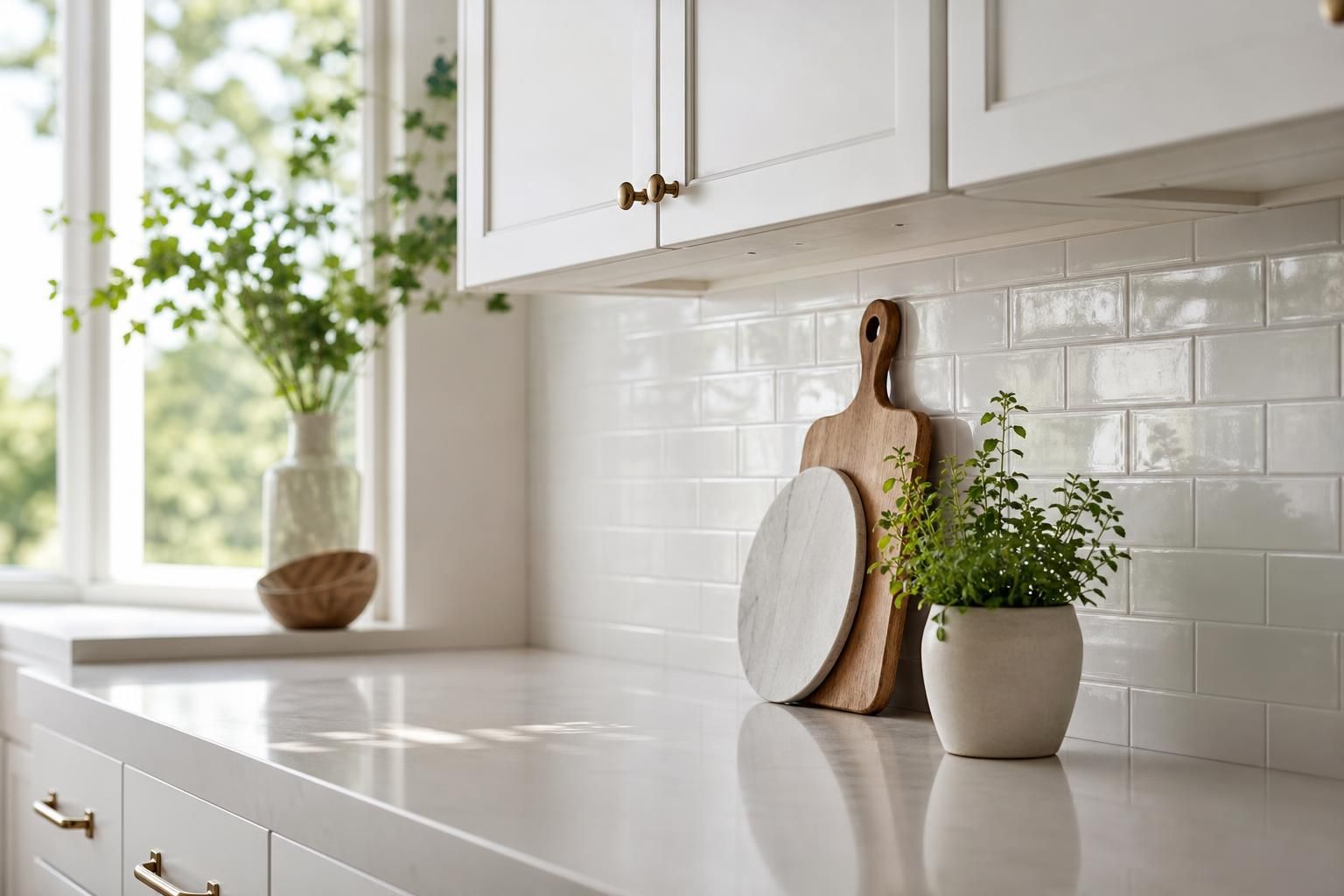
- Classic white subway tile with white cabinets creates a timeless, resale-friendly look that works with almost any countertop.
- Warm gray or greige tile softens a stark white cabinet and pairs well with brushed-gold or matte-black hardware.
- Deep blue or navy tile adds contrast against white cabinets and works especially well in kitchens with natural wood floors or warm-toned stone counters.
- Textured natural stone (travertine, slate-look porcelain) brings in an organic, island-inspired feel without introducing a strong color.
If your cabinets are frameless or slab-style with minimal detailing, a backsplash with some texture or dimension — like a handmade-look tile or a subtle stacked pattern — adds visual interest that flat-panel cabinetry doesn't provide on its own. This guide on frameless versus framed kitchen cabinets explains how cabinet style affects the rest of your kitchen's visual balance, which carries over directly into backsplash selection.
Test Samples Under Your Own Kitchen Lighting
Hawaii's daylight is intense and tends to carry warm, direct sun for much of the day, which changes how colors read compared to northern or overcast climates. A backsplash tile that looks pale gray in a showroom can shift noticeably warmer or cooler once it's under your kitchen's actual window exposure and light fixtures. Before finalizing a color, bring a physical sample home, prop it against your cabinets, and look at it in the morning, midday, and evening with your kitchen lights on.
It also helps to view the sample near the sink and range area specifically, since that's where splashes, grease, and water exposure happen most. If your kitchen includes a prominent island or peninsula, consider how the backsplash color will be visible from the main sightlines of the room — kitchen island layouts often change which wall becomes the visual focal point, and that's usually the wall worth investing the most thought into for color and tile pattern.
Don't Overlook Grout Color
Grout color changes the entire look of a backsplash, sometimes more than the tile color itself. White grout with white tile creates a seamless, almost monolithic look that reads calm and minimal. Gray or colored grout with the same white tile creates a grid pattern that draws more attention to the tile's shape and layout. In humid kitchens, slightly darker grout also tends to show less staining over time between regrouting or resealing, which is a practical consideration beyond pure aesthetics.
Frequently Asked Questions
Q: What backsplash color goes best with bright white cabinets?
Cool-toned backsplashes like light gray, charcoal, or crisp white tile with gray veining typically pair best with bright, cool white cabinets. Warm backsplash tones like cream or beige can look slightly mismatched next to a very cool white.
Q: Should the backsplash match the countertop or the cabinets?
The backsplash should coordinate with both, but the countertop generally carries more visual weight and pattern, so it's usually the better starting point. Choose the countertop slab first, then select a backsplash color that complements its undertone and pattern intensity.
Q: Is a bold backsplash color a bad idea with white cabinets?
Not necessarily — white cabinets are a neutral background that can handle a bold backsplash color like navy, deep green, or terracotta without clashing. The main risk is visual overload if the countertop also has a strong pattern, so keep at least one surface simple.
Q: Does backsplash material matter more than color in a humid climate?
Material matters just as much as color in Hawaii's climate, since porous or unsealed materials are more prone to moisture-related staining and grout breakdown. Glazed porcelain or ceramic tile is a lower-maintenance, moisture-resistant choice than unsealed natural stone for most condo and home kitchens.
Q: What's a safe backsplash color if I plan to resell my home?
Classic white or light gray subway tile tends to have the broadest buyer appeal because it reads clean and timeless rather than trend-specific. It also pairs with nearly any future countertop or cabinet hardware update a future buyer might make.