Open Shelving vs Upper Cabinets for Island Kitchens
Key takeaway
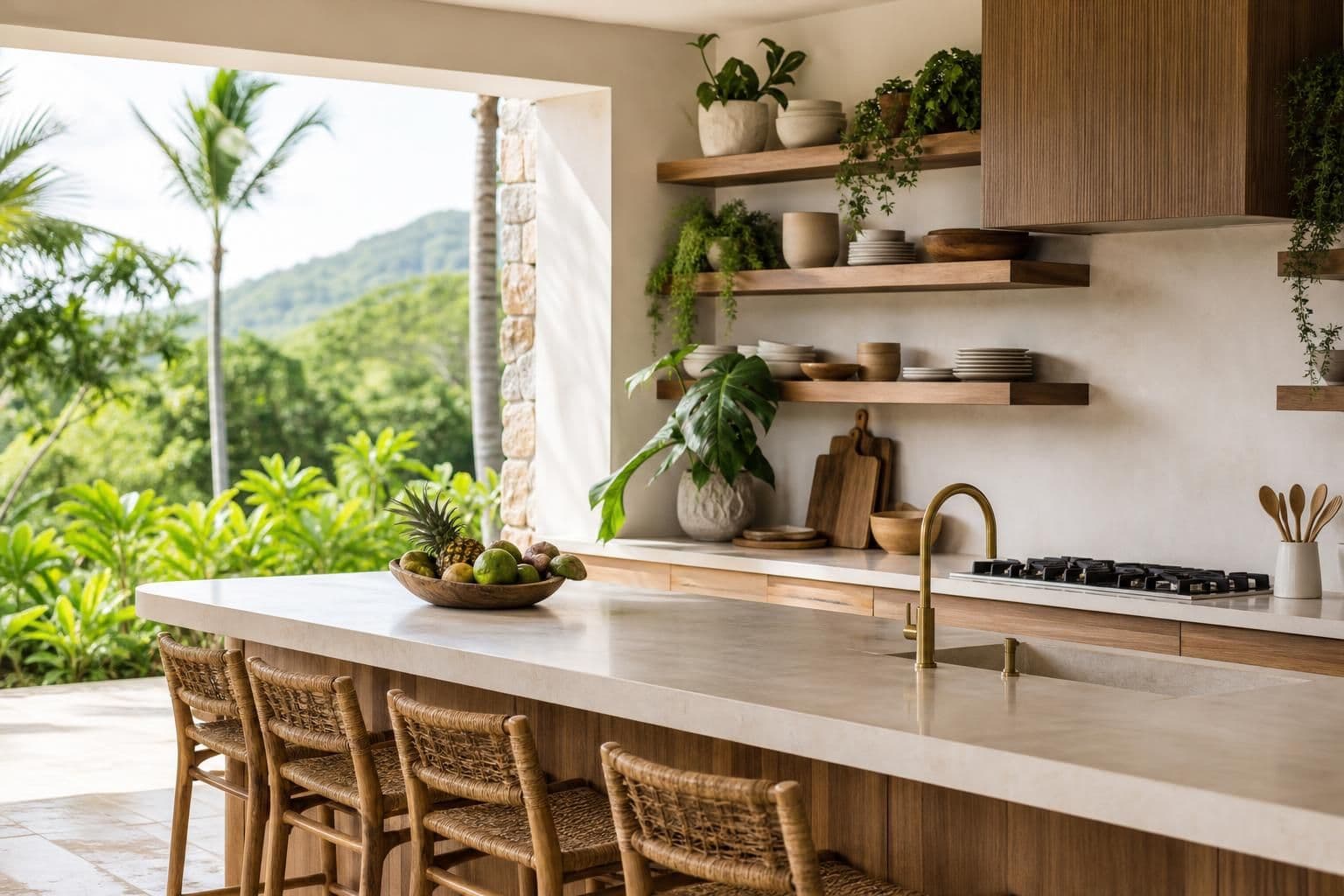
Open shelving works best for small, breezy island-style kitchens where you want a lighter visual feel and easy access to everyday dishware, while upper cabinets still win for households that need enclosed storage, pest protection, and humidity control. Most Oahu kitchens end up with a hybrid — a run of open shelving near the sink or range flanked by a few closed uppers for bulk and off-season items. The right mix depends on how much you cook, how exposed the kitchen is to trade winds and moisture, and how much daily dusting you're willing to do.
Key takeaways
- Open shelving suits lightly-used display items and daily dishware; closed uppers protect dry goods, electronics, and anything sensitive to humidity or bugs.
- A hybrid layout — some open, some closed — is the most common solution in Oahu kitchens because it balances airflow with storage.
- Material choice matters more than style here: moisture-resistant finishes and sealed edges hold up far better in Hawaii's humidity than untreated wood.
How Each Option Performs in a Humid Island Kitchen
Hawaii's year-round humidity, salt air near the coast, and the occasional invasion of ants or roaches change the calculus compared to a mainland kitchen. Open shelves expose dishes, glassware, and food containers to airborne moisture and kitchen grease, which means more frequent wiping and a higher chance of water spots on glass and ceramic. Closed upper cabinets create a sealed microclimate that keeps dust, humidity swings, and pests away from stored goods, which is one reason pest-control guidance from the U.S. Environmental Protection Agency recommends storing food in sealed containers and enclosed cabinetry in warm, humid climates. If your kitchen sits close to the ocean or in an older building without strong air conditioning, closed storage carries real practical weight beyond style.
Storage Capacity: Shelves Can't Match Boxed-In Cabinets
Open shelving almost always holds less than the same linear footage of upper cabinets, simply because cabinets use the full depth and height of the wall cavity with doors that keep stacked items from toppling. A typical 30-inch-wide upper cabinet with two shelves gives you roughly double the usable storage of an open shelf unit the same width, since shelves are usually spaced wider apart to keep dishes visible and reachable. For condo kitchens and vacation rentals where every cubic foot matters, that difference adds up fast — which is why many owners doing a full remodel look at cabinet ideas built for island homes that mix drawer banks, pull-outs, and a short run of open shelves rather than going all-open.
Side-by-Side Comparison
| Factor | Open Shelving | Upper Cabinets |
|---|---|---|
| Storage capacity | Lower — shelves spaced for visibility | Higher — full depth, stacked storage |
| Humidity/pest protection | Minimal, items exposed to air | Enclosed, better barrier against moisture and pests |
| Daily upkeep | Frequent dusting and wiping | Occasional wipe-down of doors only |
| Visual openness | Makes small kitchens feel larger, airier | Can visually box in a compact kitchen |
| Cost to install | Generally lower — no doors, hinges, or hardware | Generally higher — materials, hardware, labor |
| Resale appeal | Trend-dependent, can read as "less finished" | Broadly expected, safer resale choice |
Where Open Shelving Genuinely Shines
Open shelving isn't just a trend — it does specific jobs well in a tropical-style kitchen. It keeps a small galley kitchen from feeling closed-in, since floor-to-ceiling cabinet runs can make an 8-foot-wide kitchen feel like a hallway. It also puts everyday items — mugs, bowls, cutting boards — within easy reach for quick island-style cooking and entertaining, and it gives homeowners a spot to show off local pottery, koa wood pieces, or other decor without needing a separate display case. The tradeoff is that everything on an open shelf needs to be something you don't mind seeing every day and dusting every week.
Where Closed Upper Cabinets Still Make Sense
Closed cabinets remain the practical choice for anything you don't want exposed to kitchen grease, humidity, or pests: bulk pantry goods, small appliances, mismatched glassware, and anything stored for weeks at a time in a vacation rental between guest turnovers. They also give a kitchen a more finished, move-in-ready look that tends to read well to buyers and renters who don't share the homeowner's taste in displayed dishware. If you're planning a full cabinet replacement, it helps to measure the space correctly before deciding how much wall you can realistically give up to open shelving without losing needed storage.
Material Choices That Hold Up to Trade Winds and Rain
Whichever you choose, the material matters more in Hawaii than almost anywhere else in the country. Solid wood shelving left unsealed will cup, warp, or discolor faster here than on the mainland because of sustained high humidity, a pattern documented in wood-moisture research from the USDA Forest Products Laboratory. For open shelving, a sealed hardwood, moisture-resistant engineered wood, or a slab-style floating shelf with a marine-grade finish will outlast raw lumber by years. For closed cabinets, look for boxes with moisture-resistant cores and finishes rated for humid conditions rather than standard interior-grade materials — a detail worth asking about directly when comparing quotes, since not every cabinet line is built the same way.
A Reasonable Hybrid Approach for Most Oahu Kitchens
Most kitchens on Oahu land somewhere in the middle rather than going fully open or fully closed. A common layout keeps one or two open shelves near the coffee station or over a prep counter for daily-use items, while closed uppers handle the rest of the perimeter for bulk storage and anything sensitive to moisture. This hybrid approach also plays well with stone countertops and backsplashes, since open shelving gives a natural stone backsplash more visual breathing room instead of being boxed in on all sides by cabinet doors.
Frequently Asked Questions
Q: Is open shelving a bad idea in a humid Hawaii kitchen?
Not necessarily, but it requires more maintenance — dishes and glassware on open shelves need regular wiping to prevent water spots and dust buildup from humidity and cooking grease. It works best for a small, well-ventilated section of the kitchen rather than the entire upper wall.
Q: Do open shelves actually make a small kitchen feel bigger?
Yes — removing bulky cabinet doors and boxes from view opens up sightlines and lets wall color or backsplash show through, which reads as more spacious in compact galley-style kitchens common in Oahu condos.
Q: Can I mix open shelving and upper cabinets in the same kitchen?
Yes, and it's the most common approach — many homeowners keep one or two closed cabinets for bulk and pest-sensitive storage while adding open shelves near a prep area or coffee station for everyday items.
Q: Does open shelving cost less than upper cabinets?
Generally yes, since shelving skips doors, hinges, and some hardware, but island materials and labor rates in Hawaii still run above mainland averages for either option — a local quote will give you accurate numbers for your specific kitchen.
Q: What wood finish holds up best for open shelves in a humid climate?
A sealed hardwood or engineered wood with a moisture-resistant, marine-grade finish performs far better than raw or lightly finished lumber, which can warp or discolor under sustained humidity.