How to Choose a Custom Kitchen Cabinet Designer in Oahu
Key takeaway
A good custom kitchen cabinet designer in Oahu does more than draw layouts — they specify cabinet boxes, finishes, and hardware that hold up to island humidity, salt air, and the realities of shipping materials across the Pacific. Look for a designer who works from an in-home measurement or digital scan, offers a 3D visualization before you commit, and can speak specifically to moisture-resistant construction rather than generic mainland cabinet lines. The right partner will also coordinate cabinets with your countertop and flooring choices so the whole kitchen is designed as one system, not three separate purchases.
Key takeaways
- Ask any designer how they address humidity and moisture — plywood boxes and sealed edges matter more in Hawaii than on the mainland.
- Request a 3D rendering before approving a final layout; it catches sizing and clearance problems that flat drawings miss.
- Choose a designer who also coordinates countertops and flooring, since finish and color decisions affect each other.
What a Custom Designer Actually Does Differently
A custom cabinet designer starts with your kitchen's actual dimensions, not a catalog size chart. That means measuring wall lengths, window and door swing clearances, plumbing and electrical rough-in locations, and ceiling height for upper cabinet planning. From there, they build a layout around your storage habits — how you cook, where small appliances live, whether you need a baking station or a dedicated coffee bar — instead of fitting your kitchen into stock cabinet increments.
This matters more in condos and older Oahu homes, where walls are rarely perfectly square and kitchens are often smaller than mainland floor plans. A designer who works in 3D can show you how a layout performs before a single box is built, which is the single biggest difference between custom and off-the-shelf cabinetry.
Materials That Hold Up to Hawaii Conditions
Cabinet performance in Hawaii comes down to moisture resistance and construction quality, not just style. The National Kitchen & Bath Association notes that cabinet box material and construction method are primary drivers of long-term durability, which is especially relevant in a climate with year-round humidity. Ask your designer about:
- Box construction — furniture-grade plywood resists swelling better than particleboard in humid conditions.
- Edge banding and sealed seams — exposed raw edges absorb moisture faster, especially around sinks and dishwashers.
- Hardware finish — stainless or coated hardware resists corrosion from salt air better than standard plated finishes.
- Finish type — factory-cured finishes typically resist humidity swings better than site-applied paint.
Door style and finish are also worth discussing early. If you're deciding between a painted white kitchen and a stained or slab look, it helps to review what Oahu homeowners should know about white kitchen cabinets before finalizing a direction, since lighter finishes show humidity-related wear differently than darker ones.
Design Tools Worth Asking For
A capable designer should be able to show you the kitchen before it's built. Tools to look for include:
- 3D visualization software — lets you see cabinet color, countertop, and flooring together in one rendering.
- In-home or on-site measurement — digital or laser measurement reduces the risk of costly fitting errors later.
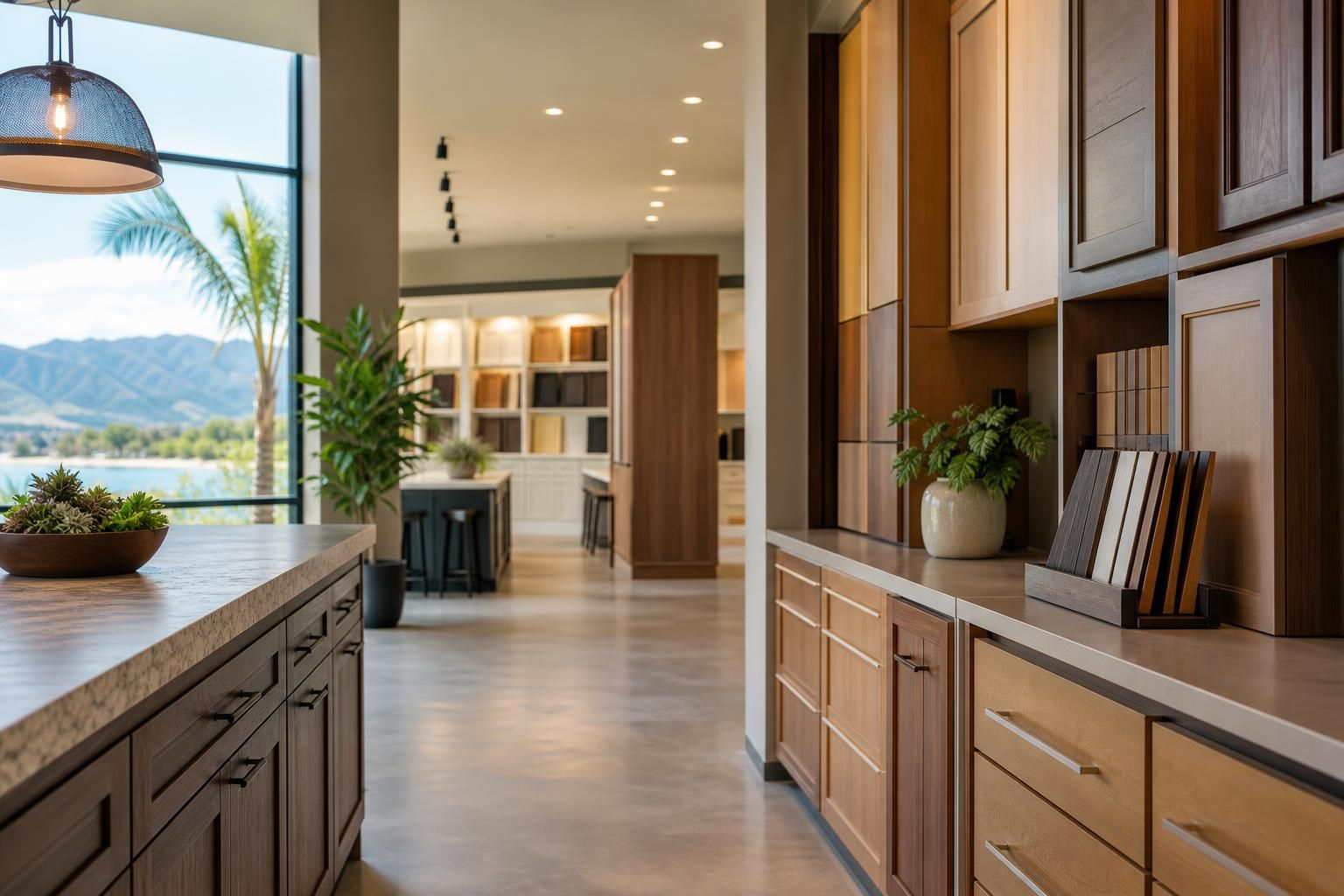
- Material samples in hand — door finishes and countertop slabs look different under Hawaii's natural light than on a screen.
VC Flooring & Stone, for example, offers free design consultations and a 3D design visualizer so homeowners can review layout and finish combinations before ordering — a workflow that's become standard practice among full-service designers rather than a rare upgrade.
Framed, Frameless, or Hybrid Construction
Cabinet construction style affects both storage capacity and how doors perform over time. Frameless (full-access) cabinets use thicker door and side panels and skip the face frame, which gives slightly more interior storage per cabinet. Framed cabinets use a traditional face frame for structural support and a more classic look. Humidity and daily use both play a role in which performs better long-term in a Hawaii kitchen, and the tradeoffs are detailed in this comparison of frameless versus framed kitchen cabinets.
Coordinating Cabinets With Countertops and Layout
Cabinets rarely get chosen in isolation. Countertop material affects cabinet color choice, and layout decisions like adding an island change how many linear feet of cabinetry you need. If quartz is on your shortlist, understanding how it compares to laminate on durability and maintenance — covered in this laminate versus quartz countertop guide — will help you lock in a budget range before the cabinet design is finalized. Similarly, if you're adding more storage or seating, these kitchen island ideas for Oahu homes show how island cabinetry changes a kitchen's overall footprint and workflow.
Questions to Ask Before You Hire a Designer
Before signing off on a design, ask the designer directly:
- Do you measure on-site, and will I see a 3D rendering before production starts?
- What cabinet box material and edge treatment do you use, and how does it handle humidity?
- Can you coordinate cabinet finish with my countertop and flooring selections?
- What is the realistic lead time once a design is approved, given that most cabinet materials are shipped in?
Because most cabinet components and quartz slabs arrive by container shipment, Hawaii project costs and timelines typically run higher than mainland averages — a detail the U.S. Department of Transportation Maritime Administration notes is a structural factor in island freight costs generally. A reliable designer will walk you through realistic timing rather than quoting mainland turnaround times.
Frequently Asked Questions
Q: What makes a cabinet designer "custom" versus semi-custom?
A fully custom designer builds cabinet dimensions and layout around your specific kitchen measurements and storage needs, while semi-custom options modify stock cabinet sizes within set increments. Custom design typically allows more flexibility for odd wall angles, ceiling heights, and built-in storage features common in Oahu homes.
Q: How long does a custom cabinet project take in Hawaii?
Timelines vary by project scope, but material shipping to the islands generally adds lead time compared to mainland projects. Ask your designer for a project-specific timeline rather than relying on general online estimates.
Q: Should I choose cabinet finish before or after selecting countertops?
It's best to review both together, since countertop color and veining influence which cabinet finish looks balanced. Designers who show cabinets and countertops in the same 3D rendering make this decision easier to visualize.
Q: Do custom cabinets handle Oahu's humidity better than stock cabinets?
Custom cabinets built with furniture-grade plywood, sealed edges, and corrosion-resistant hardware generally resist humidity-related swelling and finish degradation better than lower-grade stock cabinets. Construction quality matters more than price point alone.
Q: Can a cabinet designer also help with countertops and flooring?
Many full-service designers coordinate cabinets, countertops, and flooring as one project so finishes are selected together rather than separately. This reduces the risk of mismatched tones or scale issues once everything is installed.