Cabinet Refacing Oahu: What Homeowners Need to Know
Key takeaway
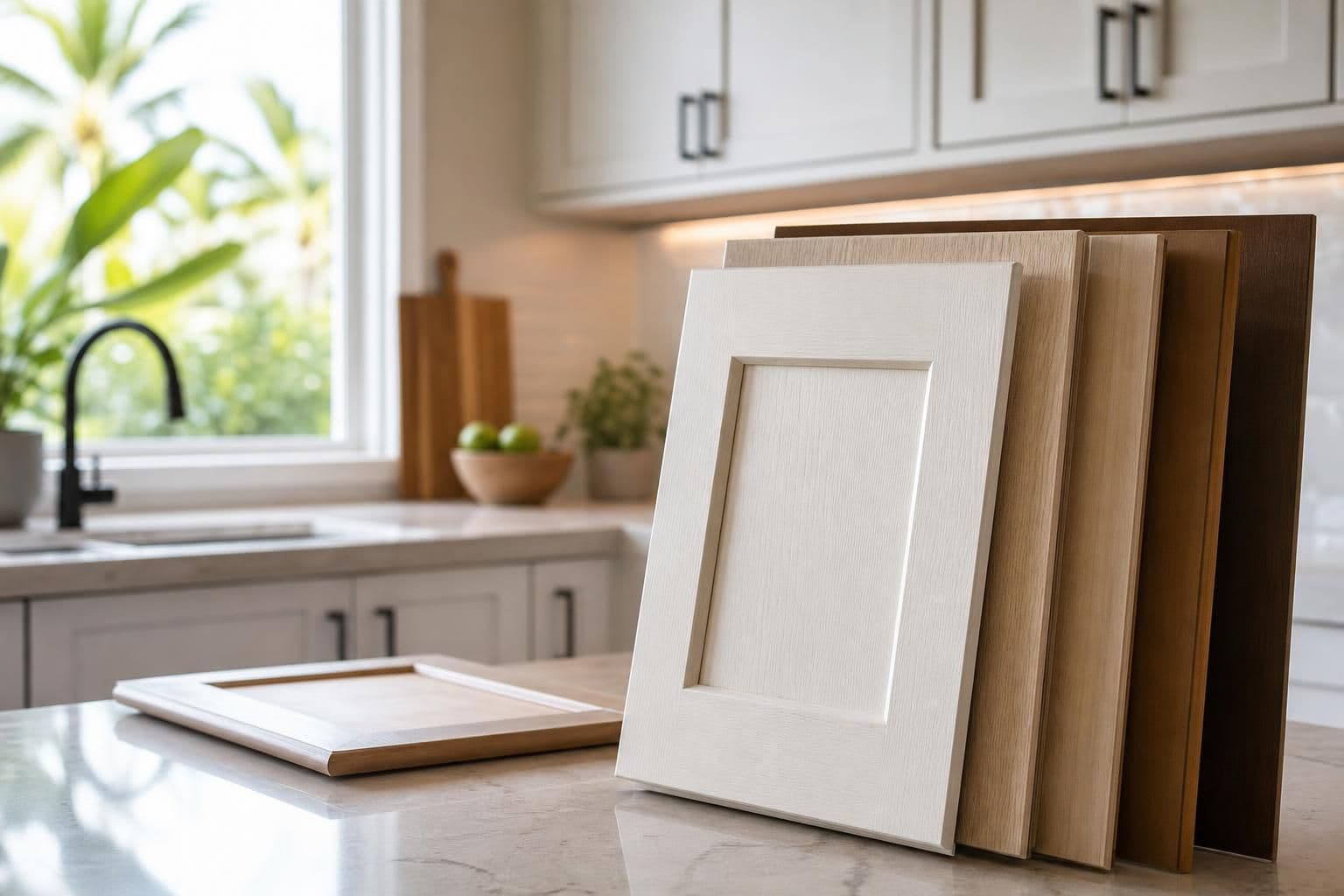
Cabinet refacing is the process of replacing cabinet doors, drawer fronts, and hardware while keeping the existing box frames in place, then covering any exposed surfaces with matching veneer or laminate. On Oahu, it's a popular option because it avoids tearing out cabinet boxes that may still be structurally sound, while updating the look and, when done with the right materials, improving resistance to humidity and salt air. It typically takes a fraction of the time of a full cabinet replacement, though the actual timeline depends on the number of doors, drawers, and finish choices involved.
Key takeaways
- Refacing keeps your cabinet boxes and only replaces doors, drawer fronts, and surface veneer — a full teardown isn't necessary if the boxes are solid.
- Island humidity and occasional termite pressure make moisture-resistant substrates (like thermofoil or PVC-faced options) worth asking about before choosing wood veneer.
- Refacing generally costs less than full replacement, but Oahu material shipping and labor rates mean local quotes will run above mainland reference numbers you might see online.
What Cabinet Refacing Actually Involves
Refacing is different from a simple cabinet "makeover" — it's a defined scope of work. A contractor removes the existing doors and drawer fronts, applies new veneer (often wood, laminate, or thermofoil) to the visible face frames and end panels, and installs new doors, drawer fronts, and hardware to match. The cabinet boxes, shelving, and interior structure stay untouched. This distinguishes refacing from painting (which reuses the original doors) and from full replacement (which removes everything down to the wall studs).
If your current layout works and the boxes aren't warped, delaminated, or termite-damaged, refacing lets you change the entire look of a kitchen without touching plumbing, electrical, or countertops.
Why It's a Common Choice for Oahu Kitchens
Older Oahu homes and condos — especially units built before more moisture-resistant materials were standard — often have cabinet boxes that are structurally fine but have doors and finishes that have degraded from years of humidity, kitchen steam, and salt-laden air near the coast. Refacing addresses the surface problem without requiring a full gut renovation, which matters in condos where teardown work can trigger stricter building rules or longer timelines.
Hawaii's climate also raises the stakes on material choice more than it would on the mainland. The U.S. Environmental Protection Agency notes that sustained indoor humidity above roughly 60% creates conditions where mold and mildew can take hold on porous materials — a real consideration for cabinets near ranges, sinks, and lanai-adjacent kitchens that see constant airflow from outside.
Refacing vs. Painting vs. Full Replacement
Homeowners comparing options usually land on one of three paths:
- Refacing — new doors, drawer fronts, and veneer over existing boxes; changes the whole look and can update dated door styles like raised-panel to slab-front.
- Painting/refinishing — reuses the original doors and boxes, just changes color; cheapest option but limited if doors are warped or delaminating from moisture.
- Full replacement — removes everything, including boxes; necessary if boxes show termite damage, water rot, or if you're changing the kitchen layout entirely.
If you're unsure which category your kitchen falls into, a look at types of kitchen cabinets and how they're constructed can help you judge whether your current boxes are worth keeping.
Material Considerations for Humid, Salt-Air Environments
Not all refacing materials perform the same way in island conditions. Wood veneer offers a natural look but can be more sensitive to moisture swings than thermofoil or PVC-wrapped doors, which are manufactured with sealed edges that resist swelling. Cabinet boxes themselves matter too — the difference between engineered and solid wood cabinet construction affects how well the underlying box handles humidity even after refacing the visible surfaces.
Termites are also a factor unique to Hawaii. The University of Hawaii's College of Tropical Agriculture and Human Resources has documented that Formosan subterranean termites, established on Oahu for decades, can cause structural damage to untreated wood cabinetry faster than mainland termite species typically do. If your existing boxes have any termite history, it's worth having them inspected before committing to refacing rather than replacement.
What the Refacing Process Looks Like, Step by Step
A typical refacing project follows this general sequence:
- In-home assessment — a contractor checks box condition, squareness, and moisture damage to confirm refacing is viable.
- Design selection — door style, veneer color, and hardware are chosen; this is also the point to think about choosing a cabinet color if you're working with a smaller kitchen footprint.
- Veneer application — face frames and exposed box ends are covered with matching material.
- Door and drawer installation — new fronts are hung and aligned.
- Hardware installation — new pulls, hinges, and knobs are attached; proper placement matters for both function and finished appearance, which is covered in detail in guides on installing cabinet hardware.
Because the boxes stay in place, most kitchens remain partially usable during the project, unlike a full replacement that empties the room completely.
Signs Refacing Is the Right Fit
Refacing tends to make sense when:
- Cabinet boxes are square, dry, and free of soft or delaminating particleboard.
- The kitchen layout works fine — you don't need to move sinks, appliances, or add cabinet runs.
- The main complaint is dated door style or finish, not function.
It's a poor fit when boxes show water staining at the base, soft spots from long-term leaks, or visible termite frass — those situations usually call for replacement instead.
A Note on Cost
Refacing generally costs less than full cabinet replacement since labor and materials are limited to surfaces rather than entire box construction. On Oahu specifically, expect quotes to run higher than national reference figures you'll find in mainland articles — materials are shipped in, and skilled cabinet labor commands higher rates locally. Rather than rely on mainland pricing guides, it's worth getting a project-specific quote, since layout complexity, door count, and material choice all move the number substantially.
Frequently Asked Questions
Q: How long does cabinet refacing take on Oahu?
Timelines vary by kitchen size and material lead time, but refacing generally takes less time than a full cabinet replacement because the boxes stay in place and no demolition is required. Custom veneer or door orders can add to the schedule if materials are shipped in rather than kept in local stock.
Q: Can you reface cabinets that have water damage?
Only if the damage is limited to the surface finish. If the underlying box material — often particleboard or MDF — has softened, swollen, or delaminated from prolonged moisture exposure, refacing won't fix the structural issue and replacement is usually recommended.
Q: Does refacing work for condo kitchens?
Yes, and it's often preferred in condos because it avoids the demolition and disposal work that full replacement requires, which can matter in buildings with stricter renovation rules or shared-wall considerations.
Q: What's the difference between refacing and refinishing?
Refinishing reuses your existing doors and just changes the color or finish; refacing replaces the doors and drawer fronts entirely while covering the boxes in new veneer. Refacing offers more design flexibility since you're not limited to your current door style.
Q: Is refacing a good option before selling a home?
It can be, since it updates the visual appearance of a kitchen at a lower cost and shorter timeline than full replacement, which matters for sellers working within a listing schedule. Whether it's worth it depends on the current condition of your cabinet boxes and the finish level of comparable homes in your market.