Best Cabinet Hardware Finishes for Salt Air Environments
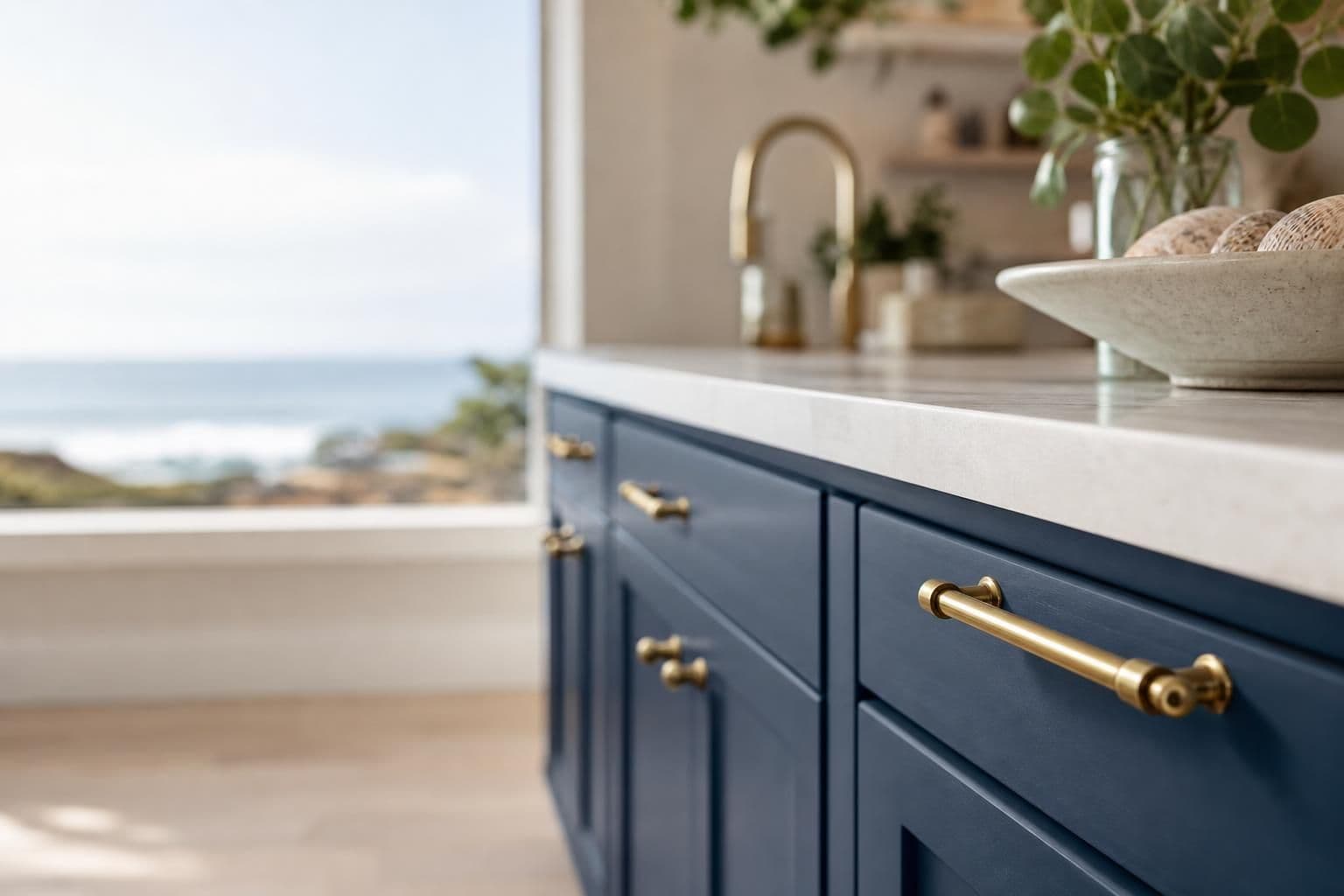
Key takeaway
Solid brass, stainless steel (304 grade), and oil-rubbed bronze are the most reliable kitchen cabinet hardware finishes for salt air environments, because they resist the pitting and discoloration that airborne chloride causes on cheaper plated metals. Finishes to avoid near the coast include unsealed polished chrome, plain zinc alloy, and painted finishes with exposed base metal at the edges, all of which corrode faster once salt particles settle into humid indoor air. Choosing the right finish upfront saves homeowners from replacing pulls and hinges every few years.
Key takeaways
- Solid brass, 304 stainless steel, and oil-rubbed bronze hold up best against salt air and humidity.
- Avoid unsealed polished chrome, plain zinc die-cast hardware, and thin electroplated finishes near the coast.
- Wipe hardware weekly with a soft, damp cloth and dry it fully — trapped moisture is what actually drives corrosion, not the air itself.
Why Salt Air Attacks Cabinet Hardware Faster Here
Airborne salt particles are corrosive because chloride ions break down the thin oxide layer that normally protects metal surfaces, and that process speeds up in warm, humid air. Homes within a mile or two of the shoreline — which describes a large share of Oahu neighborhoods — see measurably higher corrosion rates on exposed metal than inland properties do, a pattern well documented by coastal atmospheric studies from NOAA. Add in Hawaii's near-constant humidity and trade winds carrying moisture indoors through open windows and lanai doors, and kitchen hardware gets exposed to conditions closer to a marine environment than a typical mainland kitchen ever sees.
The damage usually shows up first as a dull haze on chrome, greenish spotting on brass-look finishes, or tiny white or rust-colored pits on screws and hinge pins. Once pitting starts, it tends to spread because the pitted surface holds onto moisture and salt residue even more than a smooth one.
Finishes That Hold Up Well
Solid brass — Brass naturally forms a protective patina rather than pitting, which is why older plantation-era Hawaii homes often still have working brass hardware decades later. Unlacquered or wax-sealed brass ages gracefully; lacquer-coated brass looks brighter longer but can peel at high-touch points like pulls, exposing bare metal underneath.
304 stainless steel — This is the same grade commonly used in marine and food-service hardware because its chromium content resists chloride-driven pitting far better than standard steel or cheaper 200-series stainless. It's a strong pick for contemporary or slab-front kitchens where a brushed or satin look is the goal.
Oil-rubbed bronze — The dark, semi-sealed finish resists surface staining well and tends to hide the early signs of wear that show clearly on brighter metals. It pairs well with the kind of warm, wood-forward kitchens common in island remodels.
Matte black powder-coated hardware — A well-applied powder coat creates a thicker, more uniform barrier than standard plating, which matters more in coastal air than in a dry inland climate.
Finishes to Avoid or Use With Caution
- Polished chrome — Attractive when new, but a thin chrome layer over base metal is prone to pitting once the plating is scratched or worn through at contact points.
- Plain zinc die-cast hardware — Common on budget hardware lines; zinc corrodes quickly once exposed to salt-laden moisture and often shows white, powdery corrosion within a year or two near the coast.
- Unsealed or lacquer-only brass-tone finishes on non-brass base metal — These look like brass but behave like the cheaper metal underneath once the coating wears through.
- Hardware with exposed steel screws or pins — Even good-quality pulls can fail early if the mounting screws are uncoated steel, since that's often where rust starts first.
If you're deciding on a finish while also choosing cabinet boxes and door styles, it's worth reviewing the different cabinet types available side by side, since some styles show hardware wear more visibly than others.
Installation and Placement Details That Matter
Hardware near a range hood, sink, or any spot that gets regular moisture exposure corrodes faster than hardware on upper cabinet doors away from steam and splashes. A few practical adjustments reduce that risk:
- Choose solid metal (not plated) hardware for pulls near the sink and range.
- Use stainless or brass mounting screws instead of standard steel screws, since the screws are often the first point of failure.
- Seal any exposed cabinet edges near hardware cutouts so moisture doesn't wick into the wood and sit against the hardware base plate.
- Keep lanai-facing kitchen doors and windows from blowing salt air directly across open shelving or hardware-heavy cabinet runs when possible.
Getting the mounting hardware right the first time also matters for how evenly pulls sit and how long they last; a clear step-by-step process for installing cabinet hardware correctly helps avoid the loose screws and stripped holes that let moisture in early.
Maintenance That Extends the Life of Any Finish
No finish is fully maintenance-free in a coastal climate — even marine-grade stainless benefits from regular cleaning. The Association for Materials Protection and Performance, a leading corrosion-science body, notes that regular removal of chloride deposits is one of the most effective ways to slow atmospheric corrosion on metal surfaces, which applies just as much to kitchen hardware as to outdoor railings or hinges.
- Wipe hardware weekly with a soft, damp microfiber cloth, then dry it — don't let it air-dry with moisture sitting in grooves.
- Avoid abrasive cleaners or anything with bleach, which can strip protective coatings and accelerate pitting.
- Check screws and hinge pins every few months for early rust spots, since those are usually the first parts to fail.
- For a broader routine that covers doors, boxes, and interiors as well as hardware, a full cabinet cleaning routine built for Hawaii's climate is worth following alongside hardware-specific care.
How Manufacturers Test for Salt Resistance
Hardware marketed as coastal-grade or marine-grade is often tested using a salt spray (fog) test, a standardized method defined by ASTM International that exposes samples to a controlled salt mist for a set number of hours to measure how quickly corrosion appears. When comparing hardware lines, asking a supplier whether a finish has been tested this way — and for how many hours it held up — is a more reliable indicator than marketing language like "rust-resistant" alone.
Frequently Asked Questions
Q: What is the best cabinet hardware finish for a house near the ocean?
Solid brass, 304 stainless steel, and oil-rubbed bronze generally perform best because they either resist pitting naturally or form a protective layer rather than corroding at the surface.
Q: Does polished chrome cabinet hardware rust in Hawaii?
Polished chrome itself doesn't rust, but it's typically a thin plating over a base metal that can corrode once the coating is scratched or worn, which happens faster in salt-laden, humid air.
Q: How often should I clean cabinet hardware in a coastal home?
A weekly wipe-down with a damp, soft cloth followed by drying is enough for most finishes, since removing chloride residue before it sits is what actually slows corrosion.
Q: Is matte black hardware a good choice for salt air climates?
Yes, as long as it's a genuine powder-coated finish rather than a thin painted coating, since the thicker coat creates a more effective moisture barrier.
Q: Can I just replace hardware instead of choosing coastal-grade finishes upfront?
You can, but hardware in high-moisture spots like near the sink or range often needs replacing within a couple of years if it's a low-grade finish, so choosing durable hardware initially usually costs less over time than repeated replacements.